
Flexible Plans for High-Ticket Dropshipping: Why Your Customers Need Them in 2026
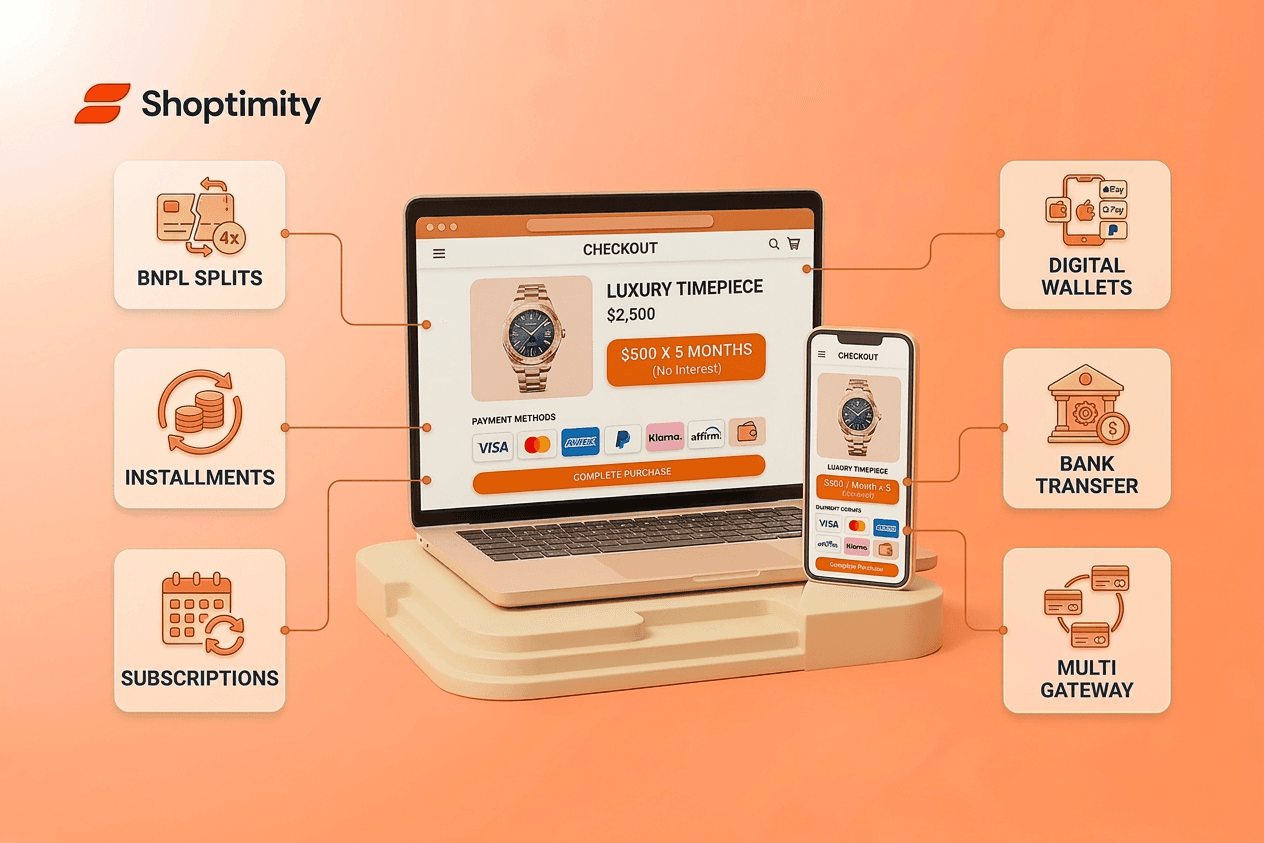
Your best customers are stalling at checkout. Not because they don't want your $500 product, but because they can't afford it right now. In 2026, high-ticket dropshipping success depends on one thing most sellers overlook: flexible plans that let buyers pay the way they actually want to.
When products range from $200 to $5,000+, a single payment option isn't enough. Buy now, pay later (BNPL), installment plans, multiple payment methods, and subscription-based pricing aren't luxury features anymore, they're table stakes. Stores offering flexible payment options see higher conversion rates, lower cart abandonment, and bigger average order values. But many dropshippers still treat payment as an afterthought, defaulting to card-only checkout.
Key takeaways:
- Flexible plans reduce cart abandonment on high-ticket products by letting customers choose how to pay
- BNPL providers like Klarna, Affirm, and Shopify Payments now integrate natively into Shopify stores
- Flexible pricing (installments, subscriptions, payment terms) increase average order value
- Payment options directly affect customer trust, repeat purchases, and your store's profitability
What Are Flexible Plans in High-Ticket Dropshipping?
Flexible plans are payment and pricing structures that give your customers options beyond a single lump sum. For high-ticket dropshipping, this means installment payment plans, buy now pay later (BNPL) financing, subscription billing, bank transfers, digital wallets, and multiple payment gateways, all presented at checkout.
The key difference: instead of forcing a customer to choose between "yes, I'll pay $2,500 today" or "no, I'll leave," flexible plans say "you can pay $500 today and $500 in the next four months." That shift removes friction and unlocks sales that would otherwise disappear.
High-ticket products, typically $200 and above, often reaching $5,000+ for luxury items, custom goods, or technical equipment, sit in a unique zone. They're expensive enough that spontaneous purchasing is rare. But they're valuable enough that customers will hunt for a way to afford them. Flexible payment structures bridge that gap. They're especially critical for dropshippers, where margins often come from volume and customer lifetime value, not one-time markup. A customer who pays in installments is more invested, more likely to receive the product on time, and far more likely to buy again.
Why Flexible Payment Plans Matter for High-Ticket Products
The numbers tell the story. When you force high-ticket buyers into a single payment method, you leave conversions on the table.
Many customers abandoning high-ticket carts aren't rejecting the product. They're hitting a payment wall. Flexible payment options directly address that objection. By offering installment splits or BNPL financing, you're saying "your budget matters, and we can work with it."
Consider payment as a conversion lever. Offering flexible plans increases average order value (AOV) because customers feel more comfortable purchasing higher-priced items when the payment burden is spread. A customer deciding between a $300 and $500 product might pick the $500 option if they can split it across three months. That AOV lift compounds across your catalog and your customer base.
There's also a trust angle. Stores that offer multiple payment options, especially BNPL, signal sophistication and customer-centricity. You're not just selling products; you're solving a real payment problem. That builds brand authority with scaling merchants, boutique brands, and high-value dropshipping customers who are used to working with vendors that cater to them.
From a cash-flow perspective, BNPL and installment providers handle the heavy lifting. They fund the purchase immediately (you get paid in full), then collect from the customer over time. You're not financing customers yourself; a third party is. That means you can offer payment plans without tying up working capital.
Payment Methods and Financing Options Winning in 2026
The payment landscape in 2026 has solidified around a few core options that work across Shopify and other e-commerce platforms.
Buy Now, Pay Later (BNPL) is the dominant flexible plan option. Klarna, Affirm, and similar providers let customers split purchases into 4-6 installments, often interest-free for short terms. Shopify integrates Klarna natively, making it a single-click setup. BNPL adoption among high-ticket shoppers is now mainstream; if you don't offer it, competitors do.
Shopify Payments remains the backbone of most Shopify stores, supporting multiple payment methods in one gateway: credit cards, digital wallets (Apple Pay, Google Pay), and regional payment methods. For high-ticket dropshipping, this is foundational. It's built-in, reduces friction, and Shopify handles compliance and fraud detection.
Bank transfers and ACH payments appeal to B2B buyers and high-ticket customers who prefer paying from their business account. Authorize.Net and similar processors support this natively.
Subscription and recurring billing is growing for high-ticket dropshippers selling premium products or memberships. Shopify's subscription framework lets you bill customers on a schedule, spreading the purchase over months and creating predictable revenue.
Flexible pricing models go beyond payment gateways. Quantity breaks, tiered pricing, and loyalty discounts all function as psychological price reductions. A customer who can buy five units and get a per-unit discount feels like they're paying less, even if the total is high. This isn't just payment method flexibility, it's pricing flexibility, and it works.
The most successful high-ticket dropshippers in 2026 aren't choosing one. They're stacking them: BNPL at checkout, Shopify Payments as the default card processor, bank transfer as an alternative for high-value customers, and subscription options for repeat products.
How Flexible Plans Reduce Cart Abandonment and Boost AOV
Flexible plans work on two levers: removing payment friction and increasing customer confidence.
On abandonment: a customer ready to buy a $1,200 product will often hesitate at checkout when they see "pay full amount now." If that same checkout offers "4 payments of $300," the perceived price drops psychologically. The commitment feels smaller. Impulse purchases on high-ticket items are rare, but informed decisions by customers who've already decided they want your product? That's recoverable abandonment. Flexible payment options recover it.
On AOV: when a customer knows they can split payment, they often upgrade or add-on. They choose the premium version instead of the base model. They bundle complementary products. The payment barrier that would have stopped them at the lower price dissolves. Testing shows AOV increases when flexible payment options are implemented.
There's also a retention angle. Customers who pay via installment feel invested. They're more likely to actually receive and use the product (since they've committed psychologically across multiple payments). They're more likely to recommend it. And they're more likely to return for a second purchase, since the first one went smoothly.
Setting Up Flexible Plans on Your Shopify Store
Implementation is straightforward, but intention matters. Don't just add BNPL as a checkbox feature. Make it visible, obvious, and framed as a benefit.
Step 1: Choose your payment gateways. Start with Shopify Payments (built-in, no extra setup). Add Klarna or Affirm if your customer base skews younger or price-sensitive. If you're selling to B2B, add ACH or bank transfer support via Authorize.Net.
Step 2: Display payment options prominently. Your checkout should show "pay with BNPL," "pay in 4," and "pay later" options as soon as customers see the total. Don't bury them in a dropdown. A badge or callout like "Split into 4 payments of $XX with Klarna" on your product page and at checkout drives conversions. Optimizing your checkout experience ensures customers actually see and use these options.
Step 3: Implement flexible pricing. Quantity breaks and tiered pricing are native to Shopify. Use them. A customer buying three units at a discount feels like they're getting a deal, which justifies the higher total price.
Step 4: Test and optimize. A/B test payment messaging. Does "pay in 4" or "starting at $250/month" convert better for your audience? Track which payment methods your customers actually use, and prioritize those at checkout.
Step 5: Consider your support burden. More payment options mean more payment-related support questions. Have clear documentation about how each option works, and train your support team.
Build a High-Converting Store in 5 Days
You now understand why flexible plans drive sales—but implementation takes time. Let Shoptimity's team build your entire Shopify store with 30+ built-in conversion tools in just 5 days, at zero cost, when you choose a yearly plan.
7-day free trial · all themes included · cancel anytime
Continue Reading
Best Shopify Themes for Canadian Fashion Brands in 2026
Your Shopify theme isn't just decoration. It directly affects whether customers trust your brand, ho...
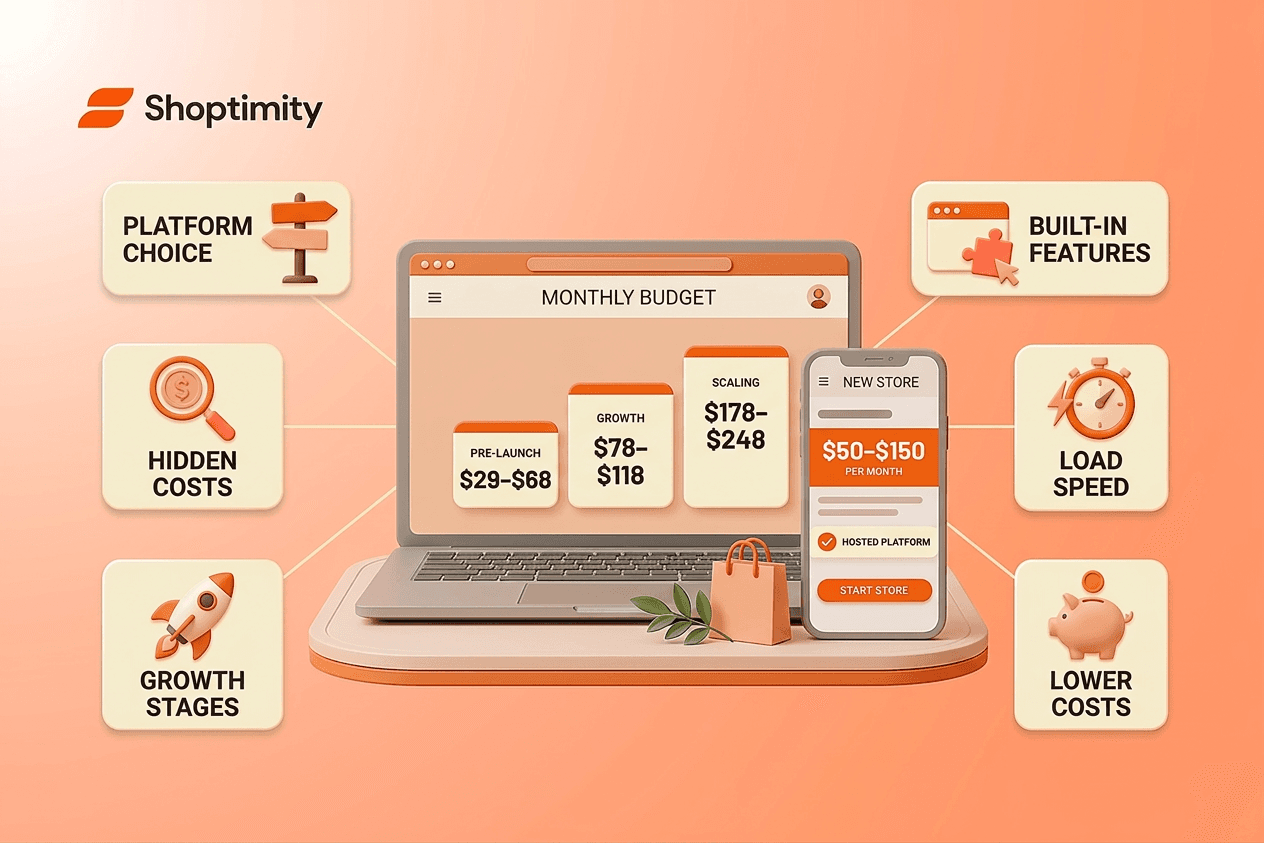
How Much Does It Cost to Create an Online Store in 2026?
The price to start an online store ranges wildly: anywhere from under $100 to $250,000 or more. But ...
Hoe Duur Is Shopify in 2026? The Real Cost Breakdown for High-Ticket Dropshippers
Shopify advertises plans starting at $5 per month, but that's a misleading headline. Most high-ticke...