
How to Build a High-Converting Shopify Store Without Paying for 30 Apps
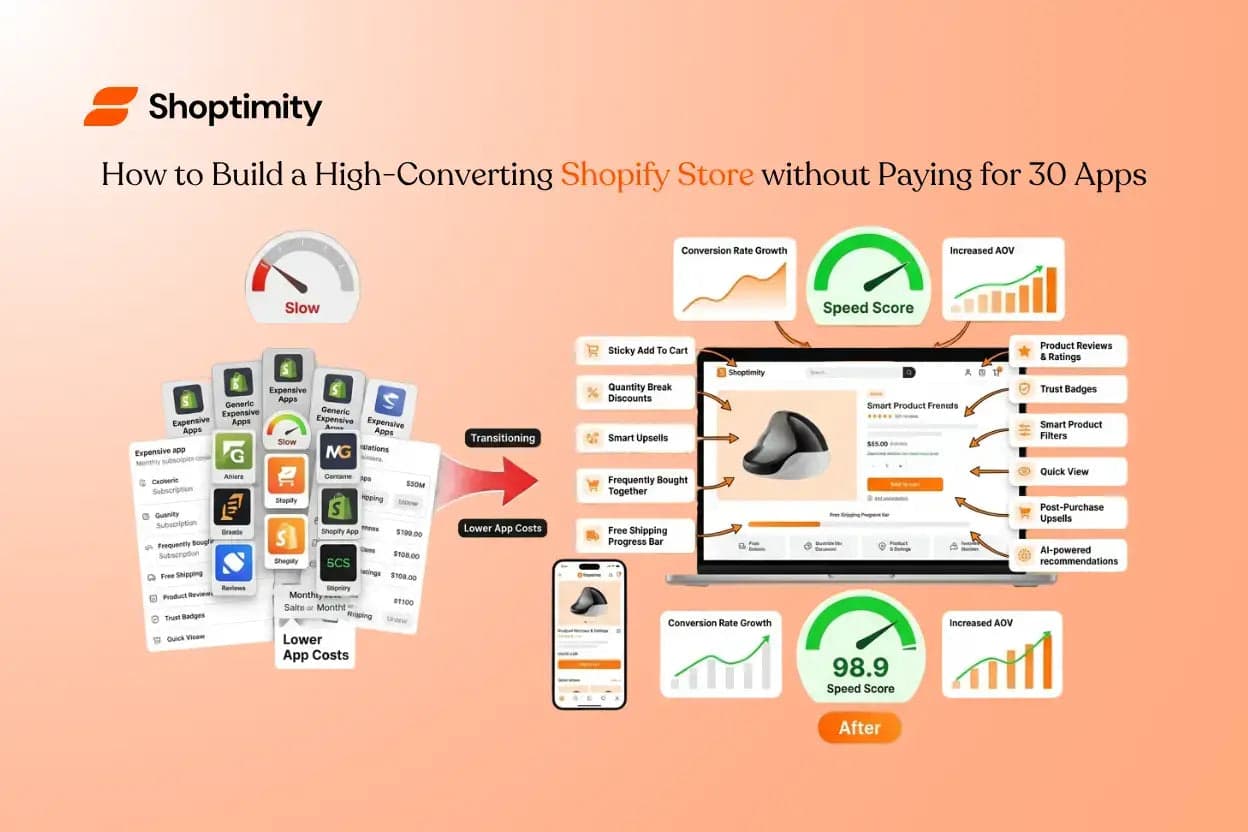
You built the store. You sourced the products. You ran the ads. But the sales just aren't converting the way they should be. Sound familiar?
1. Why Your Theme Is Your #1 Conversion Tool
Before you spend another dollar on ads or influencer partnerships, take a hard look at your theme. Most store owners treat a Shopify theme as window dressing — a coat of paint. But it's actually the foundation of every conversion.
Your theme controls page load speed, mobile layout, checkout flow, trust signals, product discovery, and upsell mechanics. A slow, bloated, or poorly designed theme can nullify even the best marketing spend. Think of it this way: you're filling a leaky bucket.
The right theme doesn't just look good — it earns you money passively by making every visitor's path to purchase as frictionless as possible.
2. Speed Kills (Your Bounce Rate)
Most themes are slow for two reasons: bloated code from feature creep, and a reliance on third-party JavaScript apps that fire on every page load. Every time a visitor lands on your store, their browser has to download, parse, and execute dozens of scripts they'll never interact with.
What a 98.9 speed score actually means. A near-perfect Lighthouse/PageSpeed score isn't a vanity metric. It directly affects your Google Shopping ranking, your Meta ads quality score, and whether your organic traffic converts or bounces. Shoptimity's Celeste theme is engineered from the ground up to hit that 98.9 benchmark — with lean, cutting-edge code and zero unnecessary dependencies.
Test your current store's speed at pagespeed.web.dev. Score below 70? You're losing money on every ad dollar spent. A score above 90 can increase conversions by 10–20% without changing anything else.
3. Mobile-First Is Non-Negotiable in 2026
When eight out of every ten purchases are completed on a mobile device, designing for desktop first is like building a drive-through restaurant without a parking lot. Yet the majority of free and budget Shopify themes are still desktop-first, with mobile as an afterthought. A true mobile-first design means:
- Thumb-friendly CTAs — large, prominent, easy to tap.
- Single-column layouts that don't squish desktop grids onto a 390px screen.
- Sticky "Add to Cart" bars that follow the user down the product page.
- Image galleries optimised for swipe, not click-and-drag.
- Checkout flows with minimal fields and native mobile inputs.
Shoptimity's themes are designed mobile-first — meaning every layout decision, font size, and interactive element is built for small screens first, then gracefully expanded for desktop.
4. The Hidden Cost of App Bloat
Here's a number that will surprise you: the average Shopify store installs between 6 and 20 apps. At $10–$49 per app per month, you could easily be spending $200–$600/month on features that a good theme should include natively. Worse, every app injects its own scripts into your storefront — slowing load times and often causing silent checkout errors that kill sales.
| Feature | Typical app cost/mo | Shoptimity |
|---|---|---|
| Quantity break / volume discounts | $19–$49 | ✓ Included |
| Sticky add to cart | $9–$19 | ✓ Included |
| Product quick view | $10–$29 | ✓ Included |
| Smart product filters | $15–$39 | ✓ Included |
| Upsell & cross-sell widgets | $19–$79 | ✓ Included |
| Trust badge sections | $5–$15 | ✓ Included |
| Monthly total (apps) | $77–$230+ | $0 extra |
By choosing a theme that bakes these features in natively, you eliminate the performance penalty, the recurring cost, and the maintenance headache — all at once.
5. Five Proven Tactics to Increase Average Order Value
Getting traffic is hard. Getting that same visitor to spend more per order is comparatively cheap. AOV is the most underrated lever in ecommerce growth.
Volume Discounts
Show customers that buying 3 gets them 10% off, and 5 gets them 20% off — right on the product page. This single feature can increase AOV by 15–30% for consumables, supplements, and accessories.
Bundling with Smart Cross-Sells
A well-placed bundle recommendation at the right moment in the purchase journey can add $10–$40 to an order with zero extra ad spend.
Free Shipping Thresholds
Display a dynamic "You're $12 away from free shipping!" progress bar. When customers know they're close to a reward, they will add more to their cart.
Sticky Cart with Upsell
A persistent cart drawer that stays accessible as the user browses — and offers a one-click upsell before checkout — consistently outperforms traditional cart pages.
Post-Purchase Offers
After a customer clicks "Place Order," they're in a high-trust, high-intent state. A thank-you page offer with a one-click add converts at 5–15% — pure incremental revenue on sales you already closed.
You don't need more traffic. You need to make more from the traffic you already have.
6. SEO Built Into Your Store's DNA
Paid ads are rented traffic. SEO is owned traffic — and in 2026, organic search is more valuable than ever because ad costs have risen dramatically across Meta and Google. Your theme plays a bigger role in SEO than most merchants realise:
- Clean, semantic HTML — Google can read your content correctly.
- Fast LCP (Largest Contentful Paint) — a direct ranking factor since 2021.
- Proper heading hierarchy — H1 → H2 → H3.
- Schema markup for products — enables rich results with ratings and prices.
- Lazy-loading images — reduces initial load without sacrificing visuals.
- Canonical tags — prevents duplicate-content penalties across collections.
Stores with solid technical SEO foundations grow their organic traffic month over month without additional spend.
7. Why Thousands of Merchants Are Choosing Shoptimity
Shoptimity was built after auditing over 1,000 real Shopify stores. The team didn't ask "what looks nice?" — they asked "what actually makes money?"
The flagship Celeste theme works across health and beauty, clothing and fashion, outdoor and garden, and electronics — categories that demand different presentation styles but identical performance fundamentals. A second theme, Dash, is coming soon: engineered for the next era of premium storefronts with a fully visual block system, lightning-fast performance, and premium ready-to-use sections. For anyone managing a live store, that 8-hour support response isn't a luxury — it's a lifeline.
8. Your High-Converting Shopify Store Checklist
Before you launch your next campaign, run through this list. Every unchecked item is a potential conversion leak.
- PageSpeed score above 85 on mobile
- Sticky "Add to Cart" button on all product pages
- Volume discount displayed on product page
- Free shipping threshold progress bar in cart
- Cross-sell / "You might also like" on product and cart pages
- Trust badges (secure checkout, return policy, reviews) above the fold
- Mobile-first layout — no horizontal scrolling on any page
- Product images optimised with WebP format
- H1 tag containing primary keyword on every collection and product page
- Thank-you page upsell or post-purchase offer enabled
- App count audited — remove anything unused in 30 days
- 8-hour or better support SLA for your theme
Building a high-converting Shopify store in 2026 doesn't require a development agency or a stack of monthly app subscriptions. It requires the right foundation: a fast, mobile-first theme that bakes conversion tools in natively — then your marketing and products layered on top. Shoptimity was built to give you that foundation, without the bloat, without the ongoing fees, and without the compromises.
Build on a foundation that converts
A fast, mobile-first theme with every conversion tool from this guide built in natively — no bloat, no monthly app stack, no compromises.
$19/month or $160/year (save 30%) — 7-day free trial, no hidden charges.
Continue Reading
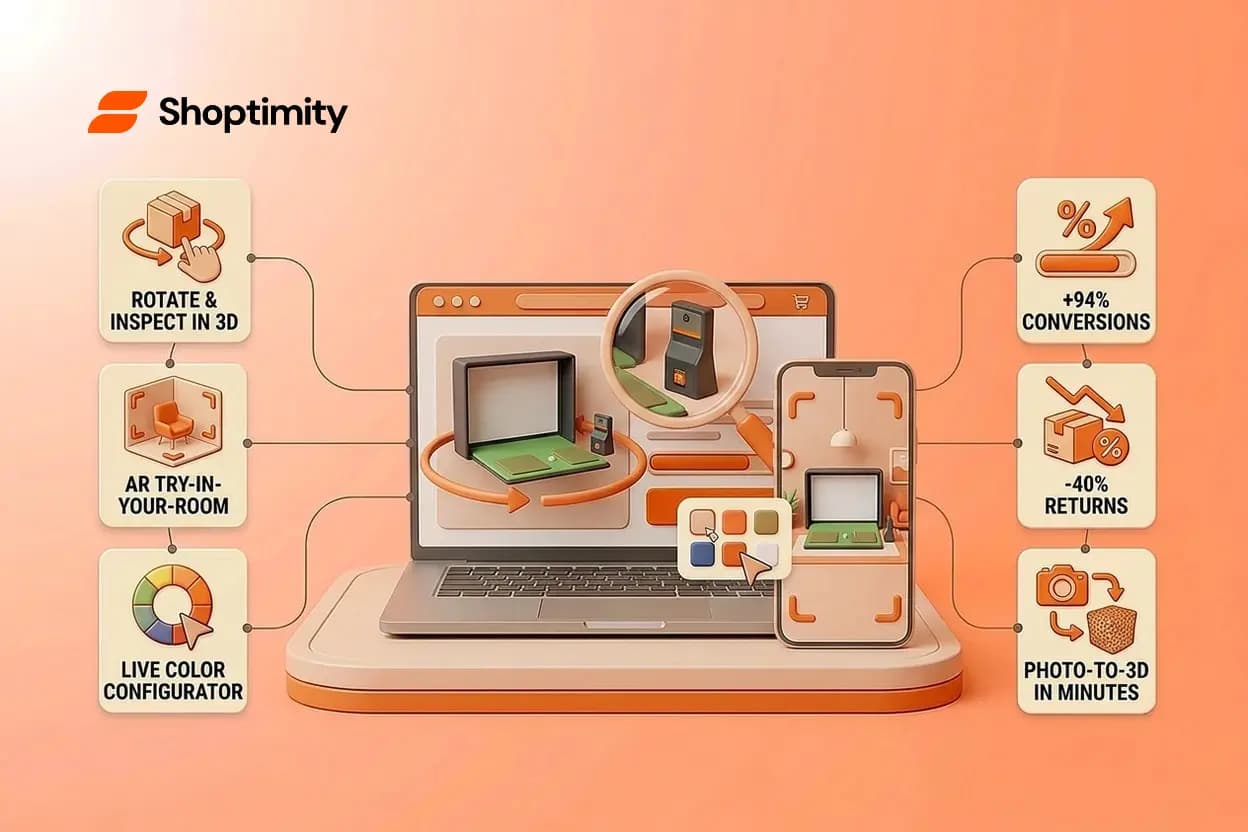
Dynamic Product Galleries: Why They Matter for High-Ticket Dropshipping in 2026
Merchants using 3D and interactive product content see conversion rates up to 94% higher than those ...
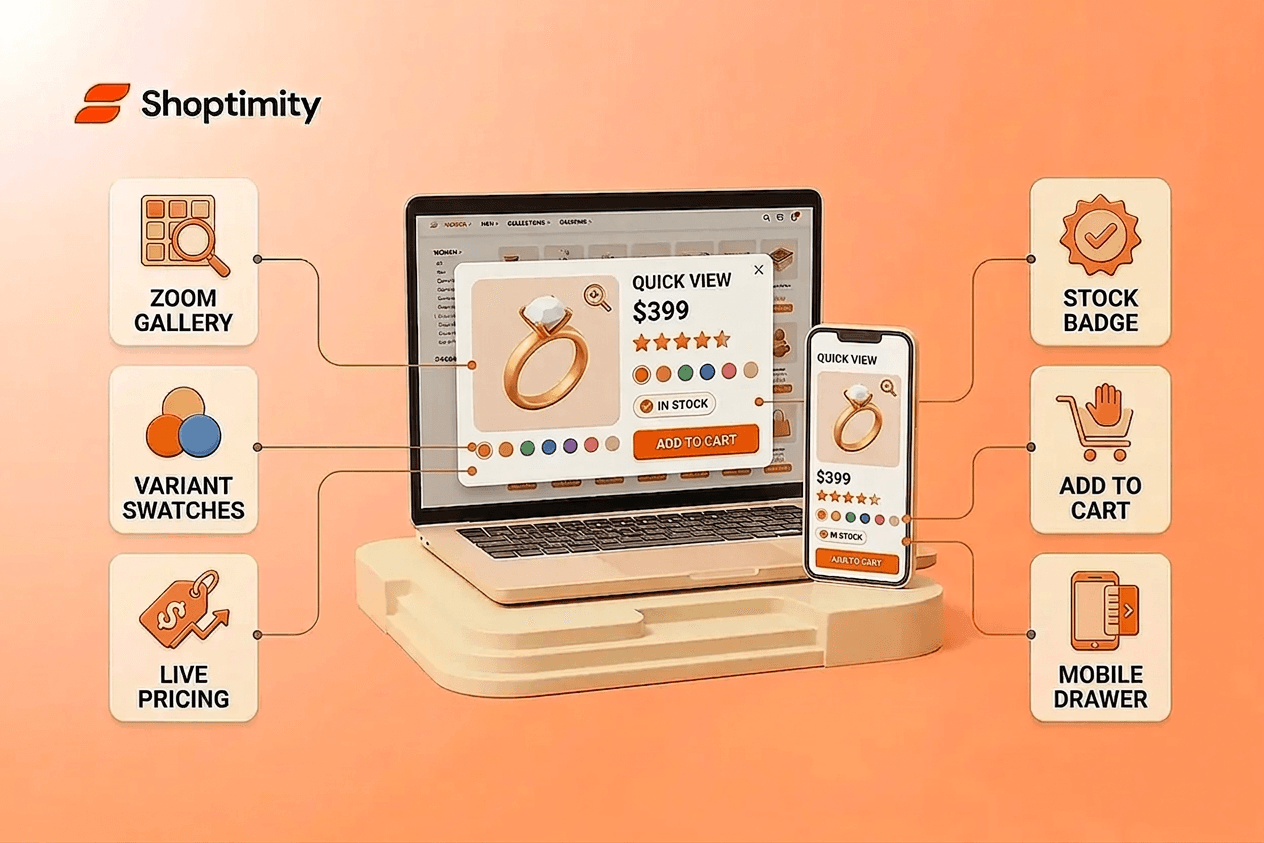
Product Quick View & Smart Filters: Essential Tools for High-Ticket E-Commerce in 2026
You're selling a $400 ring or a $2,000 golf simulator. Your customer narrows your collection by budg...
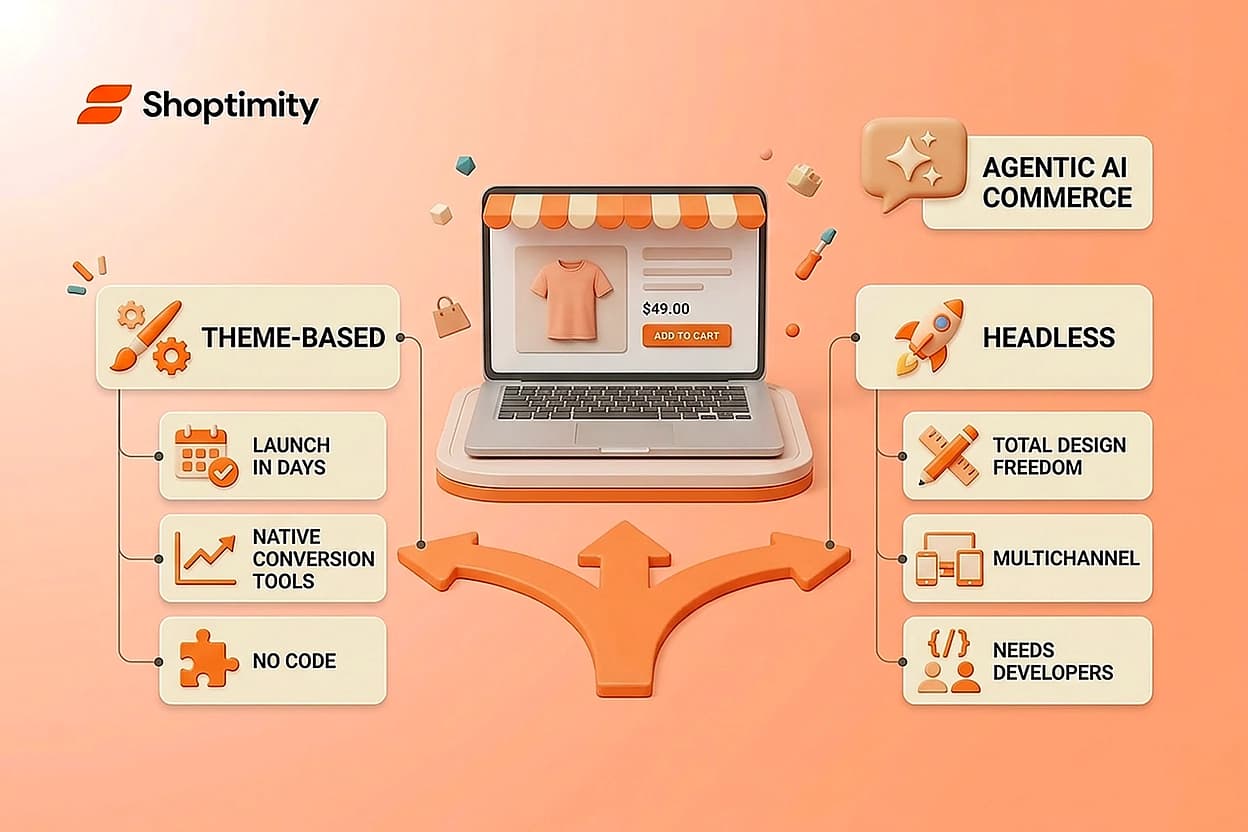
Shopify Storefronts in 2026: Headless, AI-Powered, and Built for Speed
Your online store's speed and design directly impact whether customers buy or bounce. In 2026, these...