
Best Niche Shopify Templates for Modern Retailers
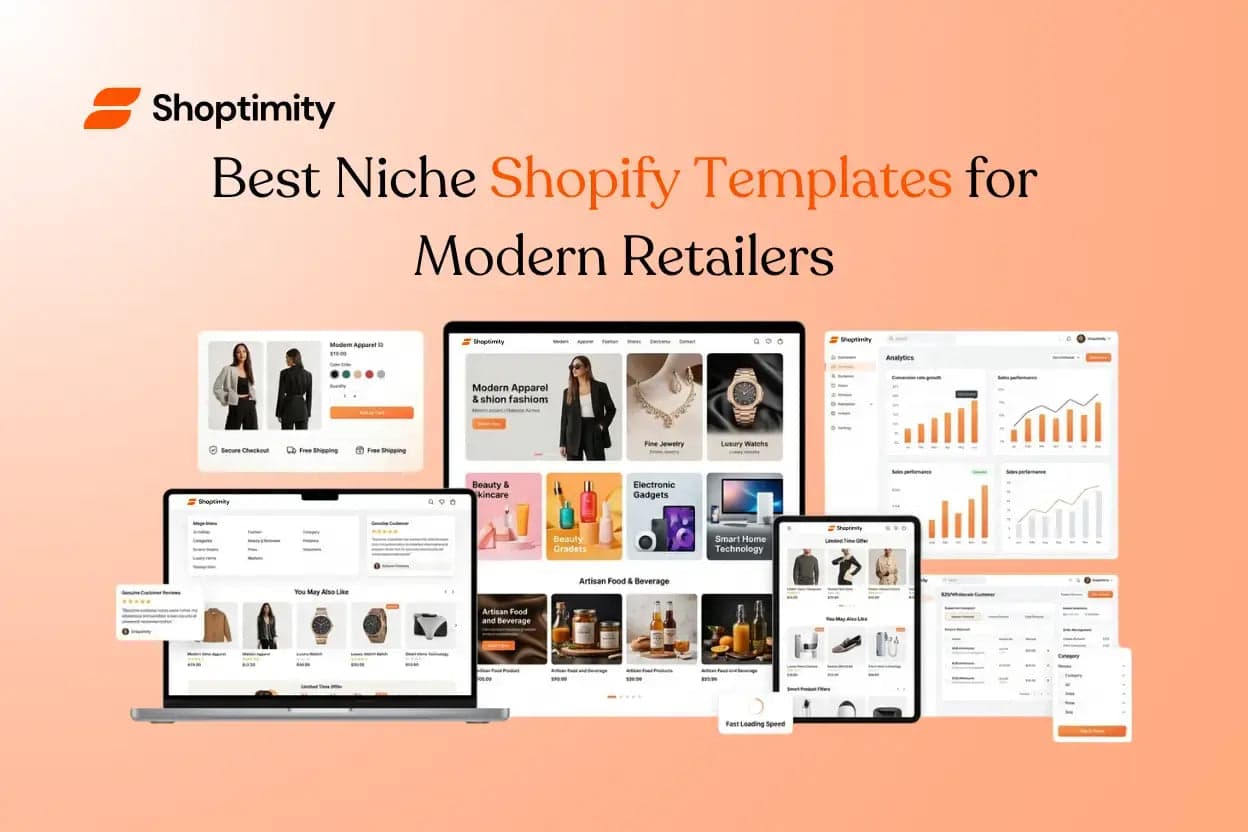
Selecting the right Shopify template is a crucial step for modern retailers looking to maximise sales, reduce ongoing costs, and create a seamless experience for their customers. Your template shapes how visitors perceive your brand, how quickly your pages load, and how easily customers can navigate and buy.
For fashion, jewellery, beauty, food, B2B, DTC, or hybrid brands, template requirements differ dramatically — yet performance, trust, and conversion features stay vital for every niche. Conversion-optimised themes like Shoptimity deliver advanced features and pre-built demos tailored by industry, removing slow-loading app clutter and putting control directly in the merchant's hands. This guide gives you actionable criteria and checklists so you can select the right template for your market.
How to Choose a Shopify Template for Your Retail Niche
Every niche has unique requirements. Mapping your needs against features, speed, ease of use, and scalability ensures your store runs efficiently without costly trial and error.
Key evaluation criteria
- Speed & performance — aim for mobile PageSpeed of 85 or higher; fast pages keep bounce rates low.
- Mobile responsiveness — with 70%+ of sessions on mobile, templates must be mobile-first.
- Design fit — editorial for fashion, minimalist for jewellery, education-led for beauty, functional for B2B.
- Conversion features — native swatches, sticky add-to-cart, upsells, timers, and review blocks lift AOV.
- Scalability — will built-in features adapt as your catalog and order volume grow?
- Reduced app dependency — fewer external apps means fewer conflicts, security risks, and monthly fees.
- No-code customisation — visual controls for layout, colour, and branding, with no coding required.
Free vs premium, at a glance
🆓 Free templates
Ideal for simple stores, small catalogs, or a single product. Expect more manual setup and added paid apps as you grow.
⭐ Premium templates
Suited to scaling brands and advanced merchandising. Pre-built demos save 10–20 hours of setup and bundle advanced features on predictable subscription pricing.
Common pitfalls to avoid
- ✕Prioritising visual appeal at the expense of speed and conversions.
- ✕Underestimating setup time for seemingly "simple" templates.
- ✕Overlooking navigation needs for larger catalogs.
- ✕Relying on numerous separate apps, increasing cost and complexity.
- ✕Skipping real-world testing on core products before launch.
Fashion & Apparel
Fashion ecommerce is driven by style, speed, and seamless variant selection. Your theme should be crafted for high-impact visuals, intuitive discovery, and trust-building.
- Editorial lookbooks and visually expressive collection layouts.
- Integrated swatches for colours, sizes, and variants, plus quick-view popups and size guides.
- Persistent sticky add-to-cart and modular homepages with carousels and CTAs.
- Native AOV boosters — upsells, "buy it with," quantity breaks, and trust signals, not dependent on extra apps.
- Advanced collection filtering, badges, and dynamic review grids.
- Conversion-focused layouts for A/B testing banners and CTAs.
Shoptimity provides ready-to-use apparel demos, 80+ built-in conversion features, and fine-grained design controls — aligning your storefront with your brand identity while driving sales. Favour templates where enabling a feature is just a toggle away, keeping CRO flexible as trends evolve.
Jewellery & Accessories
Jewellery and accessory stores thrive on elegance, clarity, and trust. A template for high-value items must showcase products with minimal noise and superior imagery.
- An uncluttered canvas with generous space and discreet typography.
- Sticky add-to-cart that stays subtle and never overpowers the visuals.
- Image-first grids with multi-angle, high-resolution galleries per product.
- Seamless zoom on desktop and mobile for texture and detail.
- Interactive sliders for lifestyle and in-context shots, plus discreet review modules.
Shoptimity ships with customisable review grids and flexible product galleries so each piece looks exceptional. Use neutral backgrounds to direct focus, highlight social proof with testimonial sliders and subtle trust badges, and preview gallery flows on real mobile devices.
Beauty, Skincare & Personal Care
Beauty and skincare brands require continuous education, urgency, and instant variant selection — all while conveying trust and product quality.
- Product swatches for colours, shades, or formulations.
- Genuine, time-limited countdown timers and stock indicators for launches.
- Ingredient, educational, and how-to blocks above the fold.
- Upsell, bundle logic, and bundle builders to increase AOV.
- Flexible review and rating blocks to address buyer hesitation.
Shoptimity offers native trust and urgency features — every layout can be fine-tuned for conversion without third-party apps. Instant swatches simplify choice, genuine urgency cues push hesitant shoppers, and accessible education builds trust and reduces doubt.
Results depend on overall store quality, product imagery, and traffic — test urgency and trust features to understand their effect for your niche.
Food, Beverage & Consumer Goods
Hybrid retailers in food and consumable goods face the unique challenge of bridging in-store, online, and wholesale experiences.
- Store-locator widgets and retail-inventory displays — no third-party apps needed for stockists or pickup points.
- Dynamic, flexible promo blocks to swap banners and context-sensitive offers.
- Quick re-order functionality for consumables and bestsellers.
- Frictionless, mobile-first checkout with location-aware inventory.
- Consumer trust modules: integrated reviews, disclosure, and guarantee sections.
- Dynamic bundles and "people also bought" recommendations.
Shoptimity's templates include these elements out of the box, built for rapid promo swaps and streamlined retail configuration. Always test your checkout on lower-end smartphones — impulse buys are common in food and beverage, so fast performance keeps shoppers engaged.
Large-Catalog & High-SKU Stores
Managing 500 or more SKUs presents navigation, search, and speed challenges not seen in smaller stores. Your template must handle complexity without sacrificing usability.
- Mega menus supporting product and category thumbnails.
- Multi-criteria filtering by tag, size, price, and colour, with breadcrumbs and instant keyword search.
- Load times kept below 2 seconds, with or without collections loaded.
- Built-in (not app-dependent) navigation, predictive search, and live filters for scalability.
- Modular demo imports for rapid onboarding and testing real inventory layouts.
| Template | Mobile speed | Desktop speed | Load time | Recommended niches |
|---|---|---|---|---|
| Shoptimity | 95+ | 99 | 1.2s | Apparel, multi-department |
| Glozin | 88 | 92 | 1.4s | Electronics, high SKU |
| Prestige | 90 | 93 | 1.3s | B2B/B2C hybrid |
Performance depends on your imagery and content density — always test your own imported products to verify speed.
Well-coded themes run smoothly even with thousands of SKUs and high-concurrency traffic. Regularly split-test changes to navigation and search — the impact can differ by product type and catalog size.
B2B, Wholesale & Hybrid Models
For wholesale and business-to-business stores, order scale and user roles demand advanced template support and airtight license management.
- Bulk order forms, quick-add, or CSV import for large-order efficiency.
- Multi-tiered pricing and discount logic by customer group.
- Fast toggling between B2C (public) and B2B (private) catalog states.
- Flexible subscription plans for predictable pricing and scalable multi-store access.
- Built-in conversion-focused features and customisable tools for long-term growth.
Shoptimity includes flexible licensing, conversion-focused features, and scalable customisation — well suited to growing brands and agencies managing multiple stores. Before choosing, test a theme's checkout flow, customisation flexibility, and performance against your scaling goals.
Single-Product & Niche Launch Stores
Launching a focused, single-product store is about clarity, speed, and removing distractions that slow the purchase.
- Minimal, one-page design with headline, product hero, reviews, and clear CTAs.
- Simplified navigation — no deep menus or unnecessary category pages.
- In-line buy buttons and one-page checkout flows.
- Lightning-fast load speed (sub-1.3 seconds is achievable with a well-optimised premium template).
- Trust blocks: testimonial grids, media mentions, or guarantees, with countdown/urgency used sparingly.
Fewer images and assets yield faster load times. Mobile-first layouts matter because 80% or more of single-product customers buy via their phone — test the seamless checkout flow on multiple devices and solicit user feedback before launch.
Performance & Speed Benchmarks
Performance data drives template selection — speed directly impacts user experience and revenue. A one-second delay can reduce mobile conversion rates by as much as 7–10%.
| Template | PageSpeed (mobile) | PageSpeed (desktop) | Typical load time | Price tier | Best for |
|---|---|---|---|---|---|
| Shoptimity | 95+ | 99 | 1.2–1.4s | Premium | Apparel, SMB to large |
| Glozin | 88 | 93 | 1.5s | Premium | Large catalog / niche B2B |
| Prestige | 90 | 94 | 1.3s | Premium | Hybrid / multi-niche |
| Booster | 86 | 91 | 1.6s | Premium | Minimalist, starter |
Mobile-first, well-structured templates outperform bloated themes even as catalogs scale. Validate with your own catalog images for the most accurate insight.
Results may vary depending on hosting, product imagery, and merchandising strategies. Always validate with your own data.
Free vs Premium: Choosing What Fits Your Niche
Free templates
Pros: zero cost for small shops getting started, typically clean and mobile-friendly, with minimal maintenance.
- ✕Missing conversion features — upsells, trust blocks, review sliders.
- ✕Manual configuration extends the initial build.
- ✕Growth often leads to stacking monthly app subscriptions.
Premium templates
- 100+ built-in blocks for conversion, trust, and engagement.
- Pre-built demos by industry — launch in hours instead of days.
- Future-ready for new catalog sections, additional licenses, and advanced features.
- Flexible subscription plans with pricing and ongoing updates included.
- 24/7 expert support and frequent updates.
The trade-off is an up-front investment (offset by reduced app fees) and a slight learning curve for advanced modules. Agencies and serial merchants especially benefit from reduced setup time and deep customisation — typically saving 10–20 hours when launching a new brand.
Final Checklist for Selecting Your Template
- Identify your niche and catalog size.
- List top-priority features: swatches, bulk order forms, mega menus, urgency tools, trust blocks.
- Set benchmarks: mobile PageSpeed >94, load time <1.5 seconds.
- Review your budget: free can start simple stores; premium saves on app costs long term.
- Plan build time: demo import cuts hours of manual setup.
- Test 2–3 shortlisted templates on your own products, mobile and desktop checkout included.
- Demand strong support, regular updates, and simple license management.
- Calculate potential monthly app-cost savings from built-in features.
- Explore rapid-launch options and the setup guide to minimise troubleshooting.
Frequently Asked Questions
Choose a Template That Grows With You
The right template balances speed, conversion focus, and ease of ownership — so you can sell more, spend less on apps, and manage your brand with confidence. Premium, conversion-optimised themes like Shoptimity pay back their cost by replacing the app stack and cutting hours off every build.
Start your free trial today
Experience how built-in features eliminate monthly app costs, cut hours off your build, and help you grow with every visitor — 7 days free, no hidden charges.
$19/month or $160/year (save 30%) — 7-day free trial, no hidden charges.
For compliance-sensitive topics such as payment, licensing, and refunds, always refer to the official policy documentation in your theme dashboard. Theme features and results may vary depending on catalog composition, store traffic, and merchandising quality. This guide is informational and not legal or financial advice.
Continue Reading
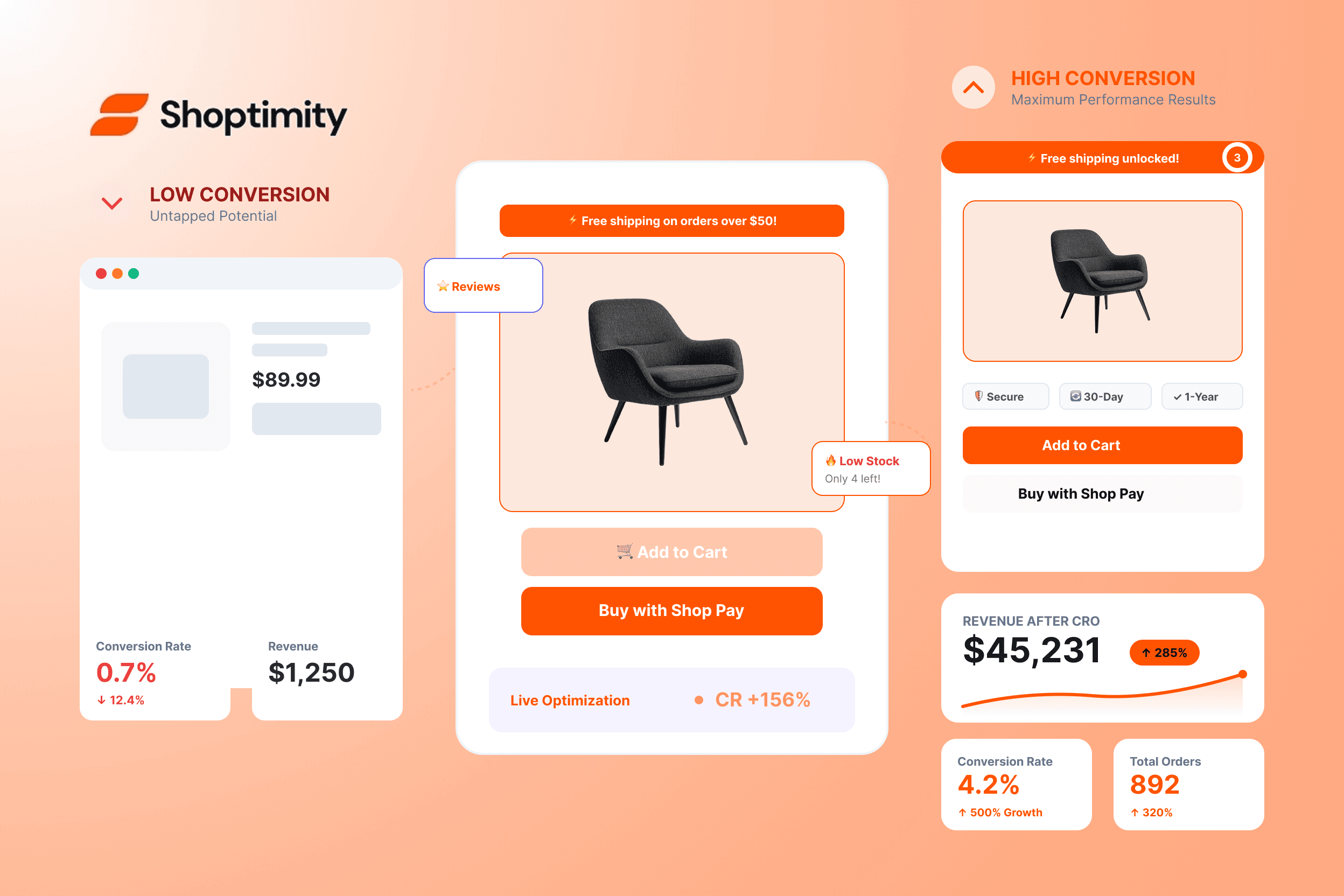
Shopify Conversion Rate Optimization: The 2026 Playbook
The average Shopify store converts at 2.5%. The top 10% of stores convert at 5%+. The difference is ...
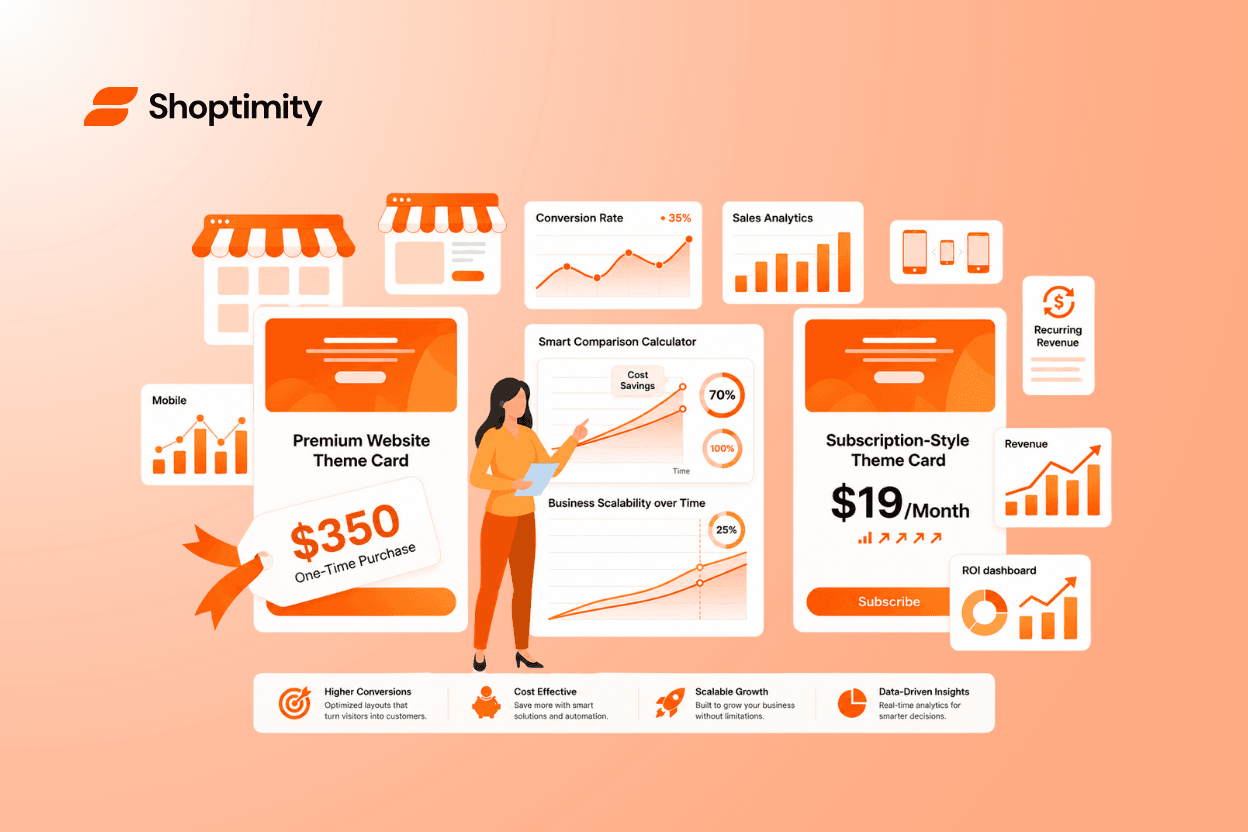
Why $19/Month Beats $350 Up-Front: The Math of Shopify Theme Pricing
A premium Shopify theme costs $280–$350. Shoptimity costs $19/month. On the surface, the math favour...
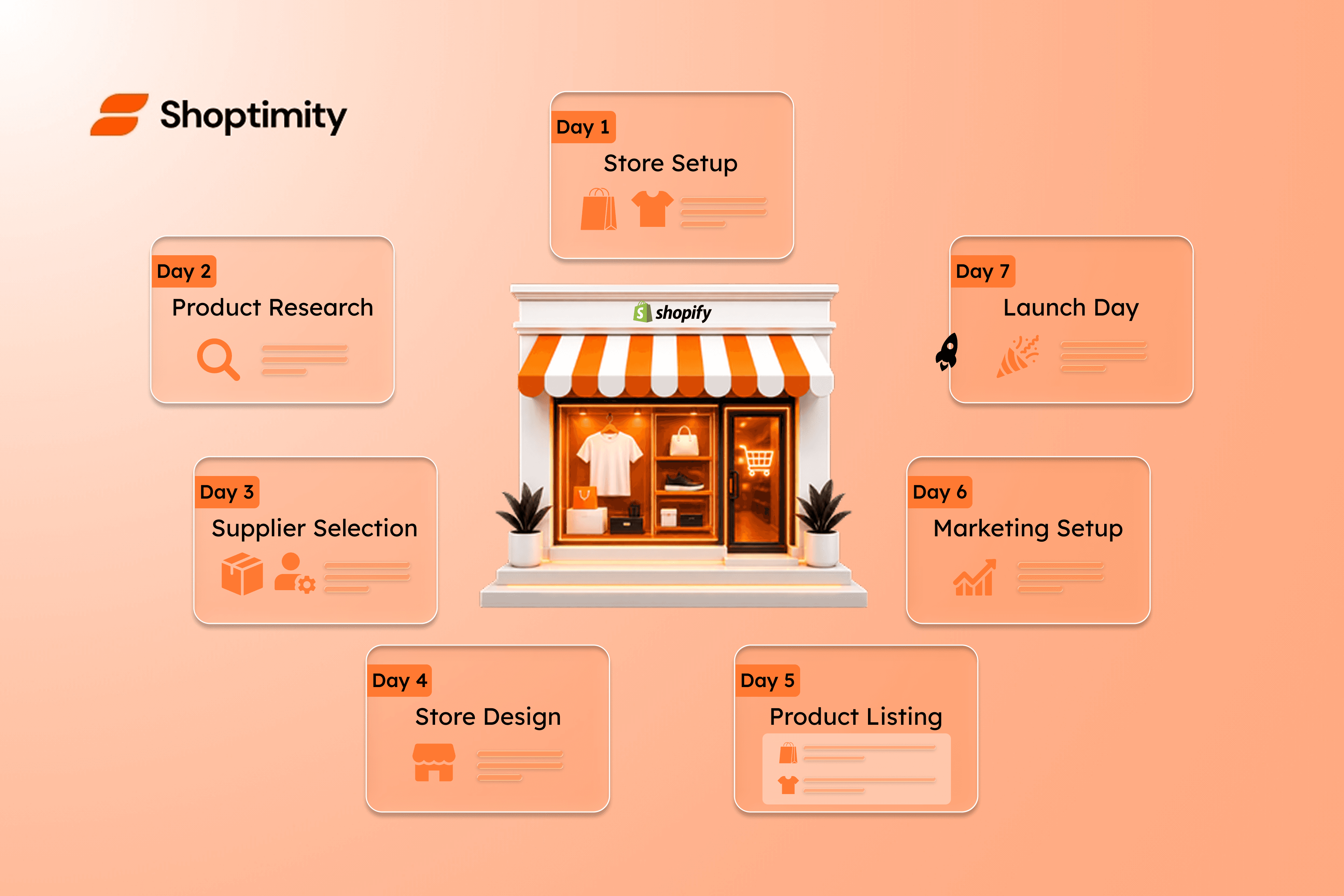
How to Launch a Dropshipping Store in 7 Days (Shopify Edition)
You can launch a Shopify dropshipping store in 7 days. Not 7 weeks. Not 7 months. Seven days. Will i...