
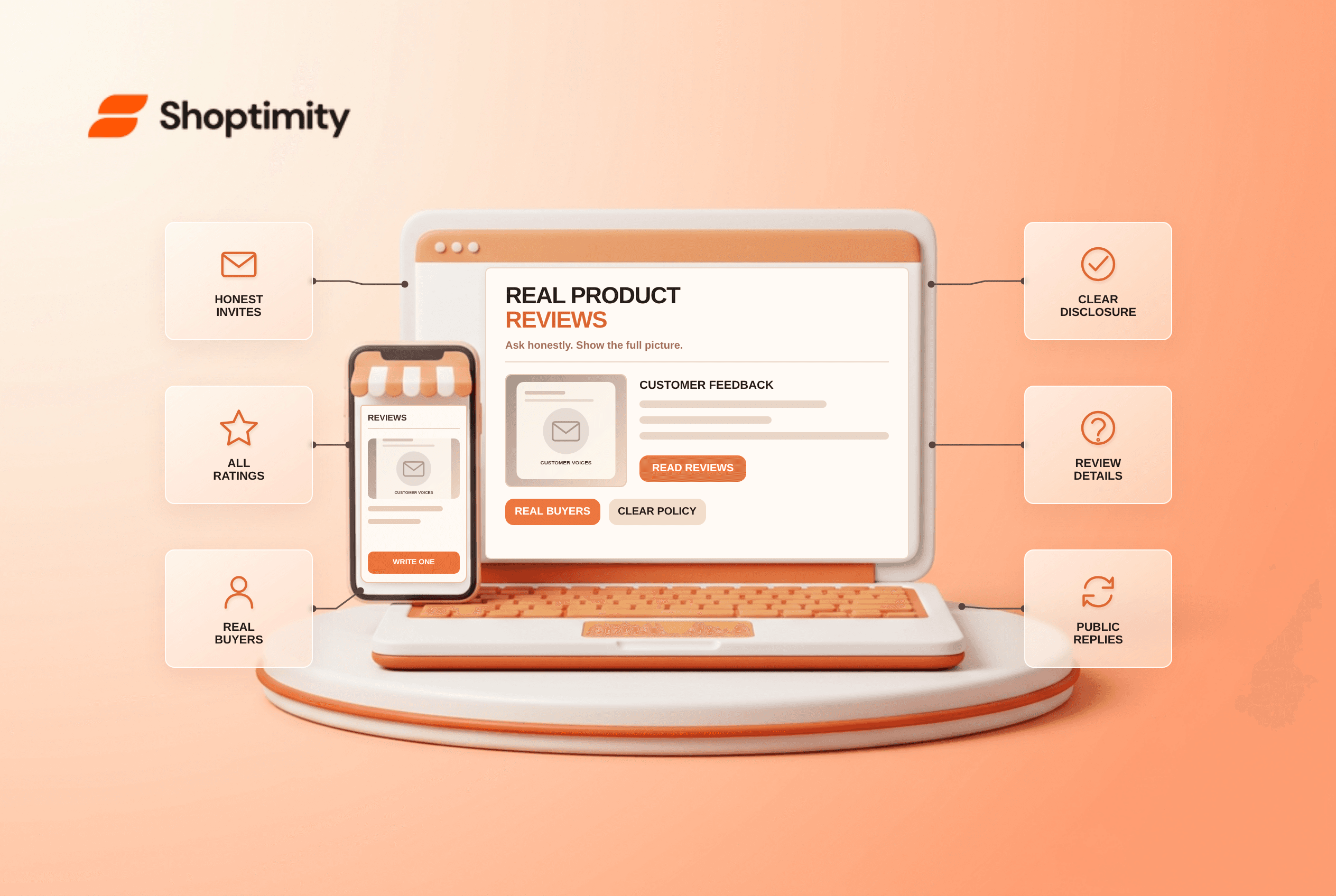
To collect product reviews responsibly, invite customers who have had a real chance to use the item, ask for honest feedback regardless of sentiment, and make the form easy to finish. Publish authentic negative as well as positive experiences under a consistent moderation policy. Never buy a five-star outcome or quietly remove criticism. Good review collection serves future buyers; star counts alone are not proof of quality.
Who should receive a review request?
Invite eligible purchasers based on experience, not predicted rating. A product that arrives today may need time before a useful review: a food item and a durable appliance have different usage windows. Confirm delivery and give the customer time to evaluate it. Avoid sending a “How was it?” request while the shipment is still in transit.
According to the US Federal Trade Commission's guide to soliciting online reviews, businesses should not ask only customers they expect to be positive, and should not solicit opinions from people who have not experienced the product. That guidance applies to US businesses and is not a substitute for advice on laws in your market. We checked FTC guidance and public UX research; we have not examined any Shoptimity merchant's review records.
How do you build a review-request workflow?
Start with one honest invitation and a short form. Write a policy before choosing a review widget:
- Trigger the request after confirmed delivery and an appropriate usage period, not after order placement alone.
- Invite all eligible customers under the same rules. Do not branch invitations on support sentiment or a private satisfaction score.
- Ask for a rating and useful context such as fit, use case or durability, with optional free text. Keep the form accessible on mobile.
- Identify any incentive clearly and check both local rules and the review platform's policy. Never condition a reward on a positive rating.
- Moderate for spam, private information and abuse using published, sentiment-neutral criteria; retain authentic critical reviews.
- Provide a clear way to report product defects or service problems. Respond with a practical remedy without pressuring the customer to edit a review.
The FTC's Consumer Reviews Rule Q&A explains that an incentive cannot be conditioned on a particular positive or negative sentiment. It also warns that undisclosed incentives can raise issues under other FTC rules. Do not assume a generic “verified” badge or a third-party widget takes responsibility for your solicitation practices.
What should shoppers see on the page?
Show both the rating and its context. According to Baymard's research on rating distributions, 53% of participants in its testing actively sought negative reviews. Its research also found 43% of benchmarked sites lacked a ratings distribution summary. Those numbers describe Baymard's study, not an expected change in your sales.
Allow readers to scan rating counts, sort by recency and find relevant details such as size or use case. A five-star score based on a single review should not appear to carry the same evidence as a broader set. Do not reuse a review from a materially different product without making that context clear. See our existing review-star troubleshooting guide for the separate issue of review display after a theme change.
When should the team respond?
Reply when an answer would help the reviewer and the next shopper. Confirm the issue, offer a concrete support route and avoid requesting public personal data. A public response can explain how a sizing mismatch will be handled. The limitation: the seller's reply does not erase a genuine negative experience. Shoptimity themes can display review content; the merchant owns its collection policy and moderation decisions.
Ready to build a faster, higher-converting store?
Every Shoptimity theme ships with conversion widgets built in — so you get speed and features without stacking apps.
7-day free trial · all themes included · cancel anytime
Continue Reading
Top Shopify Theme for Wholesale: A 2026 Buyer's Guide
You've just spent weeks sourcing inventory and building supplier relationships. But when you launch ...
Ecommerce Return Status Updates: Separate Request and Refund
Ecommerce return status updates should separate request, label, receipt, inspection and refund so sh...
Ecommerce Delivery Delay Updates: Show the New Reality
Ecommerce delivery delay updates should replace stale promises with a dated revised estimate, clear ...