
Shopify B2B in 2026: Native Wholesale vs a Dedicated App
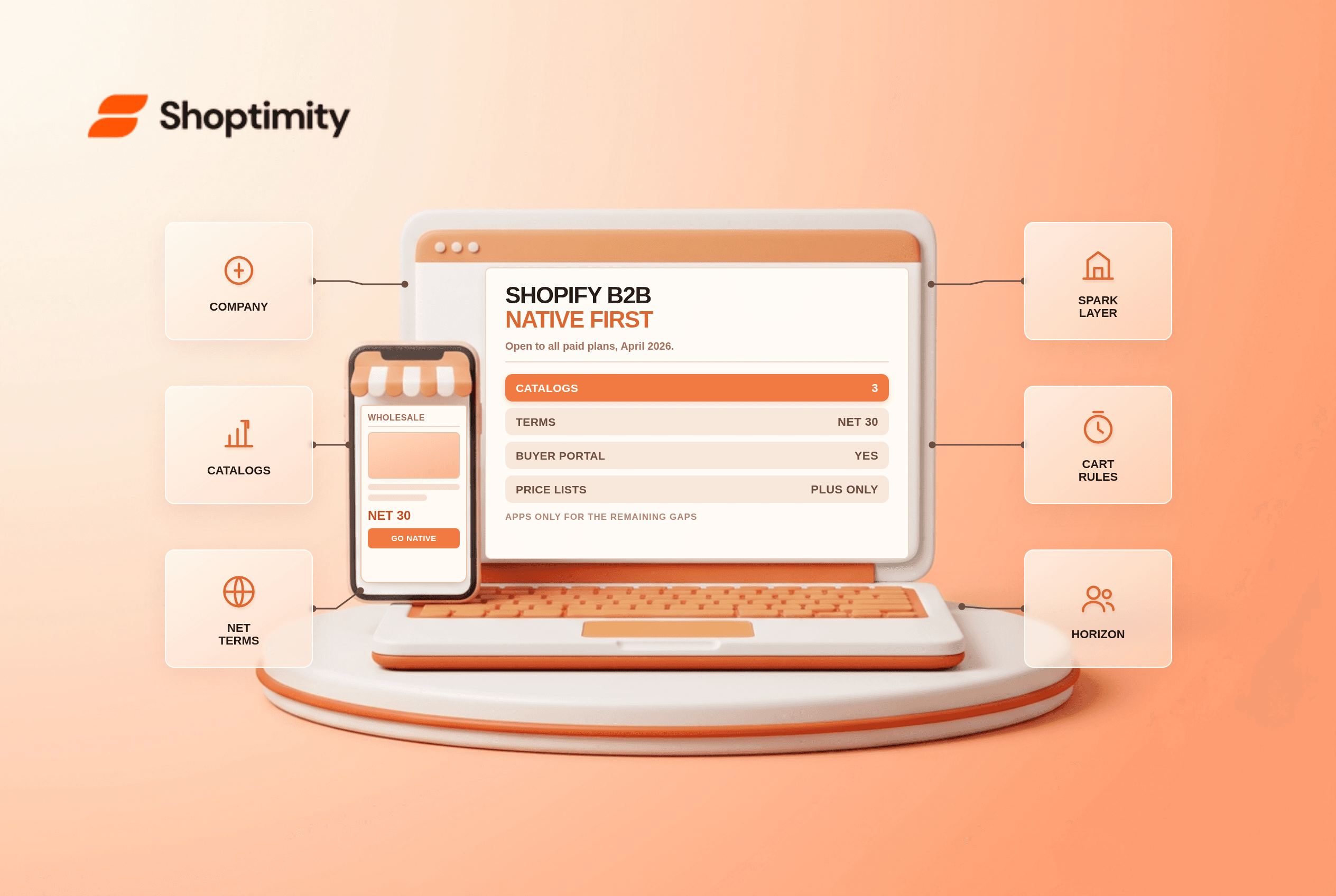
Shopify B2B tools now work on every paid plan, not only Plus. Since April 2026, Basic, Grow and Advanced merchants get company profiles, B2B catalogs, net payment terms and a self-serve buyer portal without an app. That change removed the main reason most small wholesalers needed a subscription.
What Shopify B2B includes on a non-Plus plan
Company profiles group wholesale buyers under one account, with multiple contacts and their own addresses, as Shopify's B2B manual describes. Catalogs control which products and prices each company sees, up to three of them. Payment terms support net 15, 30, 60 and custom arrangements. The buyer portal lets a purchasing manager reorder without emailing you.
That covers the operating model of most small and mid-size wholesale accounts: a buyer who orders the same list monthly, on terms, at a fixed discount. You do not need an app to run that.
Plus still carries the heavier end: unlimited price lists, advanced catalog rules, B2B on multiple storefronts, wholesale-specific checkout scripting and the volume pricing patterns larger distributors expect, which is what the Plus plan is priced for.
Where the gaps are
Three gaps show up in practice. Cart-level discount rules, such as spend $1,000 and save 10 percent, are not native. Buyer registration forms that gate prices until approval are not native either, and hiding retail prices from logged-out visitors usually takes theme work.
The third gap is ordering ergonomics. Quick order forms, CSV upload for large purchase orders and sales-rep workflows are app territory. Stores moving from a real B2B portal often find the native cart too thin for a fifteen-line purchase order.
| Need | Native Shopify B2B | App required |
|---|---|---|
| Company profiles and contacts | Yes | No |
| Three catalogs with tiered pricing | Yes | No |
| Net 15, 30, 60 terms | Yes | No |
| Buyer self-serve portal | Yes | No |
| Cart-level spend discounts | No | Yes |
| Gated registration form | No | Yes |
| Quick order and CSV upload | No | Yes |
| More than three price tiers | Plus only | Yes |
The theme question, which most guides skip
Wholesale stores have a display problem that ecommerce themes rarely solve: showing one price to the public and another to logged-in buyers, on the same product page, without flashing the wrong number on load.
The Horizon theme added native B2B price display and quick order lists in the 2026 Editions, which means a non-Plus merchant on Horizon gets a working wholesale storefront without a display app. Older themes need custom work.
If you are choosing a theme for a dual-channel store, read what a B2B Shopify theme needs and the wholesale theme comparison before you commit. Changing themes after you have built company profiles and gated pricing is more work than choosing well.
When you still need SparkLayer, BSS B2B or Wholesale Gorilla
Buy an app when one of four things is true. You need more pricing tiers than native catalogs allow without Plus. You need a full portal with quotes and sales rep assignment. You need quick order forms and CSV upload. Or you need cart-level spend rules.
SparkLayer fits structured B2B operations with quote workflows. BSS B2B covers tiered pricing and minimum order quantities with deeper rules. Wholesale Gorilla covers gated signup and order forms. Wholesale Helper covers tier pricing and MOQs.
One 2026 caveat worth checking: some older wholesale apps depended on Shopify Scripts, which is being retired. Ask each vendor how their discount logic runs now, because an app mid-migration can behave unpredictably during your busiest month.
The cost comparison that decides it
A native B2B setup costs nothing beyond your plan. A wholesale app typically runs $50 to $300 a month, and the ceiling depends on order volume and features.
Our advice: start native, measure the gap, then buy the one feature you actually need. In our experience, stores often buy an app for one missing feature and then pay for three years, and the caveat is that uninstalling an app mid-season is harder than never installing it. Audit which gap you actually have before subscribing. If it is cart-level spend discounts, an app is right. If it is gated registration, a small amount of Liquid or a simpler app will do.
According to Shopify's April 2026 announcement, opening B2B to all plans was aimed at merchants running DTC and wholesale from one store. The practical implication is that most new wholesalers should start native, hit the ceiling, then buy the specific feature they need.
Ready to build a faster, higher-converting store?
Every Shoptimity theme ships with conversion widgets built in — so you get speed and features without stacking apps.
7-day free trial · all themes included · cancel anytime
Continue Reading
Top Shopify Theme for Wholesale: A 2026 Buyer's Guide
You've just spent weeks sourcing inventory and building supplier relationships. But when you launch ...
Best B2B Shopify Theme in 2026: Features, Trade-Offs & How to Choose
Picking the wrong B2B Shopify theme costs you in two ways: either you pay for features you never use...