
Best B2B Shopify Theme in 2026: Features, Trade-Offs & How to Choose
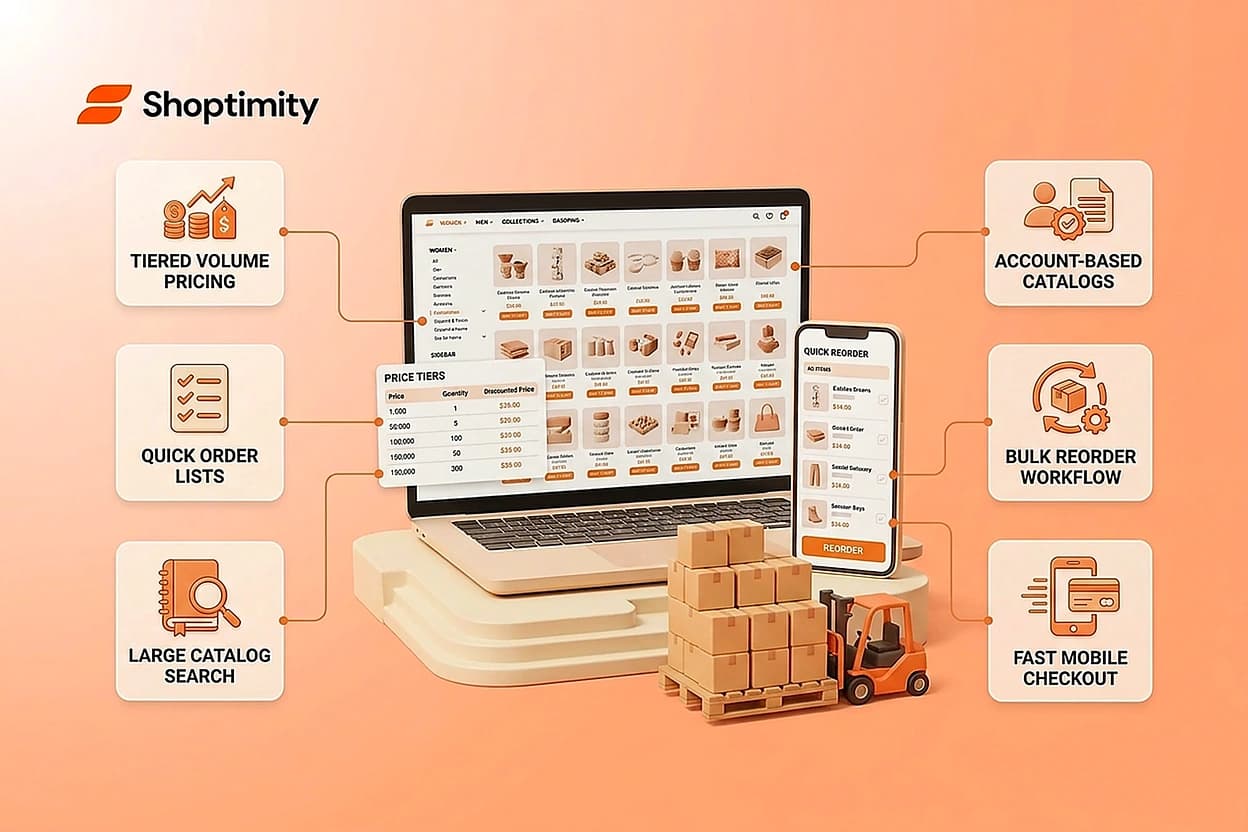
Picking the wrong B2B Shopify theme costs you in two ways: either you pay for features you never use, or you cheap out and end up building workarounds with a stack of apps that cost more than a premium theme and slow down your store. The right choice depends on what your wholesale operation actually needs: bulk ordering workflows, tiered pricing, quick reorder lists, or large catalog navigation.
TL;DR:
- Hyper by FoxEcom leads for advanced volume pricing and bulk workflows on large catalogs.
- Shopify Trade (free) includes native B2B features like quick order lists, volume pricing, and promotional banners.
- Normcore excels at large product catalogs with clean navigation for B2B buyers.
- Speed and mobile UX matter as much as B2B-specific features; test on your actual catalog size before committing.
- Total cost includes the theme price plus third-party apps you'll avoid or need.
What Is a B2B Shopify Theme and Why It Matters
A B2B Shopify theme isn't just a prettier version of a regular storefront. It's built around how wholesale and bulk buyers actually shop: structured catalog navigation for thousands of SKUs, fast reorder workflows, volume pricing displays, account-based catalog access, and quick checkout for repeat purchases.
According to FoxEcom's testing across multiple storefronts, the difference boils down to three core capabilities. First, structured catalog navigation that lets buyers drill down through large inventories without wading through generic product grids. Second, fast reorder and bulk purchasing layouts, think favorites lists, quick order forms, and pre-populated carts. Third, account-based experiences so different customer tiers see different pricing, product availability, or payment terms.
The mistake most merchants make is treating a B2B theme like a B2C theme with a bulk-order app bolted on. That approach turns a 3-second checkout into a 30-second friction fest. The best B2B Shopify theme solves this at the foundation, not with plugins.
Top B2B Shopify Themes for 2026: Features That Drive Wholesale Sales
Three themes dominate the 2026 B2B landscape, each with a different strength.
Hyper by FoxEcom is the current standard for enterprises with complex pricing needs. It ships with advanced pricing rule engines, bulk order support, and profile-based catalog customization out of the box. FoxEcom's own testing identifies it as the strongest option on the Shopify Theme Store for B2B and wholesale brands, particularly when you need to display different products or prices to different customer groups.
Sleek is a solid alternative if your buyers need fast navigation and built-in favorite products for quick reordering. It emphasizes collection structure and repeat-purchase workflows.
Normcore is built specifically for large SKU inventories. If you're a distributor or a brand with hundreds or thousands of products, Normcore's minimalist design keeps navigation clean and search fast. Buyers find what they need without being distracted by imagery or sales copy.
Say you run a janitorial supply wholesale operation with 2,500 SKUs across 40 product categories. A regular theme makes your buyers click through nested menus and filters. Normcore or Hyper surfaces category-level shortcuts and advanced filtering right on the homepage, cutting the path to checkout from five clicks to two.
Shopify Trade Theme: Free B2B Functionality Built In
If you're testing B2B sales before committing budget, Trade is the answer. It's free, and it includes the core features most growing wholesale operations need.
Trade includes volume pricing, quick order lists, advanced B2B customization options, dynamic checkout, and promotional banners. Shopify designed Trade specifically for wholesale workflows, not as an afterthought.
The catch: Trade's design is functional but basic. It won't make your brand feel premium or differentiated. Use it to validate market fit and gather data on which products your B2B buyers actually want. Once you have traction and can justify the spend, upgrade to Hyper, Sleek, or another paid option with more design flexibility and branding depth.
Hyper by FoxEcom: Advanced Pricing and Bulk Order Features
Hyper stands out for merchants who need sophisticated commerce logic. It handles dynamic pricing based on customer profile, seasonal volume discounts, and tiered product availability.
Research from multiple B2B theme reviews confirms that Hyper's strength is scalability: it performs well on large catalogs, loads fast even with thousands of products, and integrates smoothly with Shopify's native B2B tools and third-party wholesale apps.
Hyper also includes featured tabs for product collections, profile-based catalog experiences, and structured navigation. If you're selling to distributors, resellers, or enterprise accounts that need custom pricing and product visibility, Hyper removes the need for custom development on these features.
The trade-off: Hyper is paid, and you'll need to invest time in setup. It's worth it if your B2B operation has moved past validation and is scaling. For a first test, Trade is cheaper and faster to launch.
Beyond the Obvious: Speed, Mobile UX, and App Dependencies
Most merchants obsess over B2B features and ignore speed. That's backwards. A theme with perfect bulk-order workflows that loads in 4 seconds will always beat a slower theme with shinier features.
Your B2B buyers are often accessing your store on their phone during a work shift or between jobs. Mobile UX isn't a nice-to-have; it's table stakes. Test your theme on real products in your catalog size before going live. A theme that flies with 100 SKUs may crawl with 5,000.
Also count app costs. A free or cheap theme that forces you to add five apps (volume discounts, quick order, favorites, advanced pricing, bulk upload) can end up costing more per month than a premium theme that includes those features natively. A $200 one-time theme purchase that eliminates three $50/month app subscriptions pays for itself in under two months.
Launch Your B2B Store This Week
Now that you know what to look for in a B2B theme, the next step is choosing one that fits your catalog size and budget. Explore premium themes with built-in conversion tools or start free with Trade and test before upgrading.
7-day free trial · all themes included · cancel anytime
Continue Reading
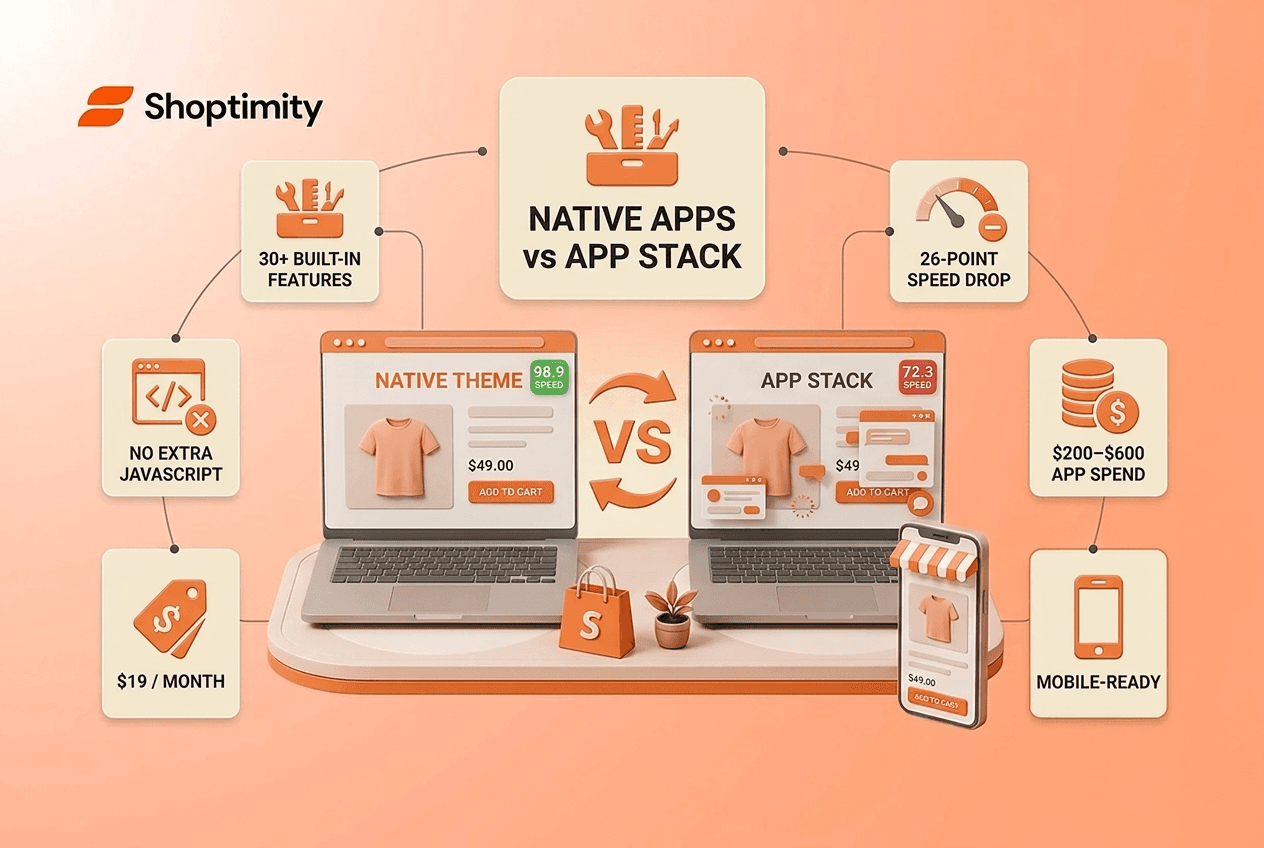
Why 30+ Native Apps Beat Building a Shopify Store Without Them in 2026
Most Shopify store owners are hemorrhaging money on the wrong things. You're paying $10 to $49 per m...
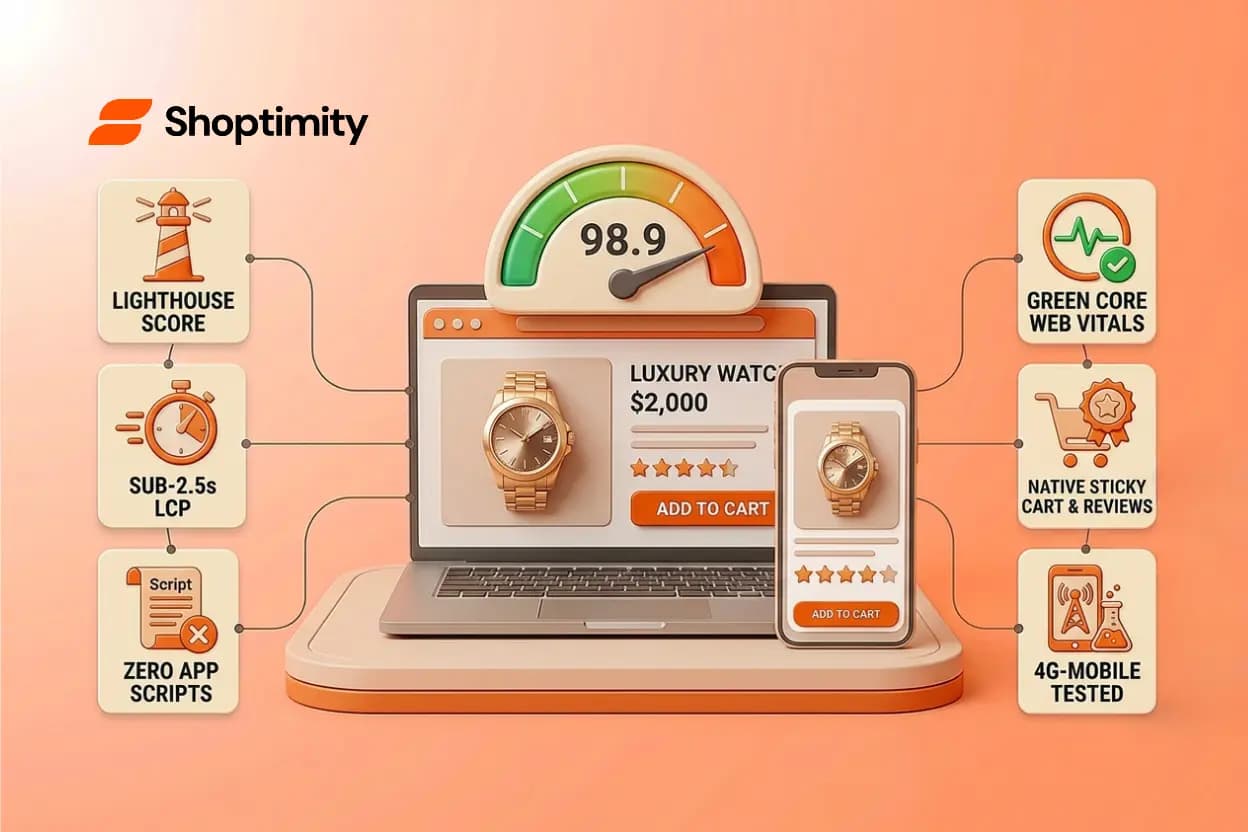
98.9 Speed Score: Why High-Ticket Dropshippers Need Lightning-Fast Shopify Themes
Every second your store takes to load costs you money. For high-ticket dropshippers selling products...
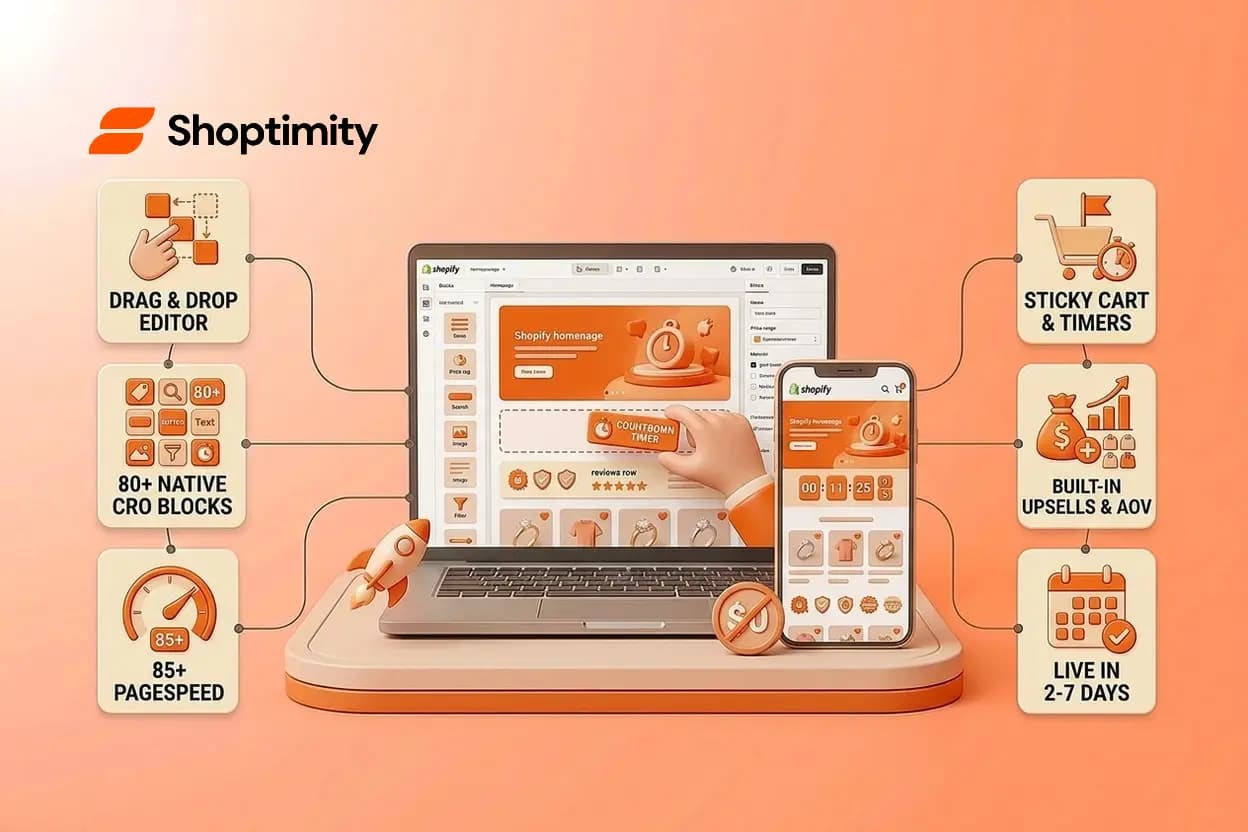
Launch a Conversion-Optimized Shopify Theme Without Coding in 2026
Most dropshippers and brand builders waste thousands of dollars on developer fees and monthly app su...