
Shopify Storefronts in 2026: Headless, AI-Powered, and Built for Speed
Your online store's speed and design directly impact whether customers buy or bounce. In 2026, these digital shops have evolved dramatically: headless architecture is now the norm for scaling brands, AI-powered design tools let you customize them without code, and agentic versions are being structured so AI systems like ChatGPT can understand your products natively. The question isn't whether you need a modern approach anymore. It's which path fits your business.
TL;DR:
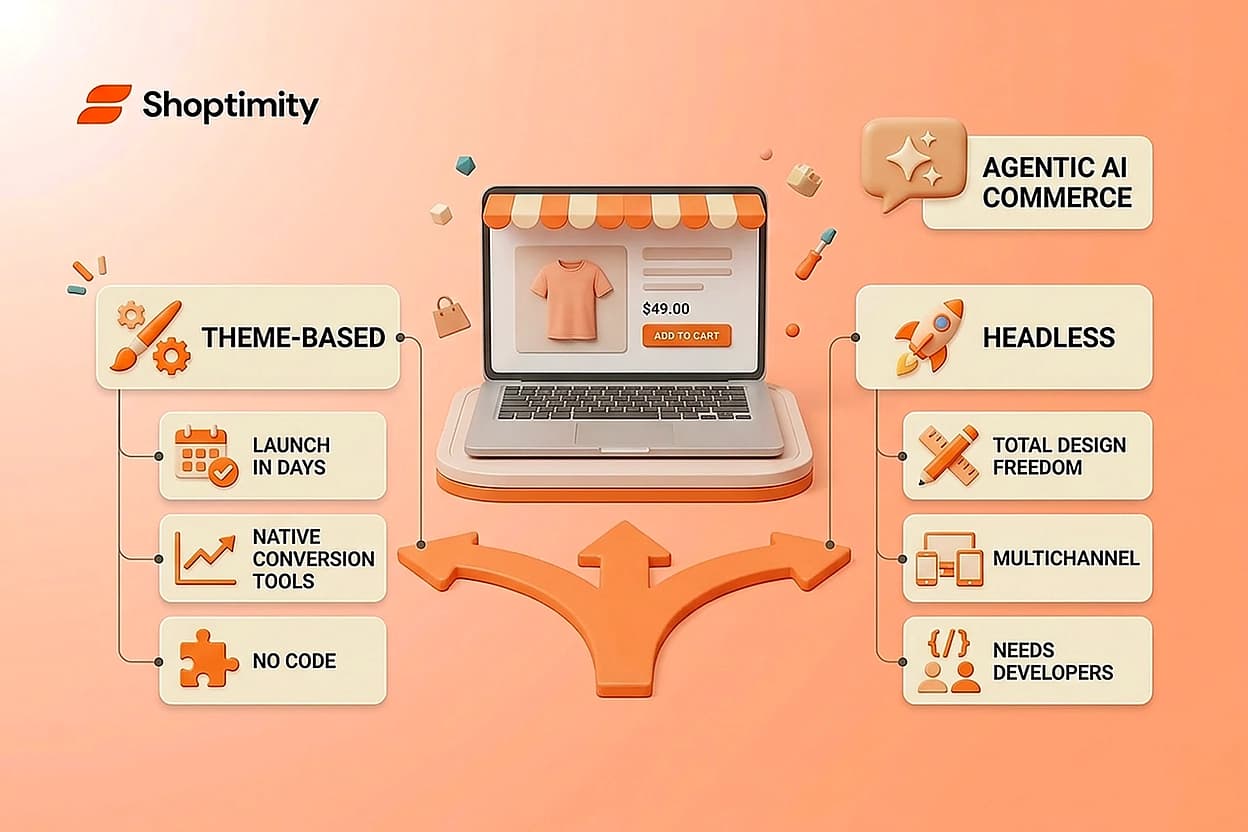
- Modern Shopify offerings split into two paths: headless (full design freedom, requires technical setup) and theme-based (faster launch, built-in conversion tools, no developer needed).
- Shopify Hydrogen, rebuilt in 2026 as a framework-agnostic toolkit, now decouples from Remix and Oxygen lock-in, giving developers choice but requiring manual optimization.
- AI-powered design tools and agentic versions let merchants generate and customize high-converting stores via text prompts, no coding required.
- Merchants using AI features see 18% higher conversion rates and 3.2x faster product listing creation.
- Page speed, mobile-first design, and native conversion tools (sticky carts, quantity breaks, variant links) are non-negotiable in 2026.
What Are Modern Shopify Storefronts?
A Shopify storefront is your online store's front end: the pages, navigation, product displays, and checkout experience that customers interact with. In 2026, these come in two flavors.
Theme-based versions use pre-built or customized Shopify themes. You pick a theme, customize it visually (colors, layout, sections), and launch in days. No coding required. These include built-in features like sticky add-to-cart buttons, product quick views, and one-click checkout integrations. Most boutique brands and high-ticket dropshippers start here.
Headless approaches decouple your store's backend (products, inventory, checkout) from the frontend (design, experience). You build a completely custom interface using a framework like React, Next.js, or SvelteKit. This gives you total design freedom and the ability to serve the same product data across multiple channels (web, mobile app, social commerce). The trade-off: headless requires developer expertise and ongoing optimization work.
The choice between theme-based and headless determines your timeline, cost, and long-term flexibility.
For most brands scaling in 2026, the decision comes down to speed to market versus design customization. A boutique apparel brand launching in weeks typically chooses a theme-based approach. A high-ticket furniture company with complex customer segments might choose headless. Both are viable; the fit depends on your team and timeline.
How Shopify Hydrogen Changed Custom Approaches
Hydrogen is Shopify's React-based framework for building custom storefronts. For years, it was tightly bound to Remix and Shopify's Oxygen hosting platform. In Spring 2026, Shopify rebuilt Hydrogen as a framework-agnostic toolkit, decoupling it from those dependencies.
What that means: developers can now run Hydrogen on any stack, Next.js, SvelteKit, or any Node-based framework. You're no longer locked into Oxygen. That's freedom.
Here's the catch. Staying with Oxygen means Shopify manages edge caching and sub-request optimization for you. Cold-start times are predictable, and performance is handled. Moving to Vercel, Netlify, or another host means your team owns cache strategy, webhook management, and performance tuning. Shopify's research shows the gap in cold-start behavior and edge-cache efficiency depends entirely on your middleware footprint. A lightweight implementation might see negligible differences. A complex setup with real-time inventory, personalization, and multiple integrations could face significant engineering overhead.
Most developers choosing headless in 2026 benchmark their own stack rather than trusting headline performance claims. The flexibility is real. The responsibility is too.
For brands considering Hydrogen, recent updates added variant links (so URLs open on specific product variants), cart refresh capabilities, and local HTTPS certificates for faster local testing. These reduce friction in development but don't change the fundamental complexity.
Agentic Storefronts and AI-Powered Design
The most exciting shift in 2026 is agentic commerce: digital shops designed so AI systems (ChatGPT, Claude, etc.) can understand your products, categories, and customer intent natively. Shopify's Winter 2026 release introduced this capability in AI chat platforms, meaning customers can browse and buy directly within ChatGPT or similar tools.
This isn't just a gimmick. AI-native designs understand customer intent better and can route people to the right product faster. More importantly, AI-powered design tools let non-technical merchants build these experiences from scratch.
Merchants using AI features report striking gains: 18% higher conversion rates, 3.2x faster product listing creation with Magic (Shopify's content generation tool), and 41% time saved on merchandising tasks. For dropshippers and brand builders juggling dozens of SKUs, this changes the game.
The shift is real: you no longer need a developer to design a high-converting shop. Tools like AI theme generators let you describe what you want ("modern, minimal, purple and white, focus on customer reviews") and get a fully customized experience. The design adapts as you refine the prompt.
Headless Commerce Trends Reshaping Digital Retail
Headless commerce adoption is accelerating. In 2026, 62% of companies report that headless approaches improve conversions, and the reasons are clear: faster load times, total design freedom, easier multichannel expansion, and higher engagement.
This architecture isn't just for tech-heavy enterprises anymore. More mid-market brands are exploring it as they scale. The barrier to entry has dropped with better tooling (Hydrogen, Storefront API improvements, improved GraphQL support).
But here's what many brands get wrong: they assume decoupled architecture automatically means faster. Speed depends on how well your implementation is optimized. A headless build can be slower than a well-built theme if it's poorly cached, has too many API calls, or uses unoptimized images. Shopify's Oxygen offering solves some of this automatically; other hosting requires careful architecture.
The real win of this approach in 2026 is multichannel simplicity and design differentiation, not speed alone.
Building Faster, High-Converting Storefronts in 2026
Regardless of which path you choose, winning implementations in 2026 share common traits.
Speed is table stakes. Mobile experiences under 3 seconds load time see dramatically lower bounce rates. PageSpeed and Core Web Vitals rank directly in Google's algorithm. A theme-based approach on a quality framework (built on Shopify Online Store 2.0 with optimized code) can hit 98+ speed scores out of the box. Headless implementations require more work to reach the same result.
Mobile-first design isn't optional. 80% of your sales happen on mobile. These experiences must be designed mobile-first: responsive navigation, single-tap add-to-cart, fast checkout. Sticky carts, one-page checkout, and guest checkout paths directly lift conversion rates.
Native conversion tools beat third-party apps. Sticky add-to-cart buttons, quantity breaks, product quick views, and pre-order functionality built natively load faster and integrate directly than bolt-on apps. Each third-party addition adds overhead, complexity, and monthly fees.
A/B testing and data-driven design separate winning implementations from the rest. Shopify added native A/B testing to the platform in 2026. Storefronts that test checkout flows, product page layouts, and navigation patterns see measurable lift.
The path forward: choose whether you need total design control (headless) or want to launch faster with built-in conversion tools (theme-based). Either way, optimize for speed, mobile experience, and native conversion features before adding complexity.
Ready to stop guessing and start building a storefront that converts? Explore conversion-focused Shopify themes built with 30+ native tools, mobile-first design, and AI-powered customization, all in one subscription.
Continue Reading
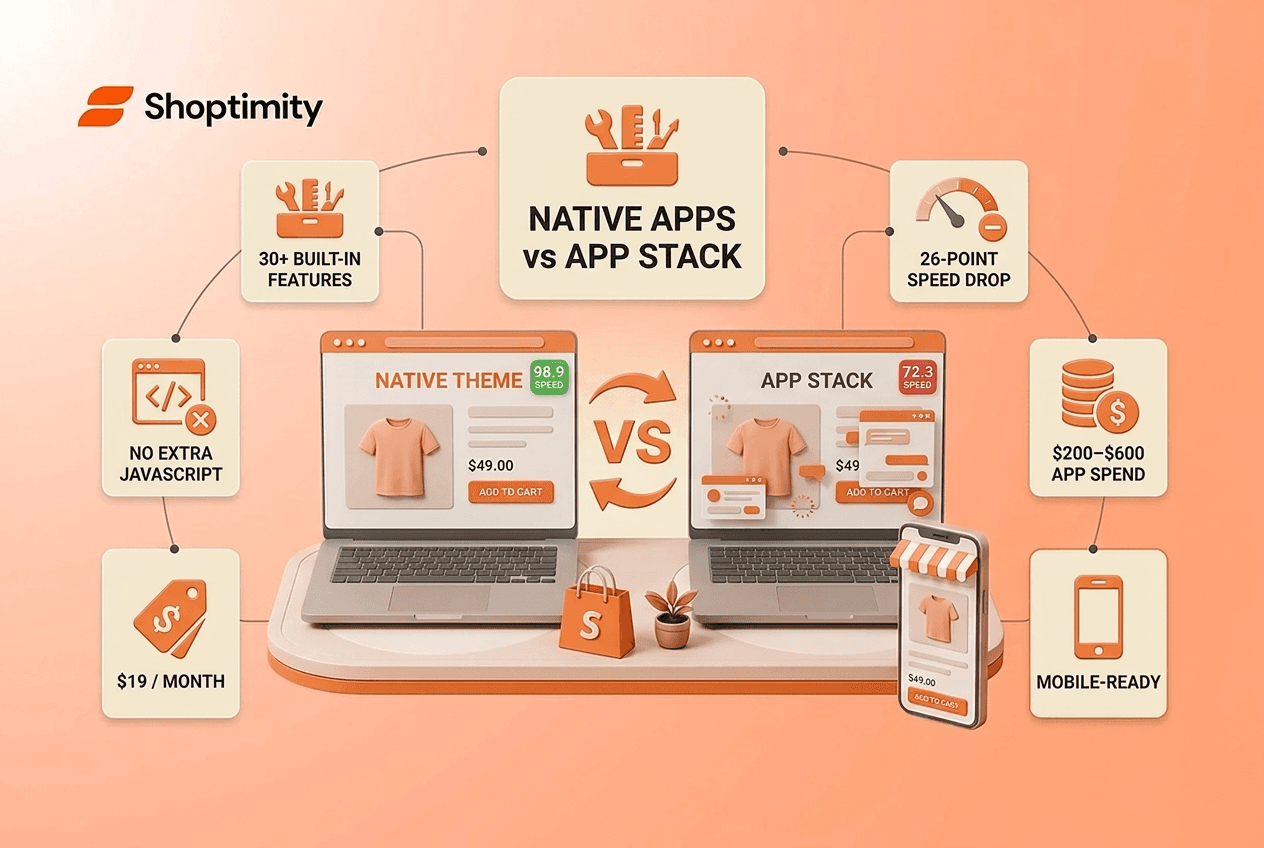
Why 30+ Native Apps Beat Building a Shopify Store Without Them in 2026
Most Shopify store owners are hemorrhaging money on the wrong things. You're paying $10 to $49 per m...
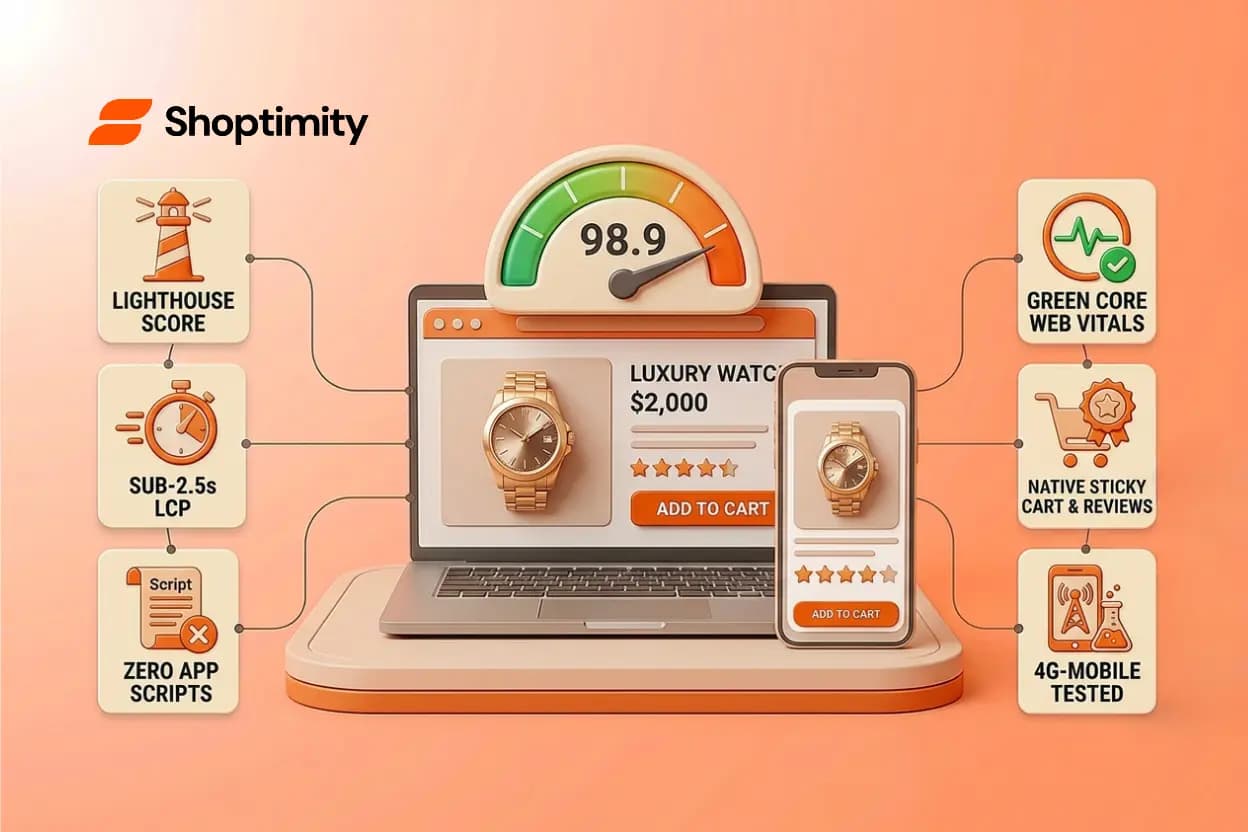
98.9 Speed Score: Why High-Ticket Dropshippers Need Lightning-Fast Shopify Themes
Every second your store takes to load costs you money. For high-ticket dropshippers selling products...
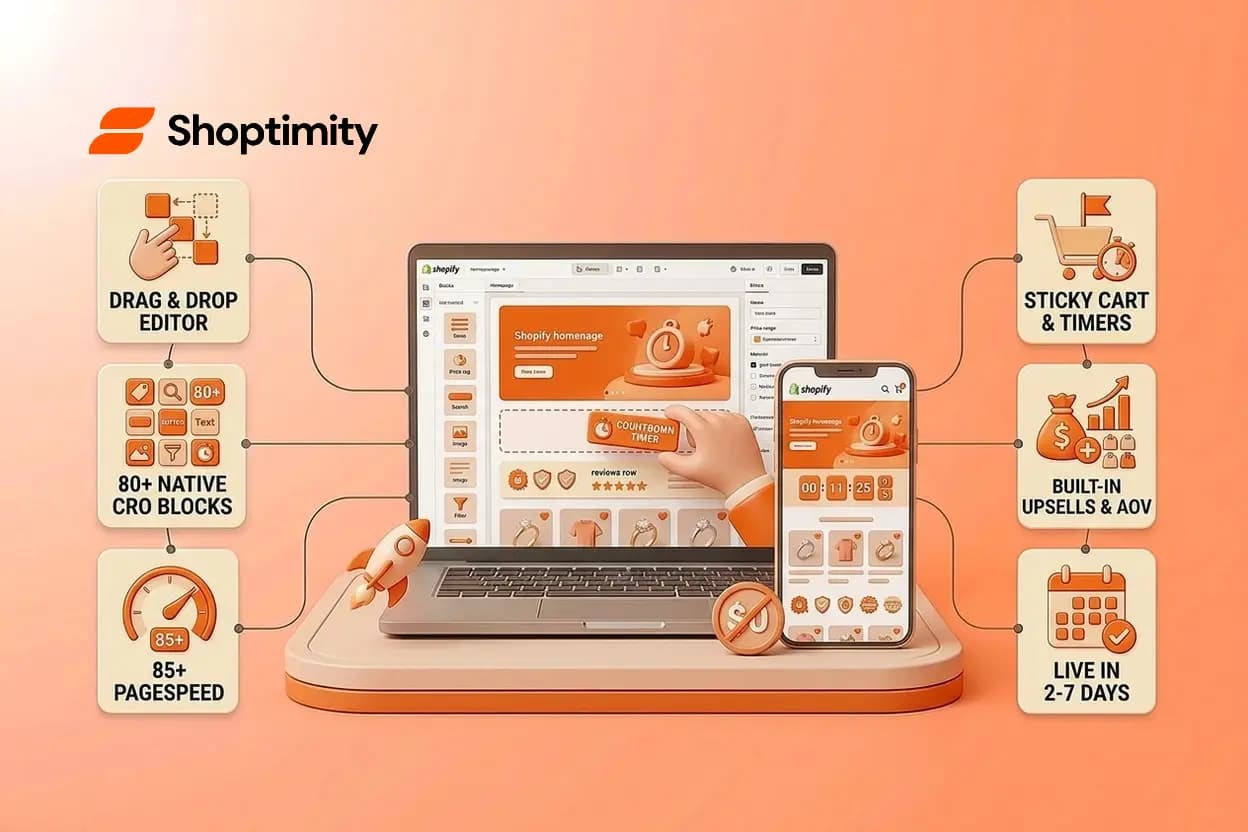
Launch a Conversion-Optimized Shopify Theme Without Coding in 2026
Most dropshippers and brand builders waste thousands of dollars on developer fees and monthly app su...