
Shopify Theme Store vs ThemeForest: Where to Buy in 2026
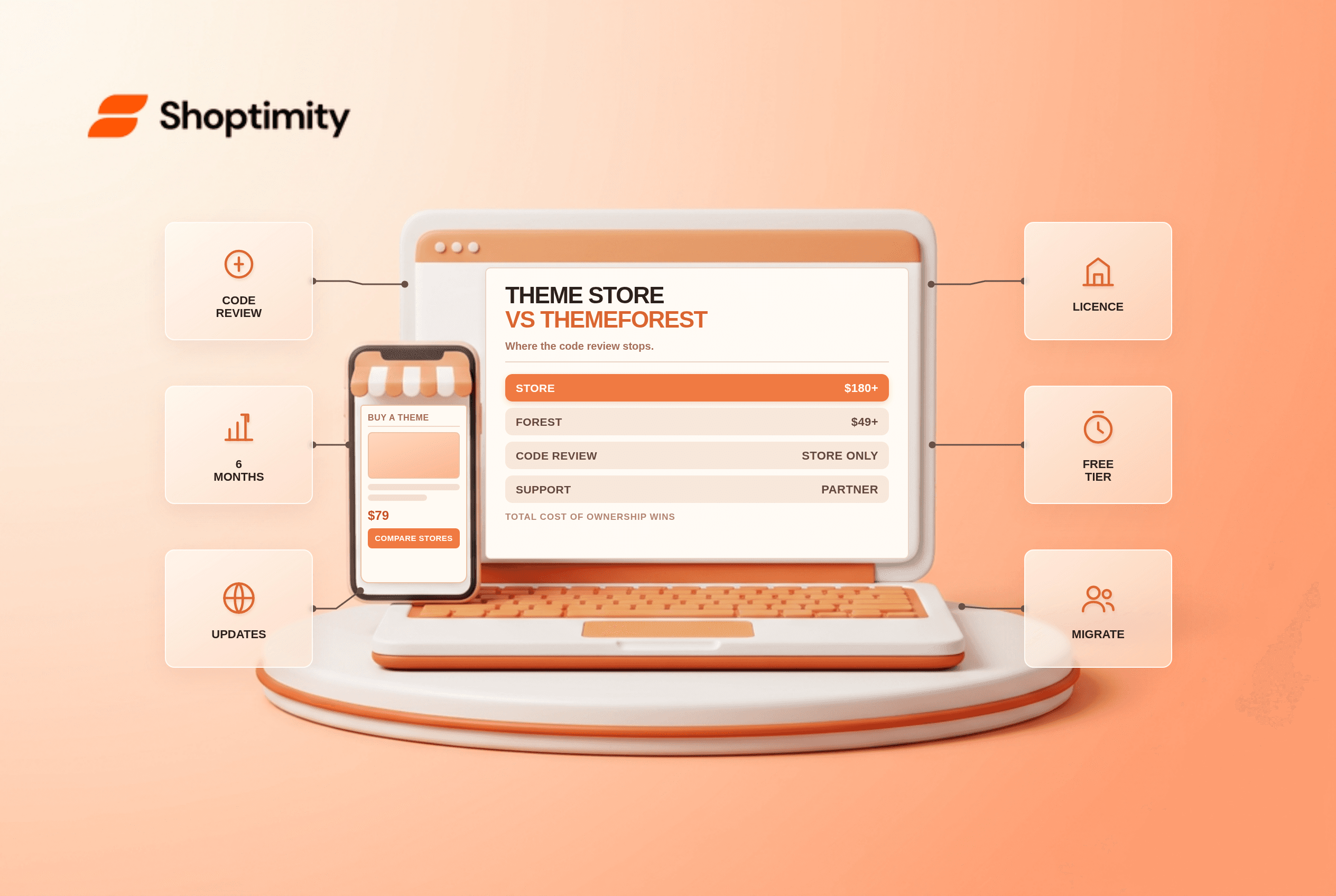
Buy from the Shopify Theme Store if you want platform code review, support obligations and updates delivered inside your admin. Buy from ThemeForest if you want a wider design range at a lower one-time price and you are willing to verify the code and manage the relationship yourself. Both are legitimate. They fail in different places.
What the Shopify Theme Store guarantees
Every theme in the Shopify Theme Store passes a code review before listing and on each update. Shopify sets partner requirements for support response, and themes must meet the performance and architecture thresholds required to stay listed.
Updates arrive through your theme library. You click update, the theme version changes, and your customizations live in the editor rather than in the theme files. That single design decision is why theme updates rarely break a Theme Store store.
According to Shopify's partner requirements, support obligations matter when something breaks during a sale. Theme Store developers are required to respond, and Shopify can remove a theme that stops meeting requirements. You are not relying on a marketplace dispute process.
What ThemeForest gives you instead
ThemeForest, run by Envato, is a marketplace. Authors publish themes, Envato handles the transaction, and the code is not reviewed by Shopify. A theme like Glozin can be well built and still sit outside every guarantee above.
Support typically runs six months from purchase, extendable for a fee. Updates arrive when the author publishes them, and you re-download and reinstall. Item support quality varies by author, and the marketplace's dispute process is slower than a support queue.
What you get in return is range and price. Themes commonly list between $49 and $89, and the design variety is wider than the Theme Store's curated catalog.
| Shopify Theme Store | ThemeForest | |
|---|---|---|
| Code review by Shopify | Yes, at listing and update | No |
| Typical price | $180 to $400 | $49 to $89 |
| Support terms | Partner requirements | 6 months, extendable |
| Updates | In-admin theme library | Manual re-download |
| License | One store per purchase | One end product |
| Buyer fee | None | Envato buyer fee added |
The hidden line in both models
A Theme Store theme costs more upfront and less in maintenance. A marketplace theme costs less upfront and more in the hours you spend testing, patching and re-checking after updates.
In our experience, the crossover lands around the third month. If you never customize and never update, the marketplace theme stays cheaper. If you maintain the store, the maintenance cost overtakes the price difference quickly.
Neither number is visible on the listing page, which is why price comparisons between the two marketplaces mislead. Compare total cost of ownership over two years, not sticker price.
What to check before buying from either
Five things decide whether a theme will still work for you in a year.
Check the update date. A theme last updated more than eight months ago is a risk on both marketplaces, and a bigger one on ThemeForest.
Check the demo against a slow mobile connection. A demo that loads in 1.2 seconds on fiber can take six on a mid-range Android phone.
Check variant and filtering behaviour with more than fifty products. Demo stores are tidy. Real catalogs are not.
Check the changelog for platform features you depend on, especially checkout customization and Markets-specific templates.
Check the license terms for the number of stores you intend to run. Both marketplaces charge per store, and neither is generous about it.
Where the Theme Store wins outright
New stores, stores running paid traffic, and stores with no developer on call should start in the Theme Store. The guarantees are worth more than the price difference, particularly when the free themes are genuinely good in 2026.
Free themes from Shopify now include block-based editing and section generation. A founder can launch a credible storefront for zero theme cost, which raises the bar for what a paid theme has to add. Our guide to paid versus free themes covers where the free tier stops being enough.
Where ThemeForest wins
Stores with a specific design need that the Theme Store does not serve, and a developer or an experienced founder on hand, get more for their money on ThemeForest. Niche aesthetics, unusual catalog structures and multi-demo flexibility are the honest cases.
If you are choosing between them and the answer is not obvious, read what paid Shopify themes are worth in 2026. The cheapest theme that fits your catalog is usually the right one, and it is rarely the one with the longest feature list.
Ready to build a faster, higher-converting store?
Every Shoptimity theme ships with conversion widgets built in — so you get speed and features without stacking apps.
7-day free trial · all themes included · cancel anytime
Continue Reading
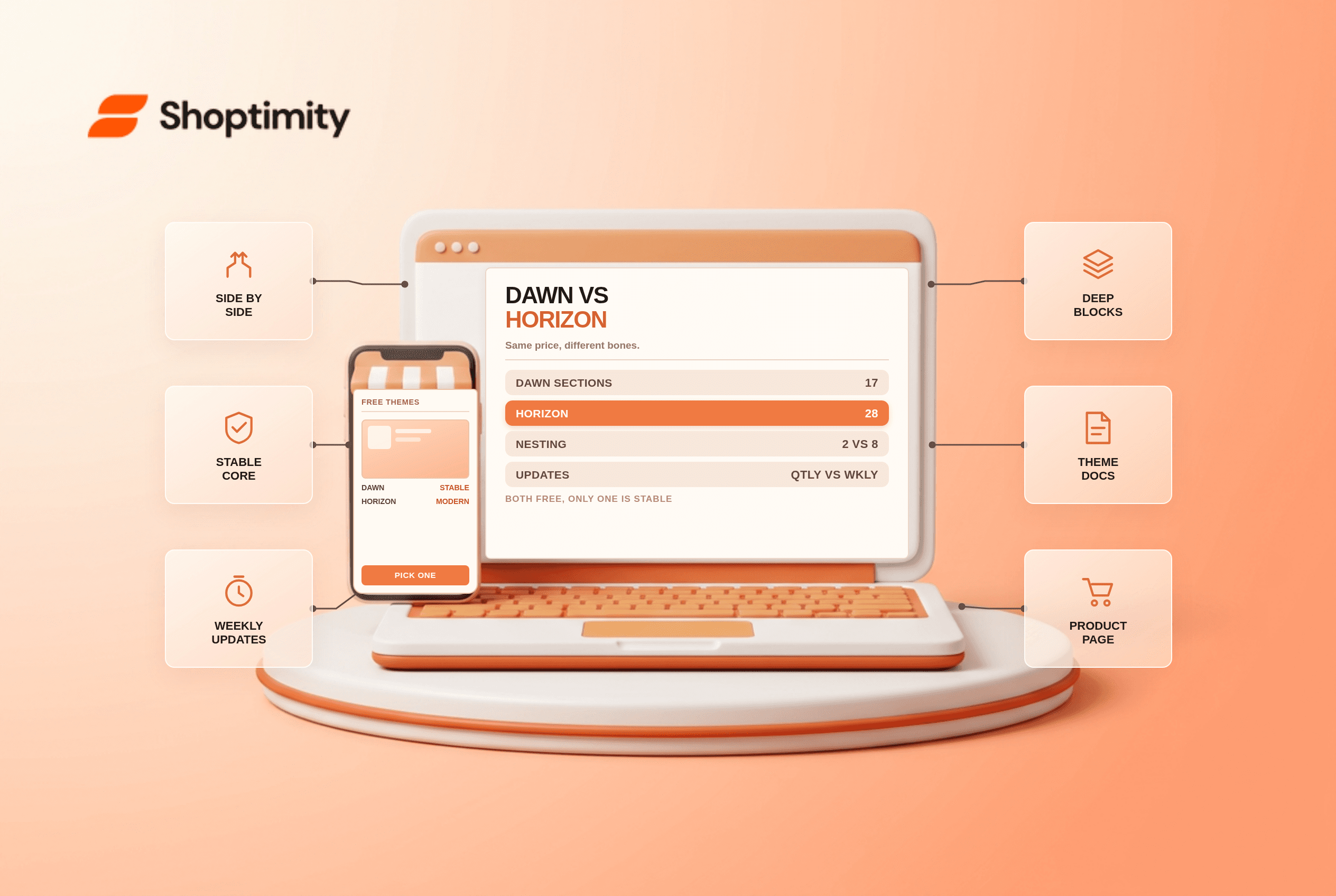
Shopify Dawn vs Horizon: Which Free Theme to Start With in 2026
Both free, very different builds. Horizon gives 28 sections and deep nesting, Dawn gives stability. ...
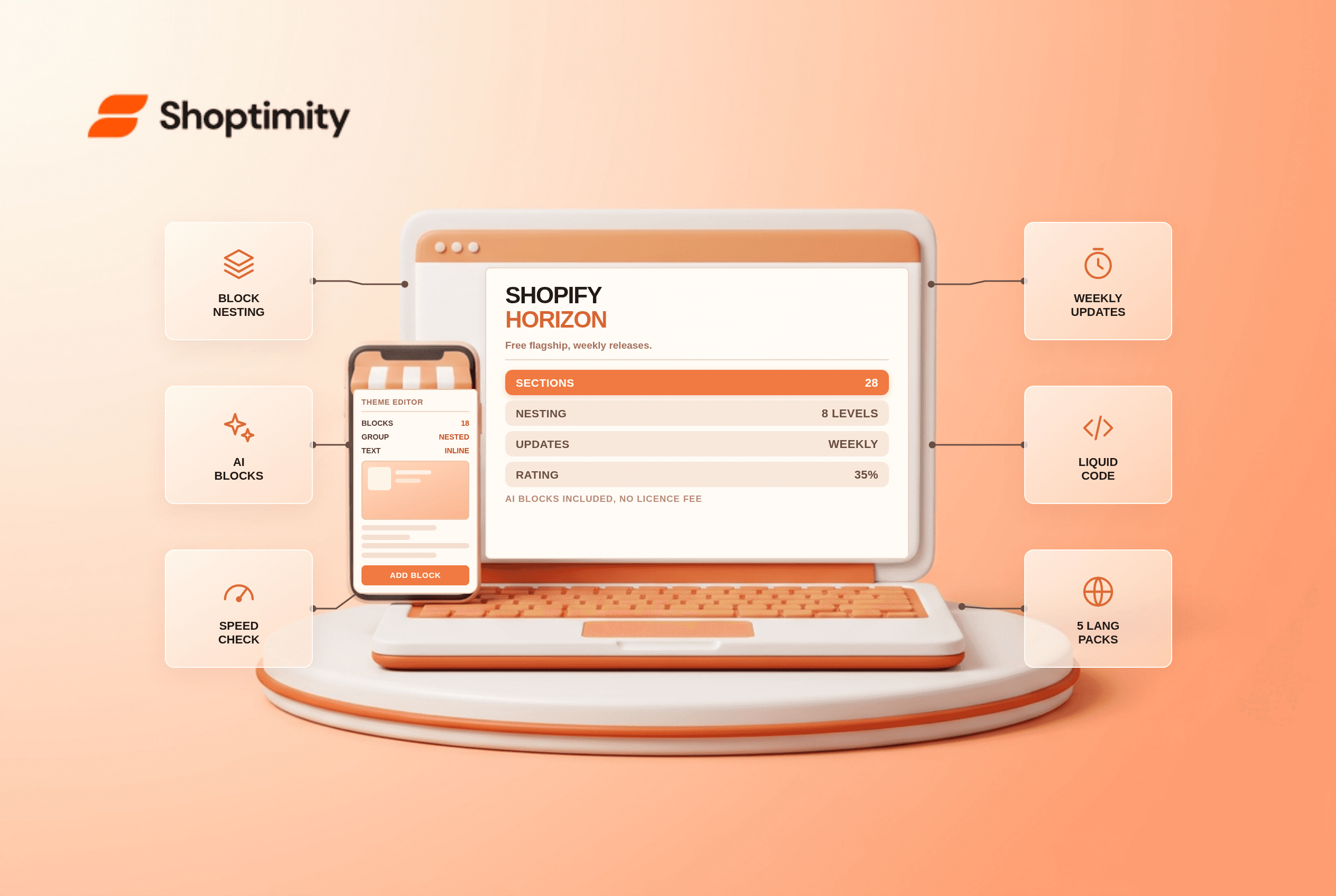
Shopify Horizon Theme Review 2026: The Best Free Theme, With a Catch
Horizon is free, block-based and AI-assisted, with a 35% merchant rating. What it does better than D...
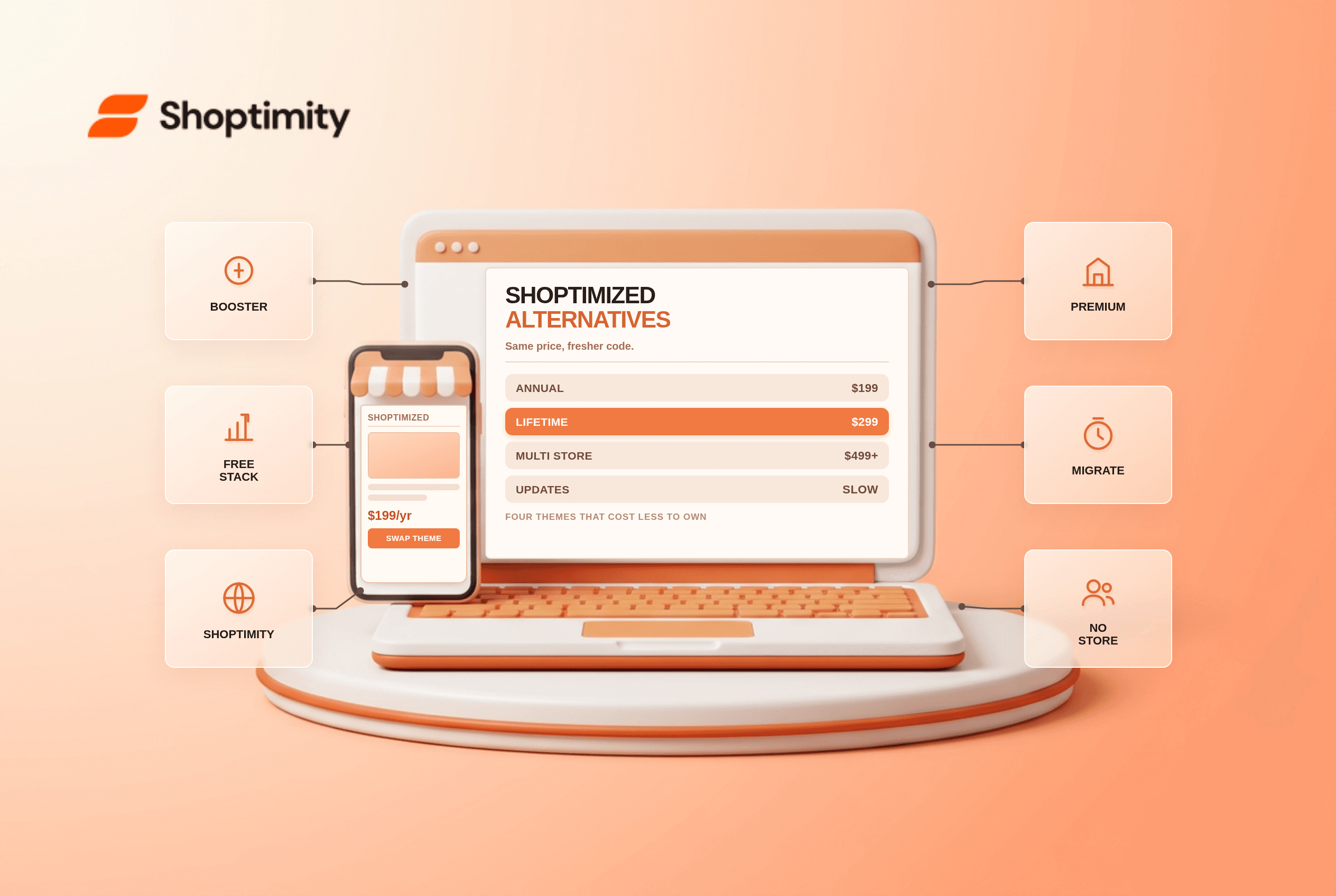
Shoptimized Alternatives 2026: Four Themes That Cost Less to Own
Shoptimized still costs $199 a year while its app bundle went native. Four alternatives compared on ...