
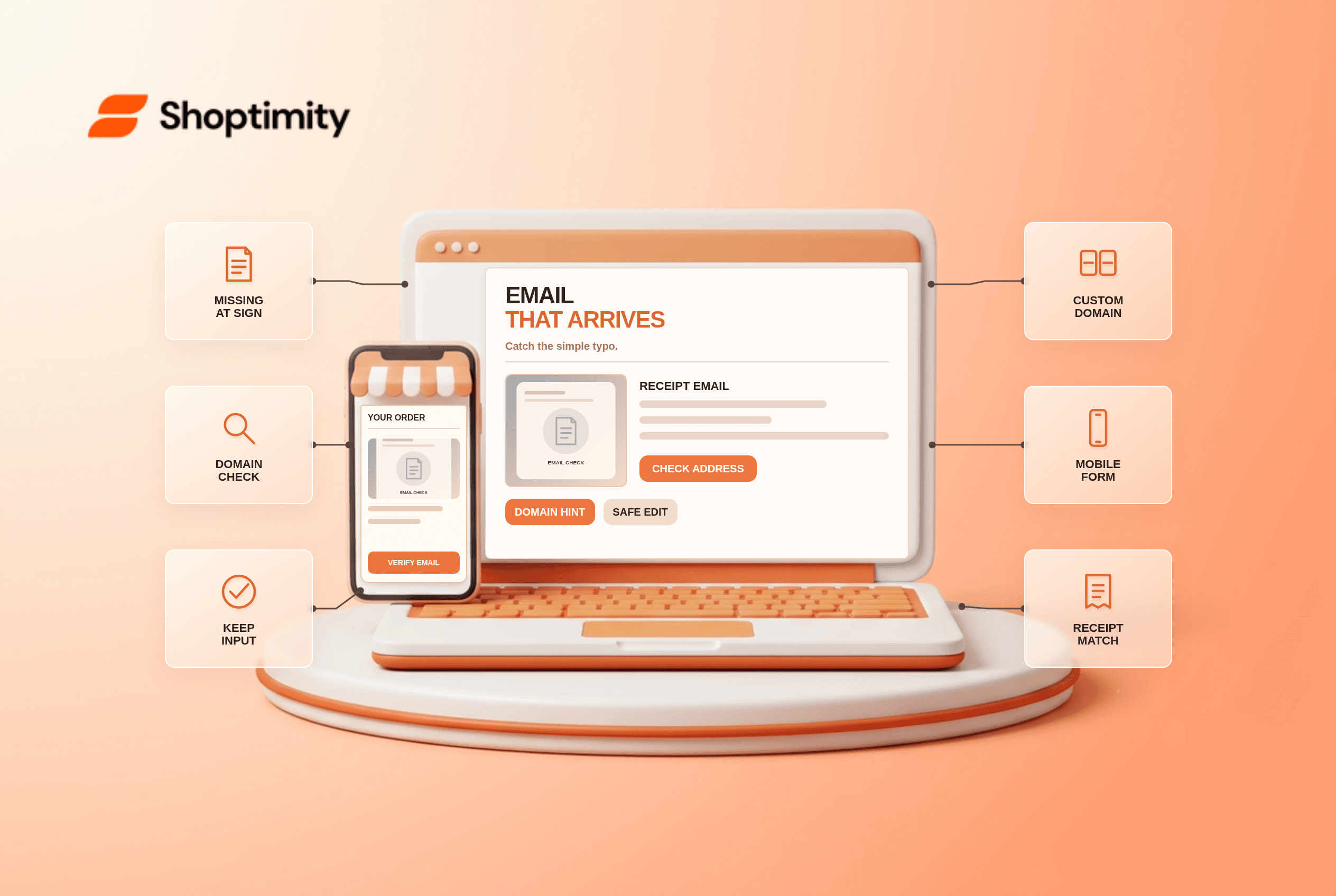
Checkout email typo recovery should explain the specific mistake, preserve form data and let buyers verify where order messages will arrive. Start by testing one real customer journey and one exception before changing a template. The store needs accurate underlying data; a theme can present it, but cannot make an incorrect warehouse, catalog or payment record true.
What does the research say about checkout email typo recovery?
Use the finding as a diagnostic, not a conversion forecast. According to Baymard’s adaptive-error research, 98% of sites in its 2023 benchmark lacked error messages tailored to the specific problem. Its examples distinguish a missing @ sign from an incomplete email domain.
Baymard’s 2026 checkout guide recommends preserving user input after recoverable errors. A mistyped contact address should not force a shopper to reenter delivery and payment choices.
When should checkout flag an email typo?
Lead with the fact that changes the decision. Validate format without claiming that every unfamiliar domain is invalid. Offer a suggestion for likely typing errors, but let the shopper retain a real custom domain. Show the entered receipt email in order review or confirmation. If a customer notices an error after placing an order, provide a secure support path to correct future notifications without exposing another customer’s order.
A buyer types alex@gmial.com. A gentle “Did you mean gmail.com?” suggestion can help. A buyer with a real company domain should not be blocked just because the address is uncommon. Confirm the final value used for the receipt before the transaction completes.
How can shoppers correct a receipt address?
Keep the message consistent after selection. A card, form or account screen is only one view of a wider system. Update the customer-facing display when the selection changes; preserve the relevant detail in cart, checkout and confirmation where applicable. If a feature depends on backend rules, give the owner of those rules a concrete test case before promising behavior in editorial copy.
How can a team test this before launch?
Test the edge case that makes the promise fail. Use a representative product, location or account alongside the happy path:
- Test missing @, incomplete domain and valid custom domains.
- Avoid replacing the shopper’s entry without explicit acceptance.
- Preserve all other checkout data after an email correction.
- Show the selected email in confirmation without exposing it publicly.
- Test guest orders and existing-account email differences.
- Confirm order notifications use the corrected address.
What exception needs special handling?
Do not turn uncertain data into a confident claim. A valid-looking email can belong to someone else. Do not reveal order details to an unverified replacement address through an insecure edit link. Keep account authentication and guest-order verification distinct. Some mailboxes intentionally use plus aliases, which should not be rejected.
What should Shoptimity merchants check?
Verify operations before polishing the storefront. Our recommendation is to confirm the customer-visible promise against the source record before launch. Shoptimity themes can display information; the merchant’s platform and connected systems own most transaction rules. See the checkout phone field guide and order confirmation guide for adjacent checks. We checked the cited public studies, not this merchant’s analytics or live setup. The study figures are neither Shoptimity results nor a promised sales improvement.
What signals matter after launch?
Compare what customers saw with what actually happened. Review undeliverable order receipts and support requests for email corrections. Syntax validation cannot guarantee deliverability. Save dated examples so the team can diagnose a data error separately from confusing copy.
Ready to build a faster, higher-converting store?
Every Shoptimity theme ships with conversion widgets built in — so you get speed and features without stacking apps.
7-day free trial · all themes included · cancel anytime
Continue Reading
Shopify Flow Fulfillment Order Moved: Location Alerts
Build an internal alert for moved fulfillment orders and verify location changes with your third-par...
ShopifyQL Timeseries: Show Missing Months in Sales
Use ShopifyQL TIMESERIES to expose empty reporting periods and compare them with GROUP BY results ca...
Shopify Flow Return Declined: Build a Review Handoff
Set up a cautious Shopify Flow return-declined review and distinguish internal reasons from customer...