
Shopify Customer Segments: Separate Membership From Email Consent
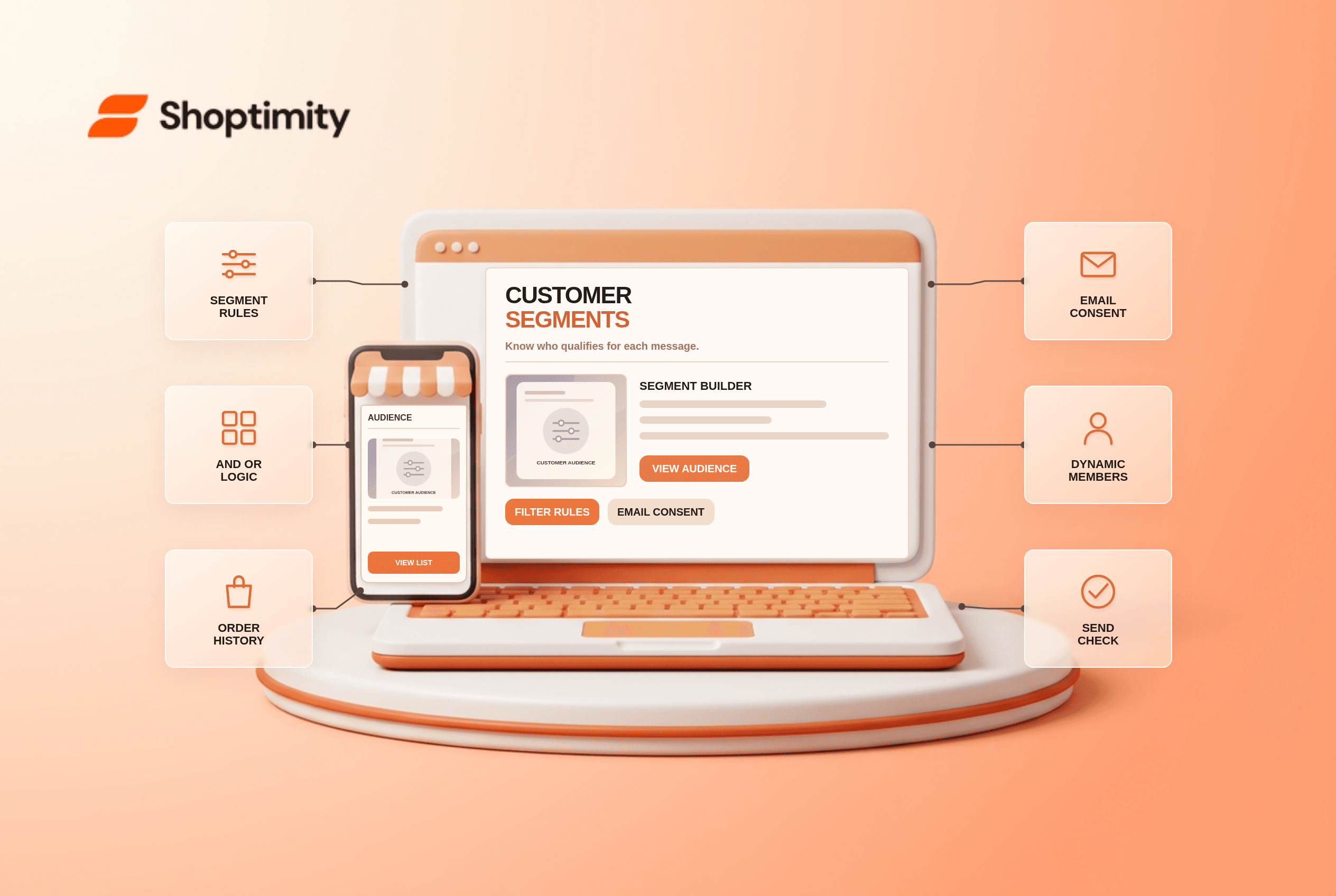
Shopify customer segments group people by rules such as purchase history, location, tags or subscription status. The list updates as customer data changes. A segment containing 2,000 customers is not automatically a list of 2,000 people you can email. Build the audience logic, then check marketing consent and valid addresses before sending a campaign.
How do customer segments update?
Segments are dynamic, rule-based groups. Shopify's segmentation overview says customers are included or removed as they meet or stop meeting the criteria. The segment components guide describes filters, operators, values and AND or OR connectors. AND narrows a group; OR broadens it. A VIP definition using five orders or an email subscription can include first-time subscribers who have bought nothing, which might not be what the merchant intended.
Shopify provides templates and a query editor for creating segments. You do not need to write every query by hand, but you should read the resulting criteria. Use one business question per segment, such as “subscribed repeat buyers,” and document the definition.
How should you validate an audience?
Test membership and send eligibility separately. Take 3 known customer profiles with different histories and marketing states.
- In Customers > Segments, choose a template or create a segment with relevant filters. Review the exact connector between conditions.
- Apply or run the query and inspect a few included profiles. Find one customer you expect to include and one you expect to exclude.
- Check whether test and deleted orders affect the expected purchase count. Shopify excludes them from segmentation calculations.
- If you plan to send email, add an email-subscription-status condition when appropriate, then check each profile's current consent state.
- Preview the campaign and estimate the actual eligible recipients. Shopify Messaging only sends to subscribed customers with valid email addresses; the send count can be smaller than segment membership.
- Save the segment with a descriptive name and owner. Recheck it before a later campaign because dynamic membership can change.
Shopify's segment-management guide says one customer can belong to multiple segments. Deduplicate campaign journeys if several automations target overlapping groups. A query is a targeting tool, not permission to ignore local marketing-consent rules.
Why does the segment size differ from email recipients?
Segment membership and deliverability are different filters. A customer might match the spend rule yet be unsubscribed or have an invalid email. Shopify Messaging checks eligibility before sending. For example, a group of “more than five orders” can include offline customers who have never agreed to marketing. Inspect the campaign's eligible audience rather than treating the segment total as the send total.
The Shopify filter reference includes email subscription status, order count, spend, location and more. Some filters depend on store data or plan availability, so use the editor's current options and test the exact result. If an abandoned-checkout automation is active, our recovery checklist is relevant; it may still be a draft.
What does a theme do here?
A Shoptimity theme can present a signup or customer-facing content, not grant marketing consent after the fact. Shopify customer records, segmentation and the sending service determine campaign eligibility. Theme versus app responsibilities helps map ownership. We checked Shopify's public guidance, not your privacy policy or subscriber records. Review legal requirements for each market before sending.
Ready to build a faster, higher-converting store?
Every Shoptimity theme ships with conversion widgets built in — so you get speed and features without stacking apps.
7-day free trial · all themes included · cancel anytime
Continue Reading
Top Shopify Theme for Wholesale: A 2026 Buyer's Guide
You've just spent weeks sourcing inventory and building supplier relationships. But when you launch ...
Ecommerce Return Status Updates: Separate Request and Refund
Ecommerce return status updates should separate request, label, receipt, inspection and refund so sh...
Ecommerce Delivery Delay Updates: Show the New Reality
Ecommerce delivery delay updates should replace stale promises with a dated revised estimate, clear ...