
Shopify Widgets for High-Ticket Dropshipping: Build Trust and Boost Conversions in 2026
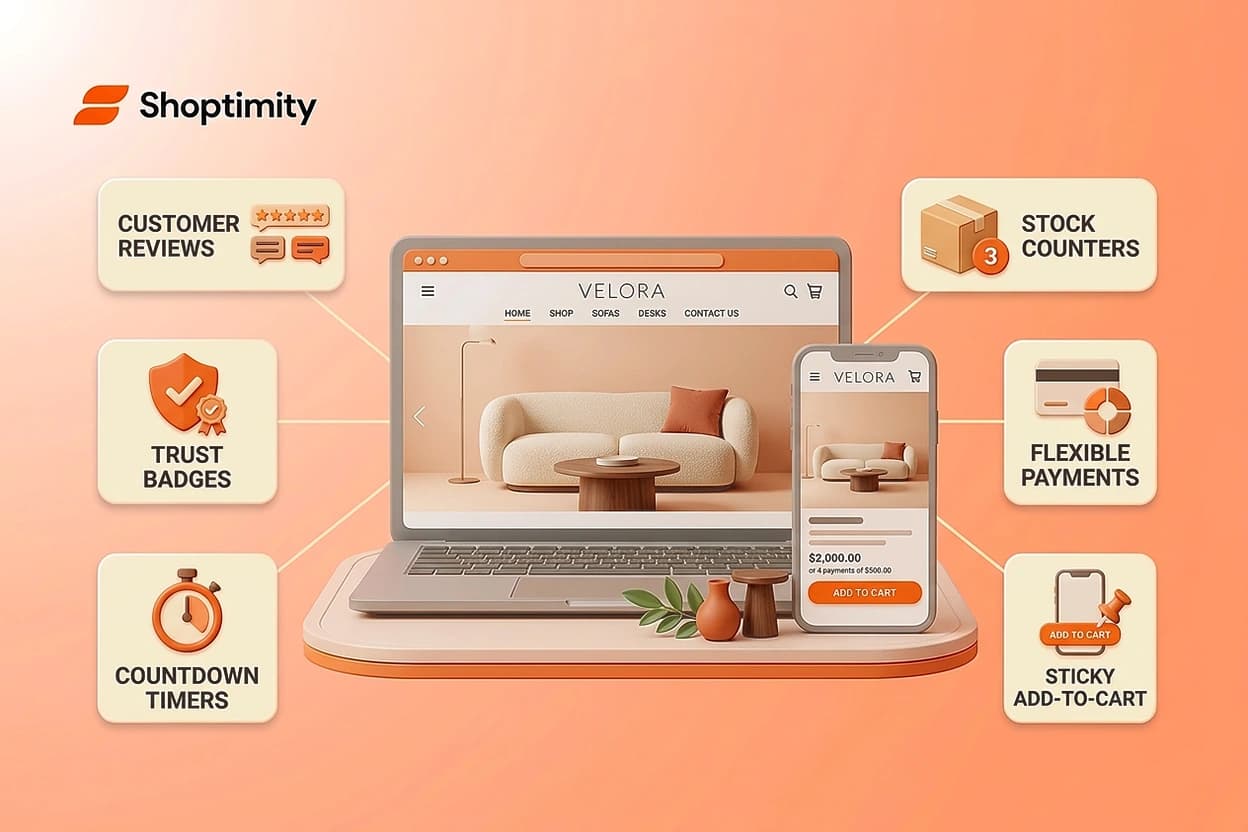
You've found a premium supplier, sourced inventory priced between $500 and $5,000, and launched your Shopify store. But traffic isn't converting. Your visitors browse for minutes, add items to their cart, then ghost you. The problem isn't your product or your ads. It's that high-ticket buyers need proof before they spend four figures on something they've never touched.
That's where Shopify widgets come in. These small, functional blocks, trust badges, countdown timers, customer reviews, payment options, live chat, are the difference between an abandoned cart and a confirmed order. Without them, your store reads like a generic catalog. With the right ones, it reads like a brand worth trusting.
TL;DR: High-ticket dropshippers need widgets that build credibility (reviews, trust badges, guarantees), reduce friction (flexible payment, stock counters, FAQ), and protect margins (upsells, bundles, sticky carts). Stacking 10+ separate apps drains performance and cash. The modern solution is consolidation: one theme subscription that covers most of the widgets a store actually needs natively, cutting monthly app clutter.
What Are Shopify Widgets (And Why They Matter for High-Ticket Stores)
A Shopify widget is a functional block you add to your store. A countdown timer creates urgency. A stock counter signals scarcity. A review widget displays social proof. A payment plan widget lets customers split a $2,000 purchase into four installments.
For high-ticket stores, widgets are non-negotiable. When someone is deciding whether to spend $1,500 on a standing desk or $3,000 on a massage chair, they're asking four questions:
- Is this brand real and trustworthy?
- Can I afford this right now?
- What if I hate it?
- How fast will it arrive?
Widgets answer all four. They're the silent salespeople on your product pages.
Most store owners face app fatigue. The Shopify App Store lists thousands of apps. To get the widgets you need, you install five, ten, sometimes twelve separate subscriptions. Each costs $10 to $30 per month. Your total bill climbs to $50 to $300 monthly, before you've made a single sale. Every app slows your store down, creating a performance death spiral: slower pages drive up bounce rate, which tanks conversion rate, which makes ad spend more expensive.
The smarter approach is consolidating your widgets into your theme itself. Modern high-converting Shopify themes now ship dozens of native conversion tools and 100+ blocks and sections, removing the need for most single-purpose apps.
Shopify Widgets That Build Trust and Credibility
High-ticket buyers research obsessively. They read reviews, check return policies, look for guarantees, and verify that you're a real business. Trust-signal widgets matter most here.
Customer review widgets are your highest-ROI widget. They display star ratings, written feedback, and photos from real buyers. For high-ticket items, reviews reduce perceived risk. A customer hesitating on a $2,000 purchase will often buy if they see ten five-star reviews saying "worth every penny" or "exceeded my expectations."
Trust badge widgets are small visual signals in the footer or near checkout: SSL certificate icons, secure checkout badges, money-back guarantees, awards, certifications. They're not fancy, but they work.
Testimonial sliders or quote carousels let you feature longer customer stories. Instead of a star rating, a customer says: "I was skeptical about spending $4,500 on this sofa, but it's the best purchase I've made in five years." This narrative arc is more convincing than marketing copy you write yourself.
Press logos and media mentions (if you have them) signal authority. A "Featured In" row showing logos from reputable publications or influencer endorsements tells high-ticket buyers that your brand has been vetted by credible third parties.
These widgets work because they shift the burden of proof from you to your customers. You're not telling people your product is great; other people are.
Conversion-Focused Shopify Widgets That Reduce Cart Abandonment
Trust builds interest. Conversion widgets close the sale.
Countdown timers create urgency. They tell customers a sale ends in 2 hours or a discount expires at midnight. High-ticket purchases are deliberate, so a timer doesn't pressure people irrationally; it gives procrastinators a reason to act now instead of "later."
Stock counters work similarly. "Only 3 left!" or "2 in stock" signals scarcity. For high-ticket items with limited inventory or pre-orders, this widget can be the difference between someone adding to cart today or browsing competitors tomorrow.
FAQ and size guide widgets solve common objections before they kill the sale. A customer wants to know: "What's your return window?" "Do you offer white-glove delivery?" "Will this fit in my doorway?" A well-built custom FAQ widget answers these in one click.
Sticky add-to-cart buttons keep your "Buy Now" button visible as customers scroll. On mobile, where 80 percent of e-commerce happens, this cuts the number of scrolls needed to complete purchase. Fewer scrolls mean fewer drop-offs.
Product bundle widgets display "Frequently Bought Together" recommendations. A customer buying a $2,000 office desk might add a $300 task chair and a $150 monitor arm. Bundling them together increases order value on high-ticket purchases.
Wishlist and save-for-later widgets give fence-sitters a way to bookmark without buying. This captures their intent and keeps your brand in their email retargeting lists.
Flexible Payment Shopify Widgets for High-Ticket Items
The single biggest blocker for high-ticket conversions is sticker shock at checkout. A customer loves your $3,000 product but doesn't have $3,000 today.
Buy now, pay later (BNPL) providers solve this. They let customers split purchases into equal installments, sometimes interest-free. In 2025, the Federal Reserve found that 15 percent of adults had used BNPL, and adoption keeps climbing. For merchants, BNPL providers handle underwriting and assume customer debt, so you get paid upfront while the customer pays in installments.
Shop Pay Installments is the lowest-friction option on Shopify. It's built into Shopify Payments in supported regions, so eligible stores can offer installments at checkout and show an installment message on product pages without a separate app. Deposit-now, balance-later payment plans are different: they need a Shopify selling-plan app, not just a theme.
For high-ticket dropshipping, offering BNPL or payment plans is table stakes. These options remove the psychological barrier of large, single payments and give customers more flexibility at checkout.
How to Avoid App Fatigue When Adding Shopify Widgets
Most store owners don't set out to install 12 apps. They start with one (reviews), add another (countdown timer), then a third (live chat), and suddenly their store is slow and expensive.
Here's what a typical mature Shopify store pays:
- Reviews app: $15/month
- Countdown timer: $10/month
- Live chat: $20/month
- Loyalty program: $12/month
- Email capture popup: $8/month
- BNPL or payment plan: $15/month
- Upsell app: $10/month
- FAQ widget: $8/month
That's $98 per month before you've hired an accountant or run a single paid ad. Over a year, that's $1,176 in app fees alone.
App stacking also destroys performance. Every widget forces your browser to load external code from a third-party server. This creates a JavaScript bottleneck that slows page load times, spikes bounce rate, and tanks SEO rankings.
The better path: choose a theme that has most of these widgets built in natively. A conversion-focused theme subscription like Shoptimity bundles 30+ built-in tools and 100+ blocks and sections for $19/month, a fraction of that cost, with new features added regularly. No app stacking, no monthly surprise bills, and better performance built into the architecture.
2026 is the year high-ticket stores stop paying for app clutter and start paying for performance.
Launch a High-Converting Store in Days
You now know which widgets matter. Shoptimity bundles 120+ conversion widgets into one subscription—no app stacking, no monthly clutter, and a 98.9 Speed Score built in. Start free for 7 days.
7-day free trial · all themes included · cancel anytime
Continue Reading
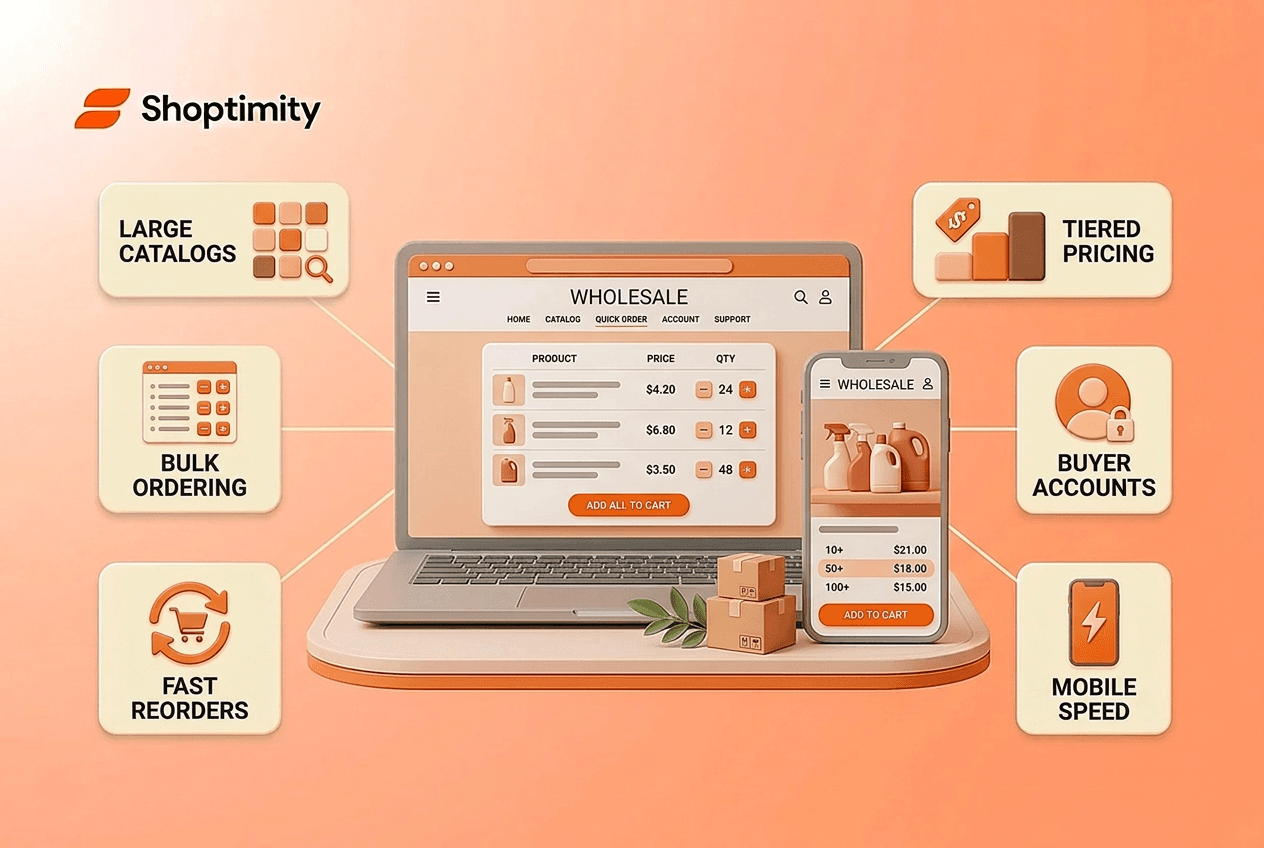
Top Shopify Theme for Wholesale: A 2026 Buyer's Guide
You've just spent weeks sourcing inventory and building supplier relationships. But when you launch ...
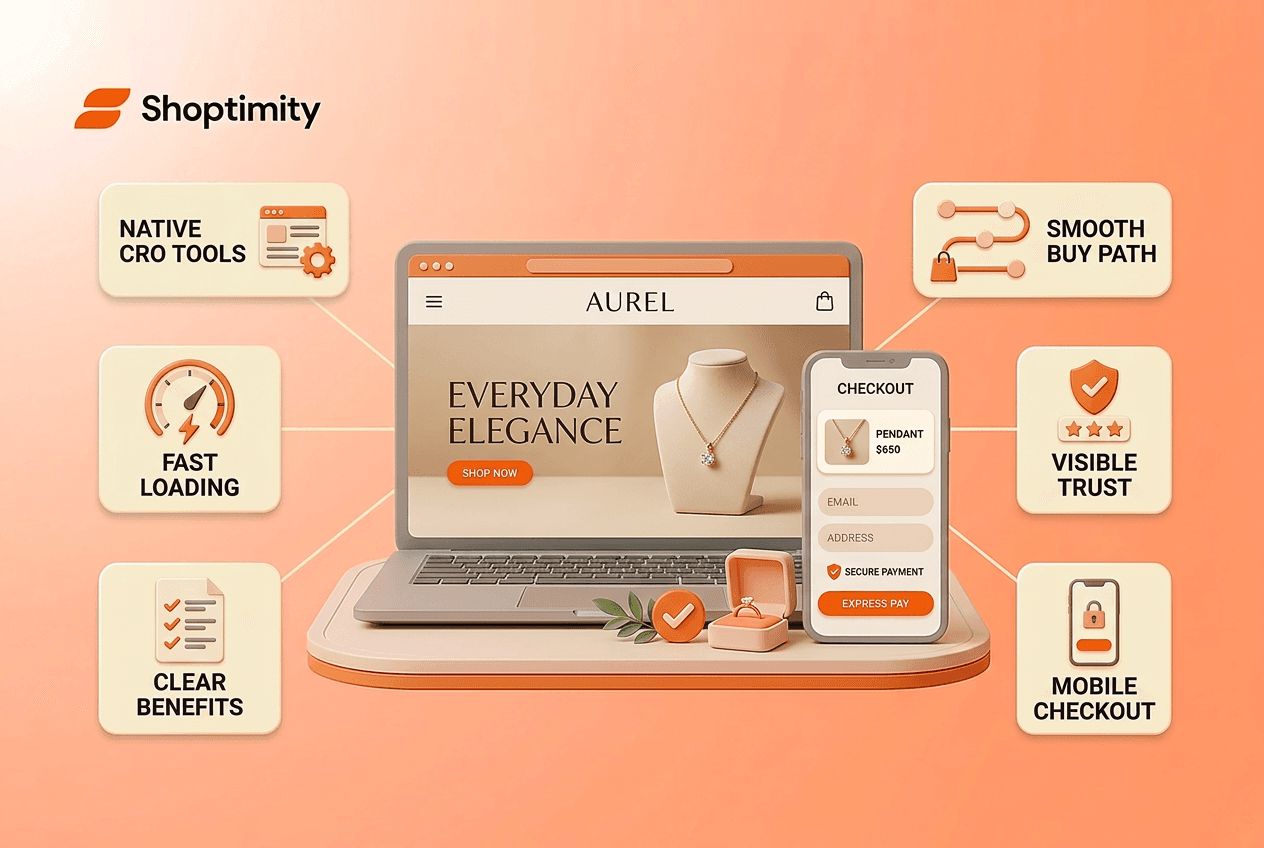
What Makes a Shopify Store Best Converting: The 2026 Framework for High-Ticket Dropshippers
The difference between a best converting Shopify store and an average one isn't traffic or luck, it'...
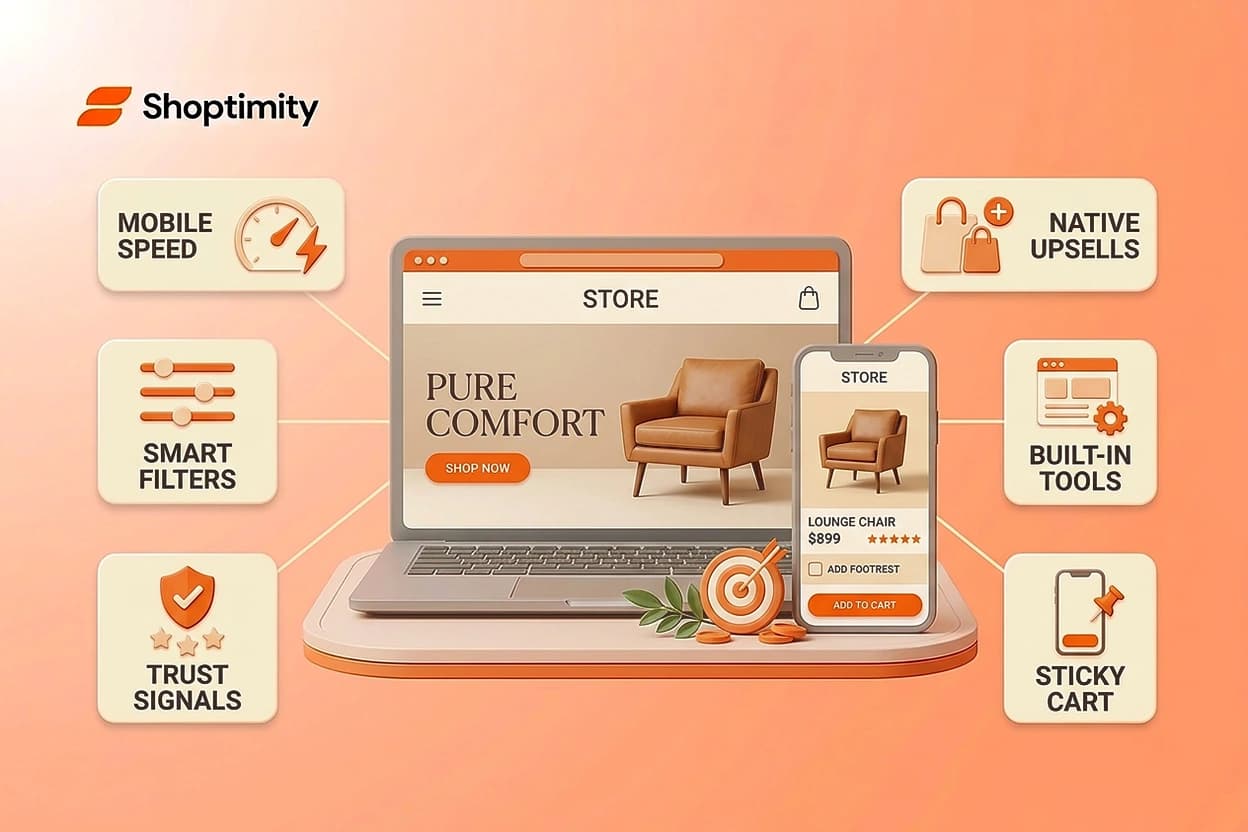
The Right Dropshipping Shopify Theme Saves You Thousands in Wasted Ad Spend
When a cold visitor lands on your dropshipping store, they have seconds to decide if you're legitima...