
Shoptimized Shopify Theme: What Changed in 2026 (And What to Know Before Buying)
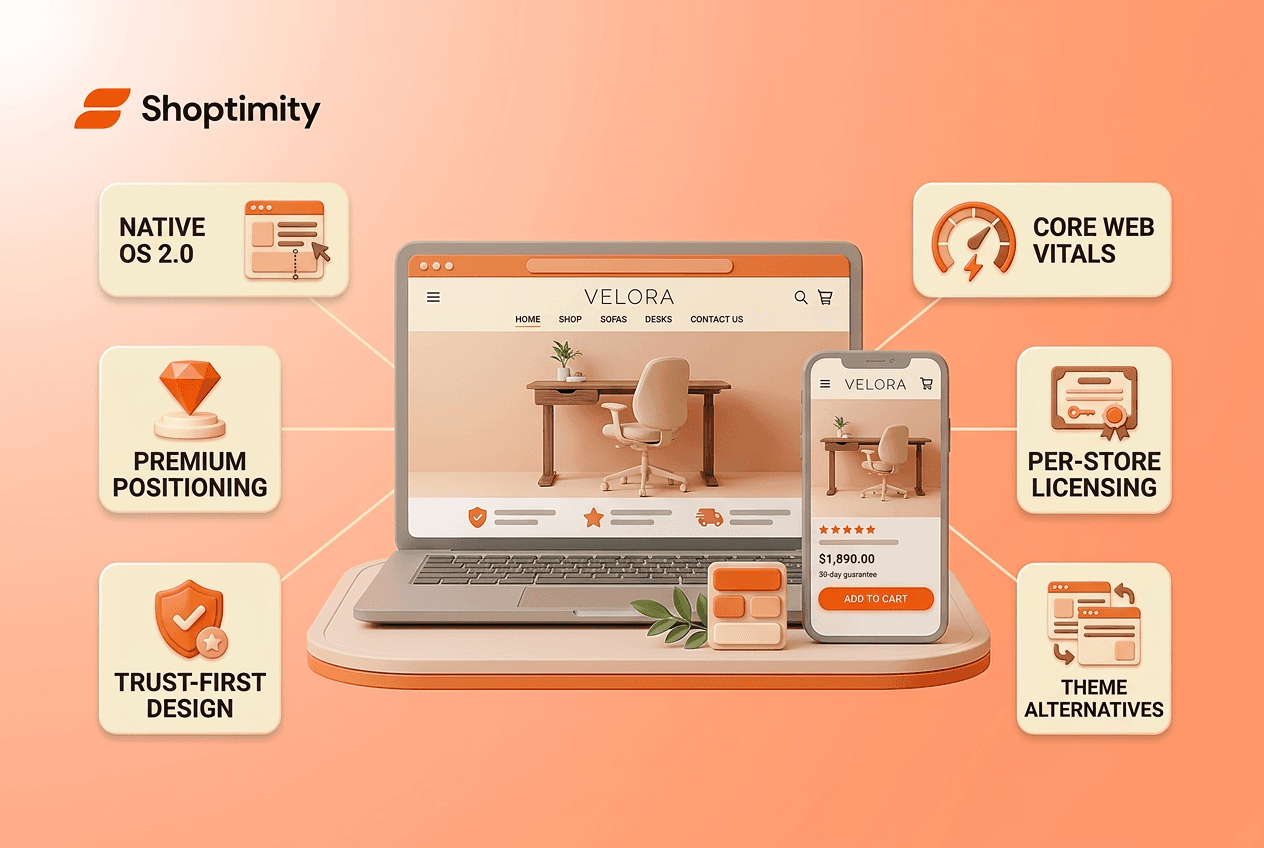
For years, Shoptimized was the default pick for anyone building a high-ticket dropshipping store. A conversion-optimized Shopify theme with built-in urgency widgets, countdown timers, sticky add-to-cart bars, and quantity discounts baked directly into the code. No app stack needed. No monthly subscriptions for each feature. It made sense.
In 2026, that recommendation has shifted. Not because Shoptimized stopped working, but because the e-commerce landscape has fundamentally changed. Shopify's Online Store 2.0 architecture matured. Conversion tools became commoditized. And the aesthetic it pioneered, heavy urgency messaging, aggressive scarcity badges, walls of proof, now actively hurts premium positioning and trust.
TL;DR: Shoptimized's core value (conversion features baked into a theme) has been outpaced by modern alternatives that do the same job faster, more flexibly, and at a better price point. For high-ticket dropshipping where trust matters more than urgency, it's become the wrong tool.
What Is Shoptimized Shopify Theme?
Shoptimized is a conversion-focused Shopify theme built outside the official Shopify Theme Store. It sells per store, either at $199/year or as a $299 one-time lifetime license, and comes pre-loaded with roughly 30 conversion widgets: countdown timers, stock scarcity messages, bulk quantity discounts, shipping cost bars, urgency banners, and more.
The bet was simple: bundle features that usually require separate apps directly into the theme code. Faster loading. Lower monthly spend. One cohesive design system. For merchants running aggressive low-ticket dropshipping campaigns with repetitive, urgency-driven marketing, this approach worked well.
Why Shoptimized Built Its Reputation
In the mid-to-late 2010s, Shoptimized genuinely was ahead of the curve. Conversion-optimized Shopify themes were rare. App ecosystems were fragmented and expensive. Building a store that moved inventory fast required either hiring a developer or buying ten separate monthly subscriptions.
Shoptimized solved that. According to practitioners who reviewed the theme in 2026, it became the go-to recommendation for high-ticket dropshippers, especially those running courses and agencies. The one-time lifetime option was seductive for merchants who wanted to avoid ongoing SaaS creep.
The theme's design pattern also became iconic: sticky bars, urgent countdown clocks, review badges stacked like a layer cake, guarantees featured prominently. It looked like a store built to convert. And for certain audiences, it did.
The 2026 Reality: Where It Falls Short
Three shifts happened that changed the game.
First: Shopify's architecture evolved. Online Store 2.0 introduced sections everywhere, native metafields, and a visual theme editor that let merchants customize without code. Themes built before this shift, or retrofitted onto it, struggle with flexibility. Shoptimized was updated for compatibility, but it wasn't built from the ground up with OS 2.0 in mind. This limits drag-and-drop customization compared to modern competitors built natively for the framework.
Second: The aesthetic backfired for premium positioning. That wall of urgency, countdown timers on every section, scarcity badges on products, shipping-cost callouts plastered across the page, works for $19 dropshipping impulse buys. It actively hurts high-ticket sales, where trust and premium positioning matter more than FOMO. A $500 product doesn't need a countdown timer to convince a buyer. It needs clean photography, transparent policies, and customer proof. Heavy-handed urgency signals "cheap dropship store" to anyone with experience.
Third: The feature count is now standard, not an advantage. Shoptimized offers roughly 30 built-in conversion features. That was market-leading five years ago. In 2026, modern alternatives offer more blocks and sections. App alternatives are faster and more flexible. And the monthly subscriptions Shoptimized was designed to replace are now cheaper and better than ever.
On performance, while Shoptimized claims sub-1-second load times, it often underperforms on Core Web Vitals compared to modern architectures built with minimal JavaScript and lazy-loaded imagery. A one-second delay in load time can drop your conversion rate by 7%, costing a $10,000/month store over $8,400 annually.
For merchants running multiple stores, the per-store licensing ($199/year or $299 lifetime each) also adds up. A brand builder with three stores pays $600–$900. Most theme subscriptions are per store too, so compare the per-store cost over the time you expect to run each store, not the headline price.
Better Alternatives for High-Ticket Stores
If you're evaluating a conversion-focused Shopify theme in 2026, consider these options instead.
Booster Theme ships monthly updates and handles modern Shopify performance better. It covers the same conversion-widget use case as Shoptimized but with a faster codebase and more regular feature rollouts.
Impulse (by Archetype Themes, $500) and Prestige (by Maestrooo, $400) target the premium positioning angle specifically. They're built around story, trust elements, and clean layouts rather than urgency maximalism. Better for high-ticket positioning.
Shopify's free Horizon theme has matured significantly. For stores without a massive app stack, the free starting point plus selective add-ons often beats paying $300 up front for a feature-heavy theme you won't customize or use.
For brands that want modern architecture, faster updates, and multiple themes in one subscription, conversion-optimized theme subscriptions at $19/month provide access to industry-specific templates, customizable blocks, and native OS 2.0 design without the one-time purchase risk. See the side-by-side Shoptimity vs Shoptimized comparison for feature-by-feature detail.
Should You Still Use Shoptimized?
Yes, if you fit a specific profile: you run a single, established low-ticket dropshipping store with aggressive paid advertising. You prefer a one-time lifetime license over a subscription. You're comfortable with the dated aesthetic. And you don't plan to scale to multiple stores.
The theme works. Its community is solid. The support team understands high-ticket dropshipping nuances. But it's no longer the default recommendation.
For everyone else, boutique brands, premium positioning, multi-store operators, or anyone launching in 2026, newer, faster, more flexible alternatives are worth your consideration. The e-commerce landscape has moved on, and so should your theme choice.
Stop Leaving Conversions On The Table
You now understand why Shoptimized isn't the right fit for high-ticket stores anymore. See how modern, conversion-focused themes can recover that lost revenue with [30+ built-in conversion tools](https://shoptimity.com/themes) and a 98.9 sp
7-day free trial · all themes included · cancel anytime
Continue Reading
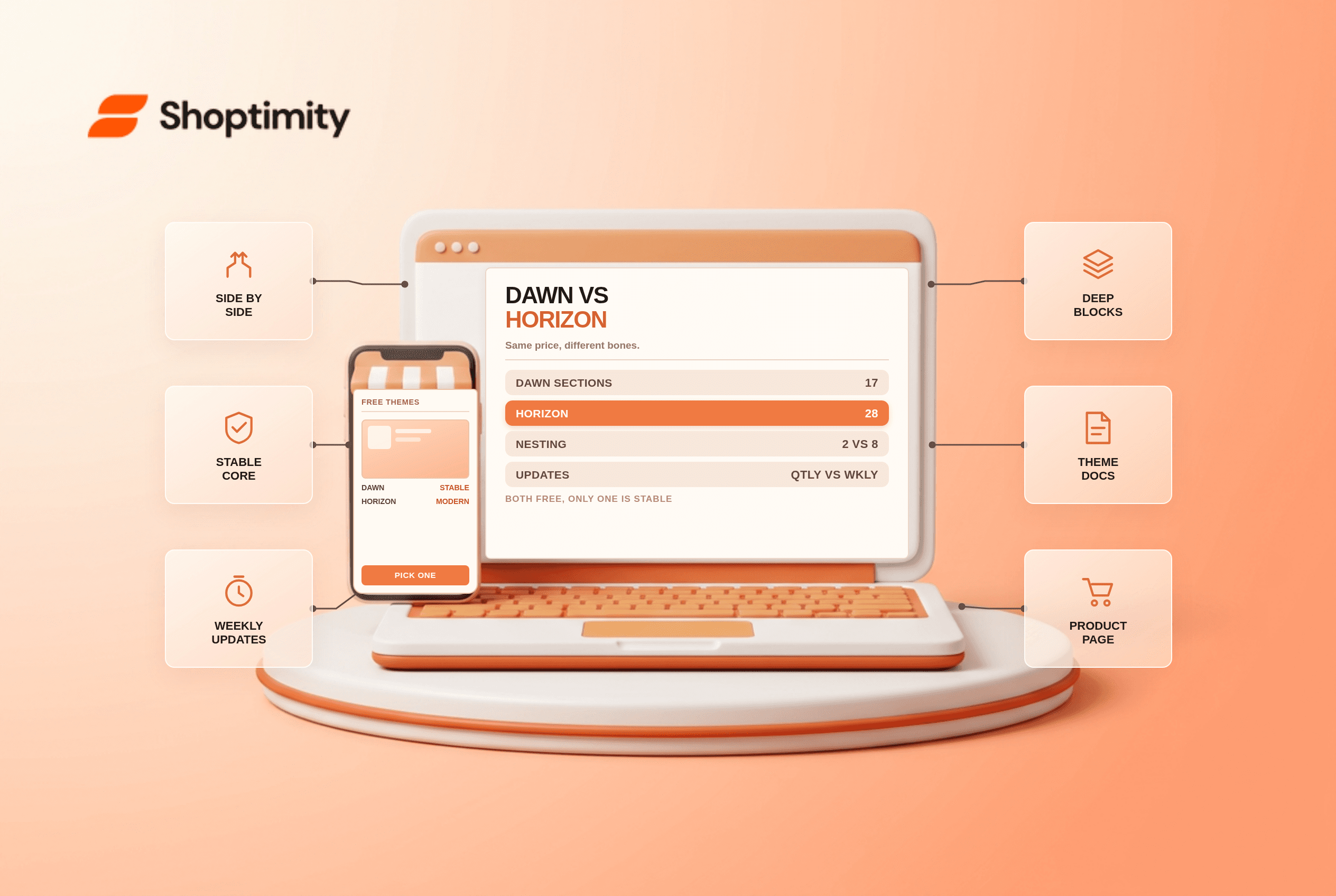
Shopify Dawn vs Horizon: Which Free Theme to Start With in 2026
Both free, very different builds. Horizon gives 28 sections and deep nesting, Dawn gives stability. ...
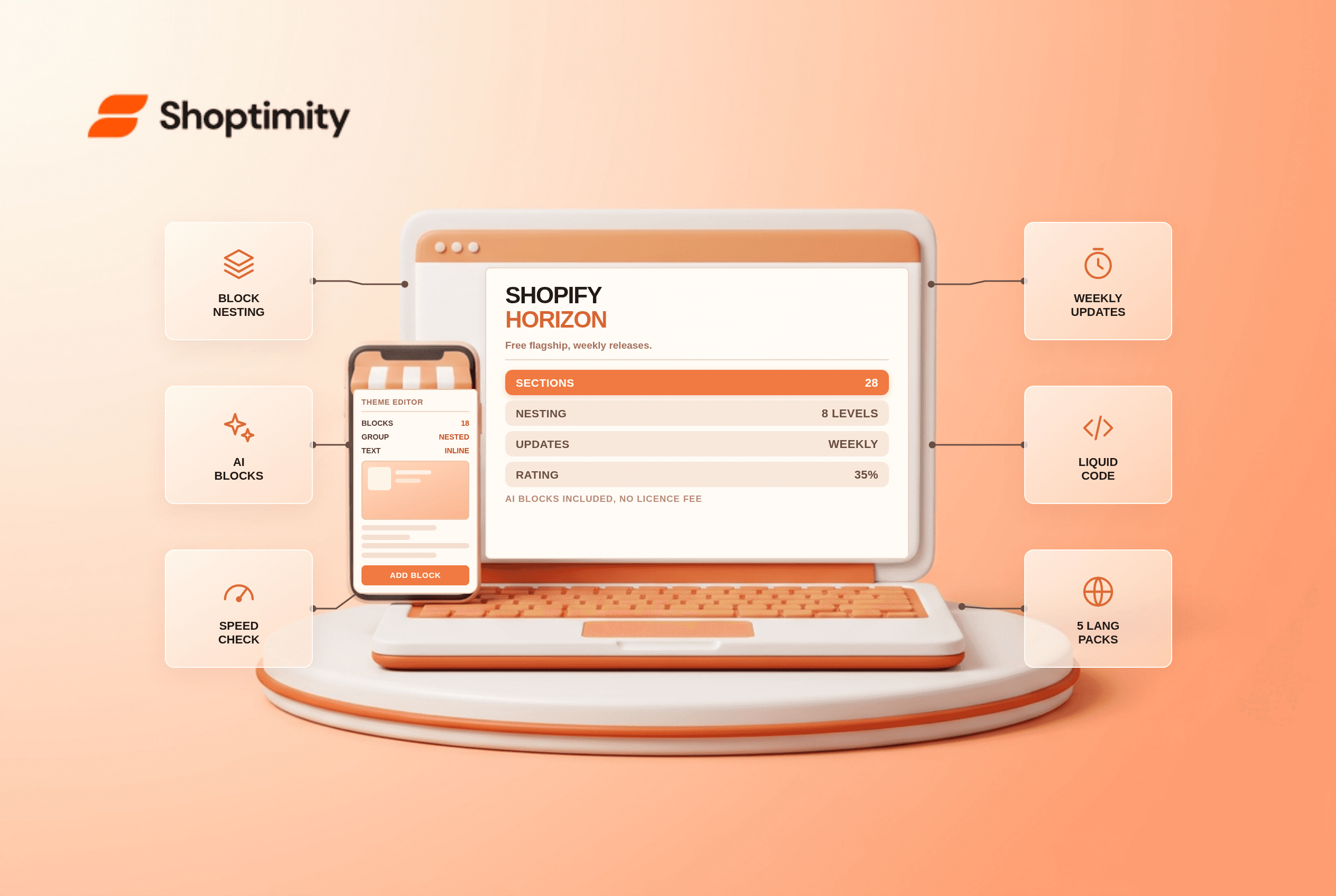
Shopify Horizon Theme Review 2026: The Best Free Theme, With a Catch
Horizon is free, block-based and AI-assisted, with a 35% merchant rating. What it does better than D...
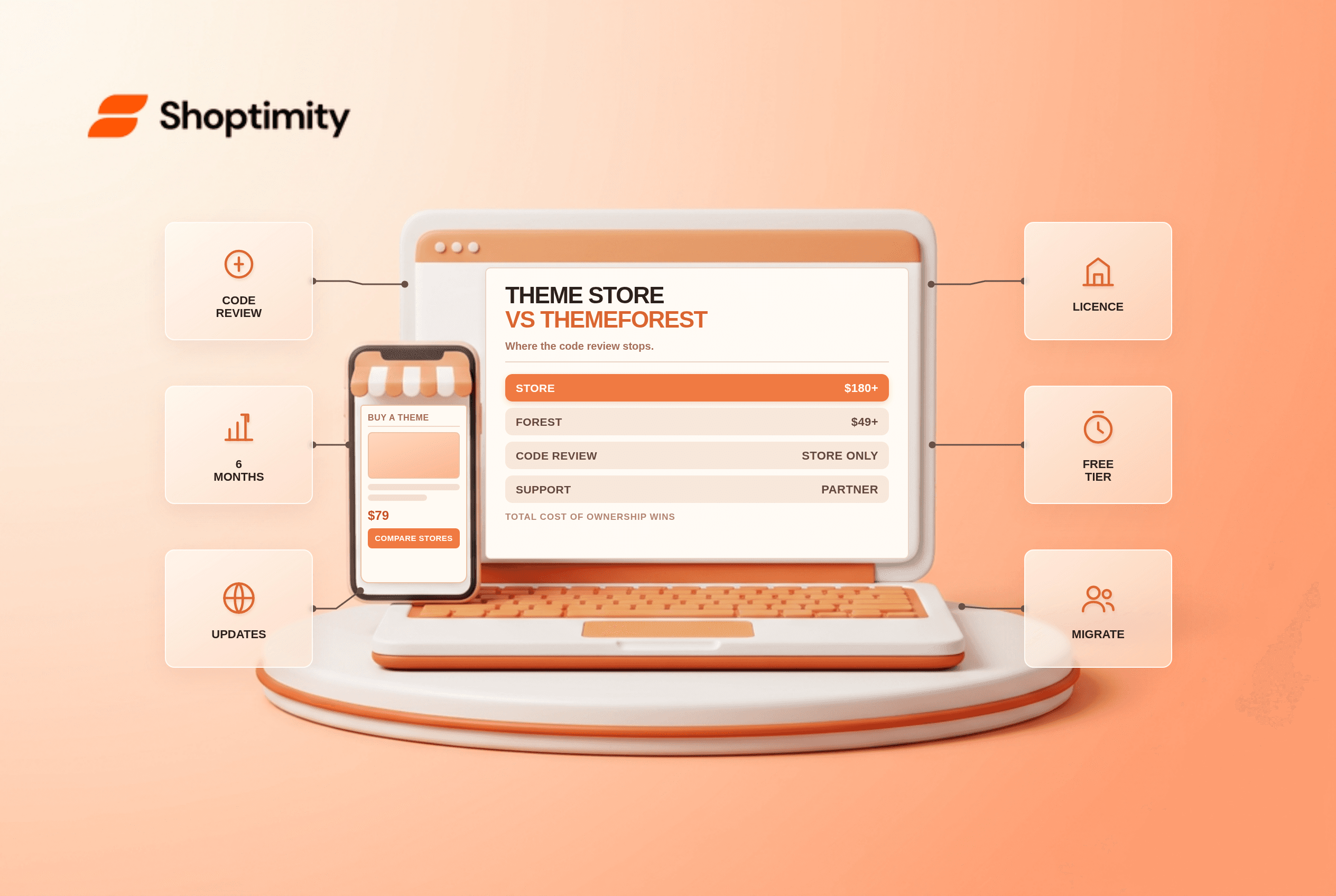
Shopify Theme Store vs ThemeForest: Where to Buy in 2026
Code review, support terms and update paths compared, plus the total cost of ownership that neither ...