
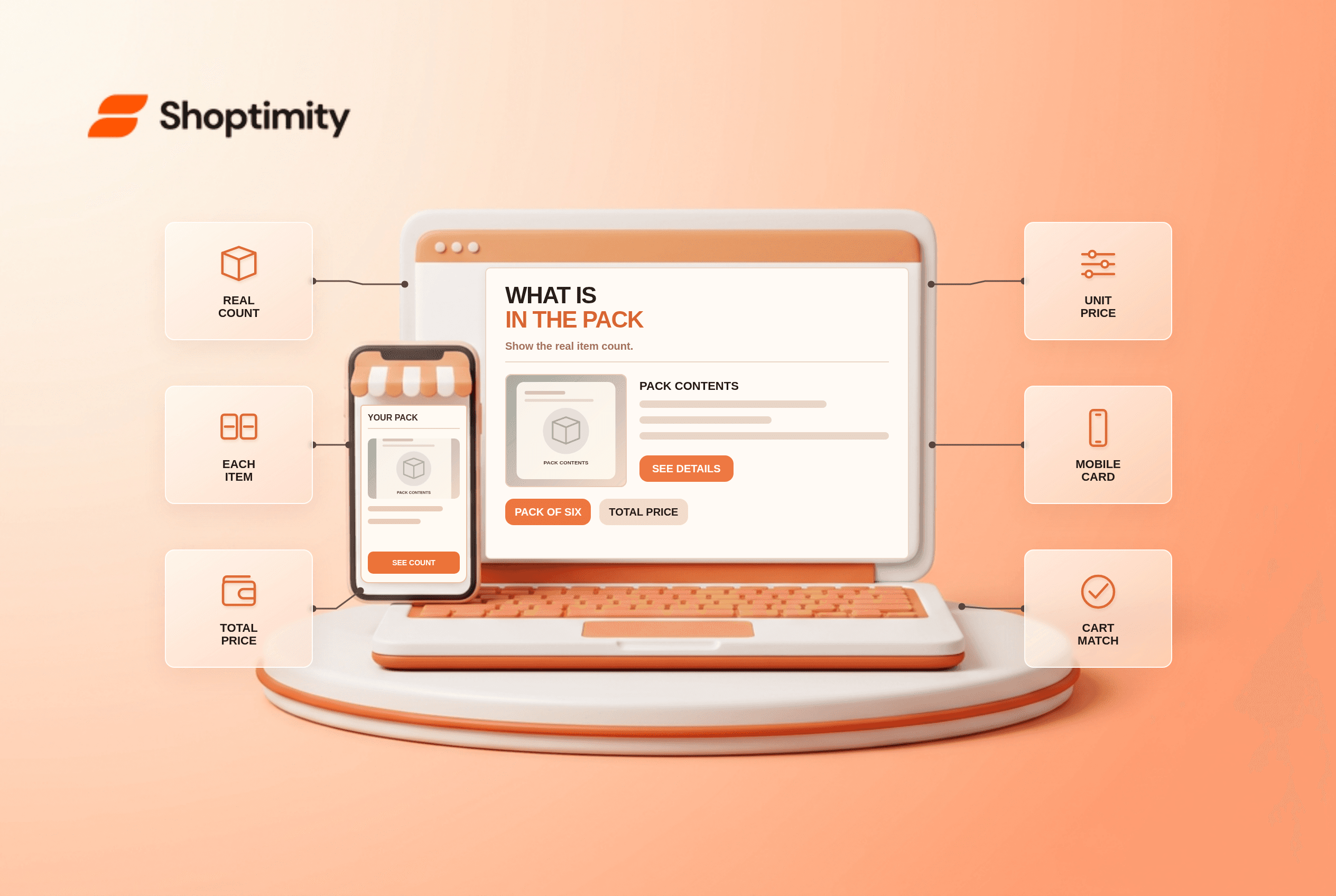
Ecommerce multipack contents should be obvious on cards and product pages, with the actual pack count, included items and total price aligned. Start by testing one real customer journey and one exception before changing a template. The store needs accurate underlying data; a theme can present it, but cannot make an incorrect warehouse, catalog or payment record true.
What does the research say about ecommerce multipack contents?
Use the finding as a diagnostic, not a conversion forecast. According to Baymard’s 2026 product-list guidance, thumbnails should represent the items actually sold, including quantities in multipacks. A single bottle photo for a six-pack creates an avoidable question about what arrives.
Baymard’s 2023 unit-price research found 86% of benchmarked sites lacked unit prices for varying quantities or volumes. The unit-price finding is separate from pack photography, but both affect comparisons.
What should a multipack card tell shoppers?
Lead with the fact that changes the decision. Place “Pack of 6” beside the product name and total selling price. Show all included pieces in at least one accurate image or use a clearly labeled representation. Specify size per piece and distinguish a six-pack of 250 ml bottles from a 1.5 L single bottle. If components vary, list each included component with count. Do not let a variant image contradict the selected pack.
A customer sees one jar in a collection card, then pays a price intended for four jars. Even if the product detail page lists “4 × 100 g,” the card has already set the wrong expectation. Show the package configuration before the click; preserve the same count in cart and confirmation.
How can pack and item counts stay consistent?
Keep the message consistent after selection. A card, form or account screen is only one view of a wider system. Update the customer-facing display when the selection changes; preserve the relevant detail in cart, checkout and confirmation where applicable. If a feature depends on backend rules, give the owner of those rules a concrete test case before promising behavior in editorial copy.
How can a team test this before launch?
Test the edge case that makes the promise fail. Use a representative product, location or account alongside the happy path:
- Check physical pack contents against the supplier record and photograph.
- Show pack count and size in the product-list title or nearby label.
- Compare per-unit calculation with actual sale price and discounts.
- Test pack-size variant changes on mobile cards and product pages.
- Inspect the cart line, invoice and fulfillment record for the same quantity.
- Distinguish mixed assortments from sets of identical items.
What exception needs special handling?
Do not turn uncertain data into a confident claim. When a supplier changes packaging from four pieces to three, update images, title, quantity attributes and pricing at the same time. If a promotional image shows multiple units for scale but the offer is for one, add a visible clarification. The exact sold configuration must never depend on a tiny image caption.
What should Shoptimity merchants check?
Verify operations before polishing the storefront. Our recommendation is to confirm the customer-visible promise against the source record before launch. Shoptimity themes can display information; the merchant’s platform and connected systems own most transaction rules. See the price per unit guide and product card checklist for adjacent checks. We checked the cited public studies, not this merchant’s analytics or live setup. The study figures are neither Shoptimity results nor a promised sales improvement.
What signals matter after launch?
Compare what customers saw with what actually happened. Review “how many do I get?” contacts and incorrect-quantity returns against specific SKUs. Confirm the warehouse pick list matches the displayed count. Save dated examples so the team can diagnose a data error separately from confusing copy.
Ready to build a faster, higher-converting store?
Every Shoptimity theme ships with conversion widgets built in — so you get speed and features without stacking apps.
7-day free trial · all themes included · cancel anytime
Continue Reading
Shopify Mondial Relay: Ship France Box Relay Orders
Set up Shopify Mondial Relay for domestic French Point Relais and locker boxes, require French billi...
Shopify Poste Italiane: Ship Domestic Italy Parcels
Configure Shopify Poste Italiane domestic Standard drop-offs and 70 kg Express pickups, avoid banned...
Canadian Sales Tax: Set Up Shopify GST, HST and QST
Configure Canadian sales tax in Shopify across the $30,000 CAD CRA threshold, 5% GST, 13% to 15% HST...