
Shopify Collective: Retailer Margins, Payments and Returns
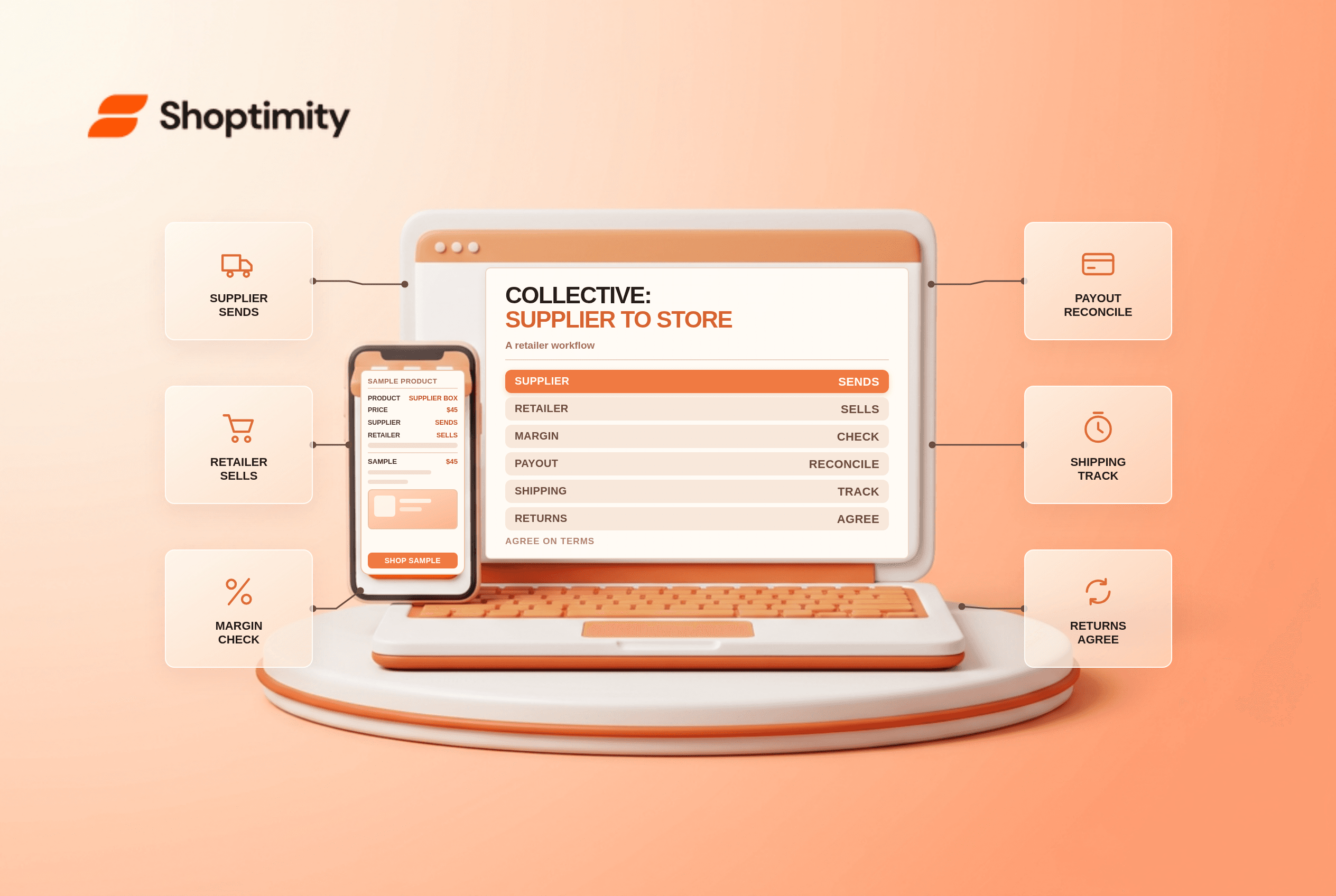
title: Shopify Collective: Retailer Margins, Payments and Returns slug: shopify-collective-retailer-supplier-guide meta_title: Shopify Collective: Retailer Margins, Payments and Returns meta_description: Explore Shopify Collective retailer margins, supplier payments and return responsibilities before you add products to your online store with a practical. primary_keyword: Shopify Collective secondary_keywords:
- Shopify merchant guide
- ecommerce operations author: The Shoptimity Team date: 2026-11-03 category: Operations schema: BlogPosting, FAQPage
Shopify Collective: Retailer Margins, Payments and Returns
Shopify Collective lets eligible Shopify retailers sell products supplied by other Shopify stores without buying inventory upfront. The supplier ships to the customer, while the retailer owns the storefront relationship. It is free to use for eligible stores, according to Shopify, but product cost, shipping, returns and payment processing still determine whether an order is profitable.
Retailer versus supplier
| Question | Retailer | Supplier |
|---|---|---|
| Who sells to the shopper? | Retailer's store | Fulfils for the retailer |
| Who holds the product? | Usually not the retailer | Supplier |
| Who receives the customer order? | Retailer first | Receives a corresponding order |
| Who sends shipping confirmation? | Retailer's store | Supplies fulfilment and tracking |
| Who handles returns? | Depends on the agreed policy | Depends on the agreed policy |
Both stores need to meet current eligibility requirements. Shopify's retailer setup guidance says the connected stores must be in the same supported country and use the same supported currency. A business can be both a supplier and a retailer, but cannot resell products it imported from a supplier through Collective.
The margin is not profit
Suppose a supplier lists an item at a $100 retail price with a 30% retailer margin. Shopify's price-list documentation illustrates a $70 product cost to the retailer and $30 retained before other costs. If the retailer also incurs $5 in shipping subsidy, $3 in processing and an expected $4 in support and returns, the illustrative contribution falls to $18. Advertising, taxes and overhead are not included.
Public price lists have a minimum 5% retailer margin under Shopify's current guidance. A minimum is not a recommendation: negotiate a margin that survives your actual cost structure, and confirm how discounts and supplier price changes are handled.
Follow the money and the order
The shopper pays the retailer. When both partners use eligible automatic payments, Shopify collects the supplier amount from the retailer's Shopify Payments balance and transfers funds after shipment, subject to the documented process. When automatic payments are not active, both parties need an agreed manual settlement method. Read the supplier payment terms for the current requirements.
The supplier fulfils the order and the tracking updates the retailer's order. If payment is captured manually, the retailer may need to request fulfilment. Shopify warns that an automatic-payment charge can occur when fulfilment is requested even if the retailer's order is not yet marked paid. Design the workflow around payment status and fraud review.
Agree on returns before listing
Ask who creates and pays for the label, where the item is returned, which party can approve a return and how supplier refunds reach the retailer. Shopify's returns policy guide describes different rules and notes that defaults can depend on when a retailer joined. Do not assume every connection follows the same default.
Run a small operational pilot: test stock changes, shipping promises, tracking, cancellations and a return with your supplier. Compare product availability with your multi-location inventory setup, and review your own returns self-service process.
Keep a supplier scorecard
Review cancelled orders, late dispatches, inventory mismatches, return turnaround and customer complaints for each supplier. Agree on escalation contacts and review intervals before scaling. If a supplier changes terms or delivery performance, update the product promise on your storefront rather than allowing a stale estimate to create avoidable support tickets.
Ready to build a faster, higher-converting store?
Every Shoptimity theme ships with conversion widgets built in — so you get speed and features without stacking apps.
7-day free trial · all themes included · cancel anytime
Continue Reading
Shopify B2B Company Locations: Give Buyers the Right Access
Configure Shopify B2B company locations, verify buyer permissions and test pricing, addresses and pa...
Shopify Checkout Contact Settings: Separate Email From Shipping Phone
Configure Shopify checkout contact settings and test email, phone and shipping address requirements ...
Shopify POS Recent Carts: Share a Sale Without Reserving Stock
Learn how Shopify POS recent carts work across devices, what they do not reserve, and how to hand of...