
Shopify RFM Customer Analysis: Read the Groups Before Campaigning
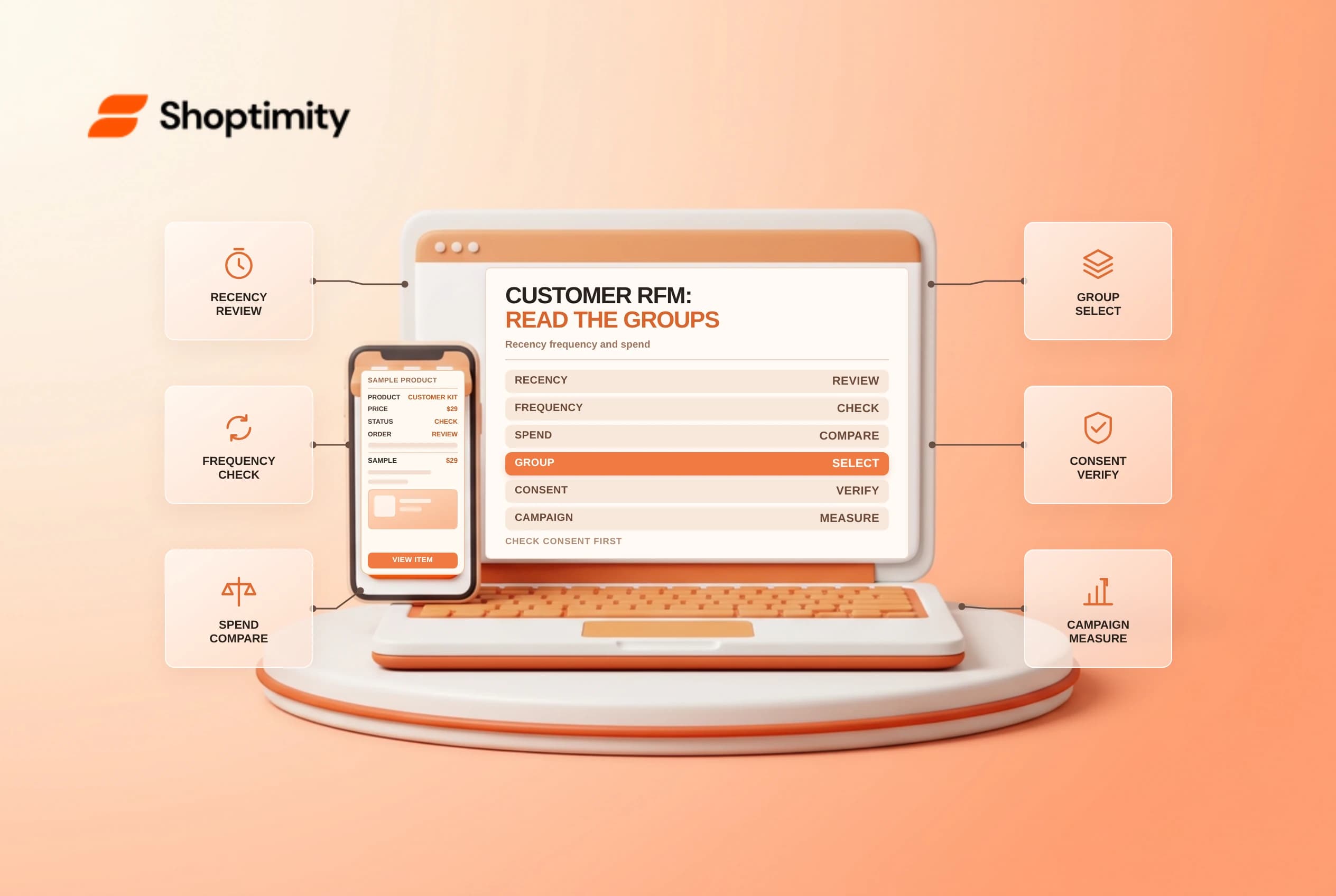
Shopify RFM customer analysis groups customers by recency, frequency and monetary value. It can help prioritize retention questions, but a score is not a prediction of profit or permission to send marketing. Understand the report's group definitions and check consent before creating an audience.
Read the three digits
Shopify's customer reports guide describes a three-digit RFM score, with each digit ranging from 1 to 5. The digits represent recency of the last purchase, number of orders and amount spent, respectively. Shopify categorizes customers into 11 predefined groups based on recency and the average of frequency and monetary scores.
| Component | Meaning | Question |
|---|---|---|
| R | Recency of the most recent order | How recently did the customer buy? |
| F | Frequency of orders | How often have they ordered? |
| M | Monetary amount spent | How much have they spent? |
| FM | Average of frequency and monetary scores | Which predefined group applies? |
| Consent | Separate marketing eligibility | May the customer receive the intended message? |
For Shopify's example score of 154, R is 1, F is 5 and M is 4, so FM is (5 + 4) / 2, or 4.5. Use the report's current definitions rather than inventing thresholds from a different analytics tool. A high spend score does not by itself establish contribution margin or future value.
Interpret a group in context
A previously loyal customer has an older most recent purchase and a strong purchase history under Shopify's group definitions. A champion has very recent purchases and a high combined frequency and monetary score. Prospects have no orders yet. These labels describe a model's categories, not a customer's intent or a guarantee that a discount will cause another purchase.
Check the store's sales cycle. A customer who purchases a durable item once a year may not be disengaged simply because they have not ordered recently. Examine seasonality, product mix, returns and acquisition channel alongside the group. Avoid using a score as a substitute for customer support or individual context.
Build a responsible segment
Shopify's segment reference includes an RFM group filter. Combine the business condition with the correct channel subscription status and any other legally required suppression rules. Segment membership and marketing consent are different things.
| Before sending | Check |
|---|---|
| Audience definition | Group and current report settings are understood |
| Channel eligibility | Email or SMS subscription status is appropriate |
| Suppressions | Unsubscribes and legal restrictions are respected |
| Offer economics | Margin and discount cost are reviewed |
| Sample records | Group membership and recent orders look plausible |
| Measurement | Compare outcomes with a suitable control where possible |
Use a small authorized test and avoid exporting unnecessary personal data. A control group or carefully designed comparison can help evaluate a campaign; revenue associated with a segment alone does not prove the message caused it.
Maintain the analysis
Record the report date, group definition, segment query, eligibility rules and campaign owner. Review changes over time without assuming the same individuals remain in a group indefinitely. Investigate unexpected counts before sending, including profile merges, recent purchases and reporting delays.
Marketing and finance should agree on the decision: service outreach, education, replenishment or an offer may each need different evidence. Related guides: customer segments and consent and customer cohorts.
A practical first review can compare two clearly defined groups, such as previously loyal and new buyers, without assuming they need the same message. Check the number of eligible subscribers in each group, plan a relevant non-discount option, and document how the team will measure results. If a group is small, avoid drawing confident conclusions from a handful of responses.
Ready to build a faster, higher-converting store?
Every Shoptimity theme ships with conversion widgets built in — so you get speed and features without stacking apps.
7-day free trial · all themes included · cancel anytime
Continue Reading
Shopify Mondial Relay: Ship France Box Relay Orders
Set up Shopify Mondial Relay for domestic French Point Relais and locker boxes, require French billi...
Shopify Poste Italiane: Ship Domestic Italy Parcels
Configure Shopify Poste Italiane domestic Standard drop-offs and 70 kg Express pickups, avoid banned...
Canadian Sales Tax: Set Up Shopify GST, HST and QST
Configure Canadian sales tax in Shopify across the $30,000 CAD CRA threshold, 5% GST, 13% to 15% HST...