
Shopify Subscriptions vs Recharge: The Cost Math for 2026
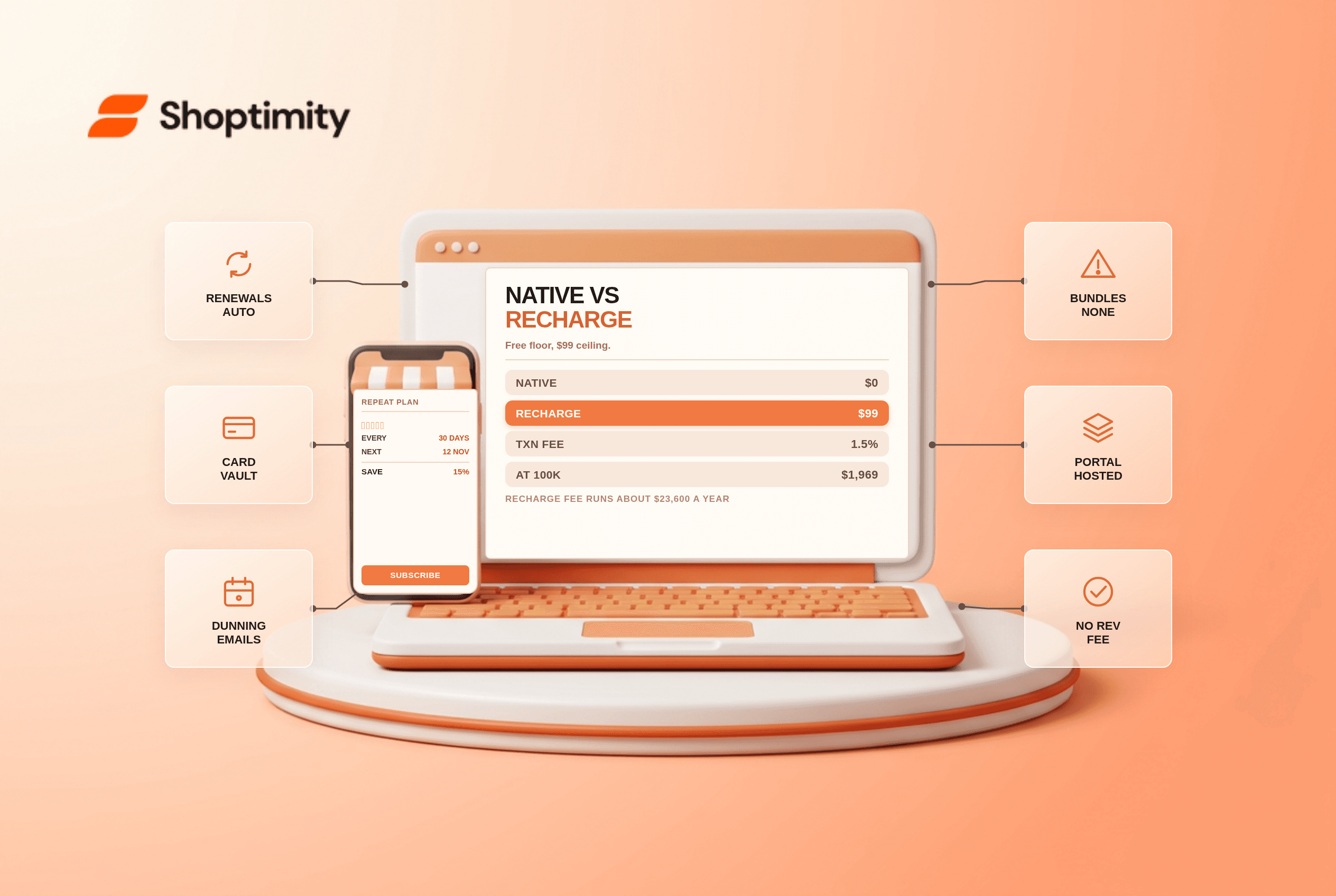
Start with the native Shopify Subscriptions app. It is free, it charges no revenue share, and it handles weekly, monthly and yearly renewals with a customer portal. Recharge starts at $99 a month plus roughly 1.5 percent and 19 cents per transaction, and that stack only pays for itself once retention features are earning more than the fee.
What each one charges
| Native Shopify Subscriptions | Recharge Starter | Recharge Pro | |
|---|---|---|---|
| Monthly fee | $0 | $99 | $499 |
| Transaction fee | 0% | About 1.49% + 19c | About 1.34% + 19c |
| Bundles and build-a-box | No | Higher tiers | Yes |
| Advanced dunning | Basic | Yes | Yes |
| Customer portal | Basic hosted | Customisable | Customisable |
Processing fees still apply on every order either way. A subscription order is a card charge, and Shopify Payments takes its cut regardless of which app produced it.
The break-even in real numbers
At $5,000 a month in subscription revenue, Recharge costs around $193 a month and native costs nothing. At $50,000 a month, Recharge lands near $1,034. At $100,000, roughly $1,969 a month, or around $23,600 a year.
Put differently: the app has to generate about $24,000 a year in retained revenue at the $100,000-a-month level before it beats the free option. That is roughly five recovered subscribers per month at a $400 average order, which is plausible. It is also a number you should check rather than assume.
According to Recharge's published pricing, the transaction fee applies to recurring orders and falls slightly on the higher tier. Fees and plan names change, so confirm before contracting.
What the free app genuinely cannot do
Four gaps. No build-a-box or bundle flows, so a coffee brand selling three bags per delivery needs something else. Dunning is basic, which matters when a card expires. The portal is a hosted page you cannot design. And there is no granular winback tooling.
In our experience, those four gaps are the honest reason a store upgrades. Everything else, including "we need a proper subscription system", is usually a data question rather than a software one.
The migration cost nobody quotes
Moving off an app means moving payment tokens. Stored card details sit with the provider, and a vault-to-vault migration takes weeks and real engineering time. One 2026 engineering guide puts the range at 8 to 16 weeks and a five-figure budget for a mid-size brand.
That changes the decision shape. Starting native is cheap and reversible. Starting on Recharge is cheap and reversible until you have thousands of subscribers, after which leaving gets expensive.
Our advice: launch native, watch retention for two quarters, and upgrade only when you can name the flow you cannot build and the revenue it is leaving behind. The plan comparison explains when a higher Shopify tier changes the calculus, and the bundle inventory checklist covers the stock side that subscriptions make harder.
Building the offer before you buy software
A subscription fails on offer design far more often than on software. Two things matter: a genuine replenishment rhythm, and a discount that beats the hassle of remembering to reorder.
Test with one product, one interval and one incentive. If the repeat rate after three cycles is healthy, invest in the tooling. If it is not, an app with better dunning will not fix a product people do not need twice.
Ready to build a faster, higher-converting store?
Every Shoptimity theme ships with conversion widgets built in — so you get speed and features without stacking apps.
7-day free trial · all themes included · cancel anytime
Continue Reading
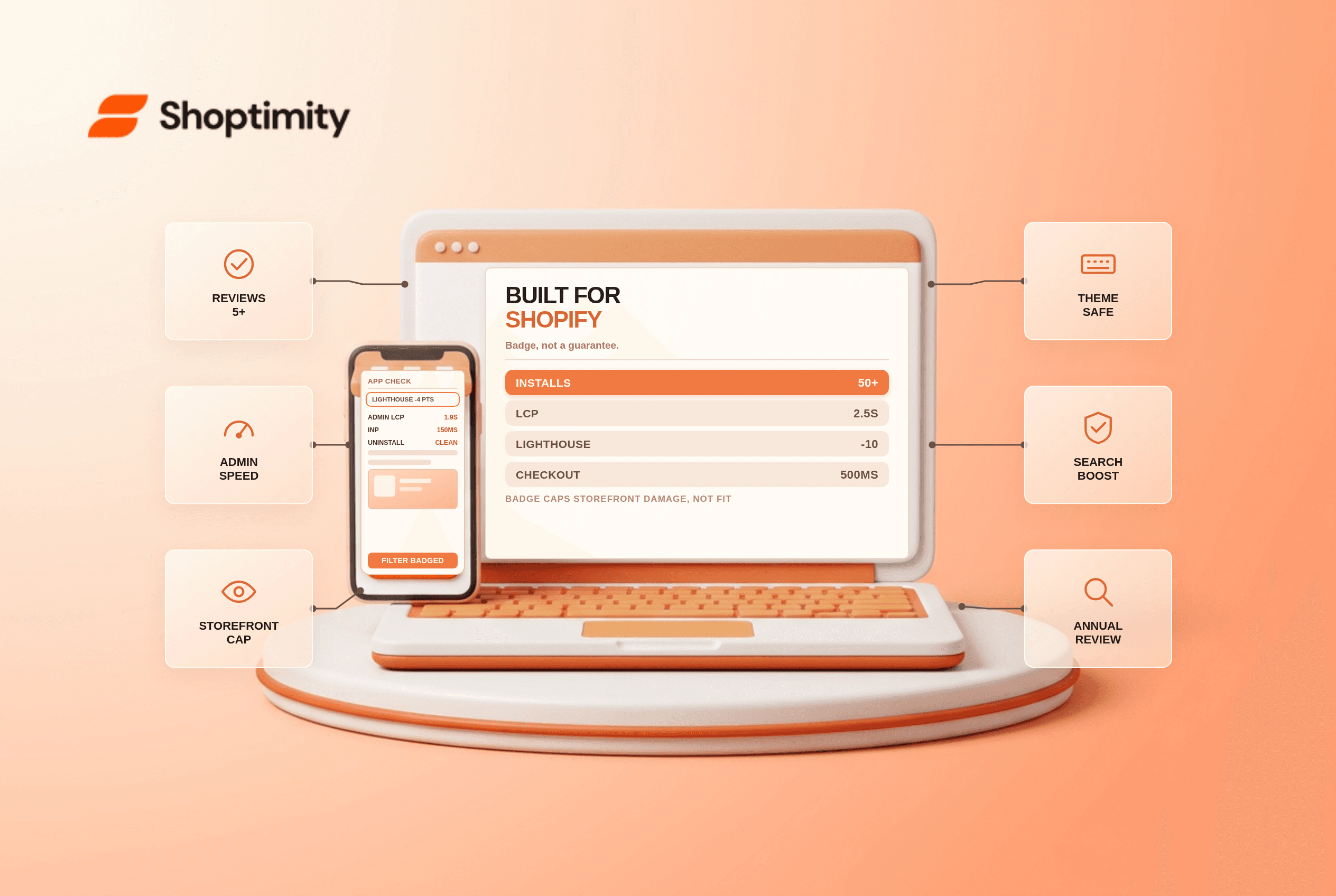
Built for Shopify: What the Badge Guarantees, and What It Does Not
The badge caps how far an app can drag your storefront speed and bans theme-file edits. What it cert...
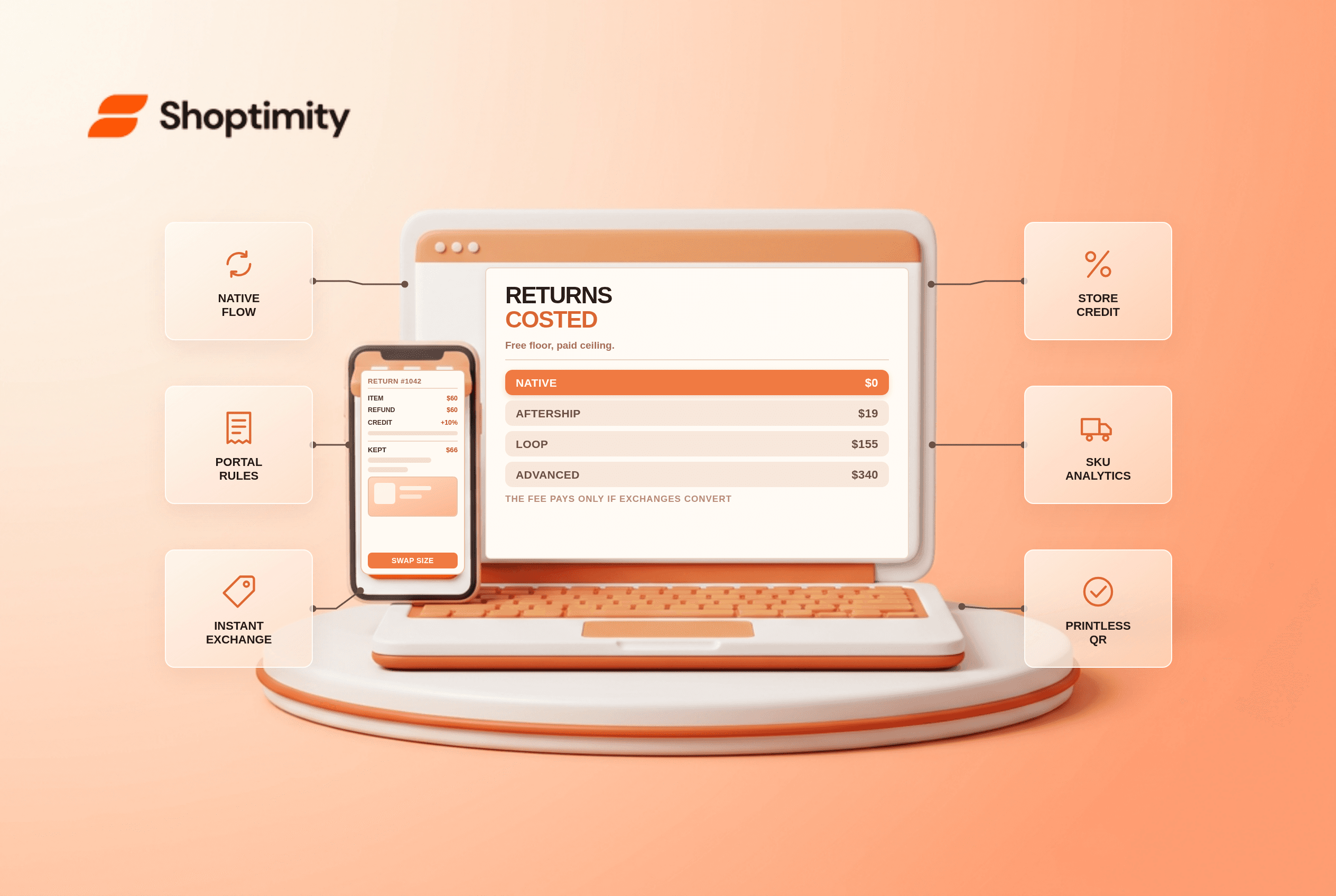
Shopify Returns Apps: What Each Costs and When the Fee Pays
Native returns are free, apps run $19 to $340 a month. The exchange-conversion maths that decides wh...
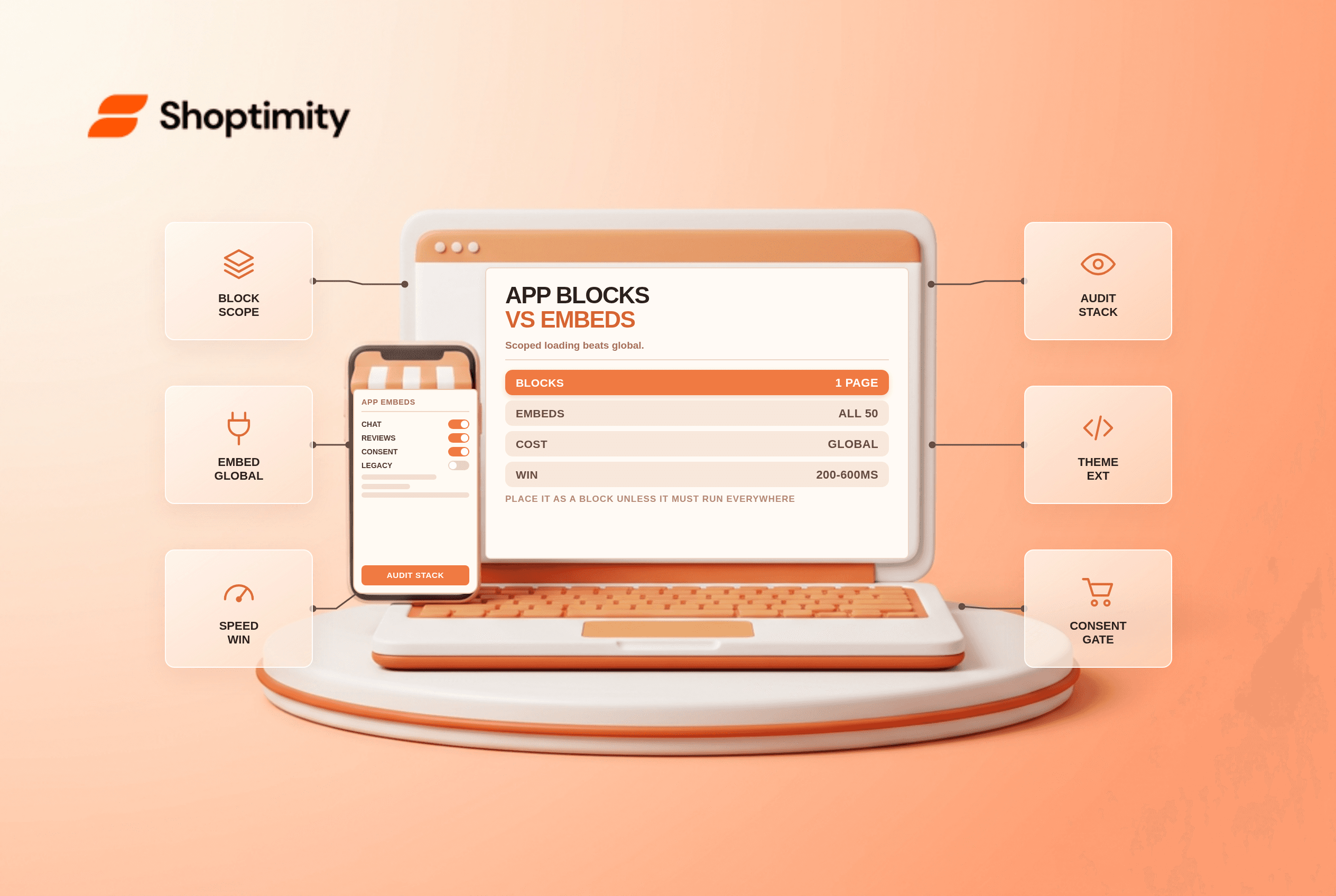
Shopify App Blocks vs App Embeds: Where Each One Belongs
Blocks load where you place them, embeds load everywhere. Why that is usually your biggest speed win...